Hakata History: Twin Cities, Gold Seal, Mongols, Taiko Machiwari
Why are there two names — Fukuoka and Hakata? Unraveling that question reveals the layered history Fukuoka City has walked.
From an ancient diplomatic hub, to a merchants' town, to the castle town of the Kuroda clan — Fukuoka City has accumulated a richly layered past.
Here we introduce key historical turning points, organized by event.
Understanding Ancient and Medieval Fukuoka
The National Treasure gold seal and the Korokan guesthouse attest to ancient exchange with the continent, while the Genko Borui walls recall the Mongol invasions.
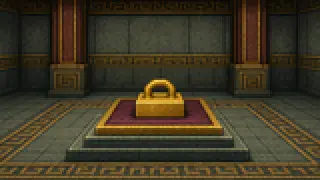
Gold Seal "Kan no Wa no Na no Kokuo" (金印「漢委奴国王」)
A gold seal said to have been discovered on Shikanoshima Island during the Edo period, inscribed with the characters "Kan no Wa no Na no Kokuo" (meaning: King of the Na state of Wa). Believed to have been granted by a Chinese emperor in antiquity, it is designated a National Treasure. Now housed at the Fukuoka City Museum in Sawara Ward's Momochihama, it is celebrated as a priceless artifact attesting to the exchange between ancient Japan and the continent.
Korokan (鴻臚館)
A state guesthouse erected from the Asuka period through the Heian period to welcome foreign envoys, functioning as the gateway for diplomacy and trade with the continent. It supported the comings and goings of Tang and Silla delegations. The site is believed to lie in what is now Chuo Ward, near Fukuoka Castle, and excavations have gradually revealed its form.
Genko and the Genko Borui defensive wall (元寇と元寇防塁)
The Genko refers to the two Mongol invasions that swept in during the Kamakura period. Stone defensive walls were built along Hakata Bay in preparation for further attacks, and those remains survive today at various sites as the Genko Borui. They are precious historical relics transmitting the story of the samurai who held the coastline against the invaders.
Events That Shaped Early Modern Fukuoka
Kuroda Nagamasa's Fukuoka Castle created a castle town beside merchant Hakata, while Hideyoshi's Taiko Machiwari grid and the Hakata Sanketsu merchants drove the town's revival.
Kuroda Nagamasa and Fukuoka Castle (黒田長政と福岡城)
Awarded the province of Chikuzen for his service at the Battle of Sekigahara, Kuroda Nagamasa went on to construct Fukuoka Castle. Also known by the poetic name Maizuru-jo (Dancing Crane Castle), its stone walls and turrets still stand in what is now Maizuru Park. The Kuroda clan's town-building project also gave rise to the place name "Fukuoka" itself.
The Twin Cities of Fuku-haku (福博の二極)
With the Naka River as the dividing line, the east side developed as "Hakata," an ancient merchant quarter, while the west side grew as "Fukuoka," the Kuroda clan's castle town. This structure of two towns with distinct characters standing side by side is what still survives in the dual use of the city's name and its district name today.
Taiko Machiwari (太閤町割)
Around 1587, Toyotomi Hideyoshi is said to have replanned the war-ravaged Hakata into a grid of streets, in an urban reconstruction known as Taiko Machiwari. He organized road alignments and town plots to drive recovery, laying out the skeleton of street patterns that underlies the historic Hakata district today. The "nagare" community units that persist to this day are also said to have originated from this grid planning.
Hakata Sanketsu (博多三傑)
A term said to refer to Kamiya Sotan, Shimai Soshitsu, and Oga Soku — Hakata merchants from the medieval through early modern periods who devoted themselves to the revival and flourishing of the town. Bound to the powers of their day through the tea ceremony and overseas trade, they sustained the prosperity of Hakata as a merchant town. They are the emblematic faces of the Hakata merchant spirit.
FAQ
Which name is the "correct" one to use — Fukuoka or Hakata?
The official city name is Fukuoka-shi (Fukuoka City), while the area around the JR main station and the old merchant quarter is called Hakata. Thinking of Fukuoka as rooted in the castle town and Hakata as rooted in the merchant town makes it easier to understand why both names coexist.
Can I see the actual gold seal? Where should I go?
The gold seal is housed at the Fukuoka City Museum in Sawara Ward's Momochihama and can be seen in the permanent gallery. Shikanoshima Island, the location traditionally cited as the site of its discovery, lies in Higashi Ward and can also be visited as a historical site.