Hakata Traditions and Festivals: Hakata-ori, Hakata Ningyo, Dontaku
A finely woven sash, a doll with a warm expression, a festival that parades through the streets. In Hakata, the culture of skilled craft and celebration lives on unbroken.
Continental exchange and the free spirit of a merchant town nurtured crafts and festivals unique to Hakata.
Here we introduce representative traditions and festivals along with how each came to be.
Traditional Crafts Hakata Is Proud Of
The two pillars are Hakata-ori silk weaving, famed for its kenjo pattern, and Hakata Ningyo clay figurines — crafts shaped by samurai patronage and castle-town history.
Hakata-ori (博多織)
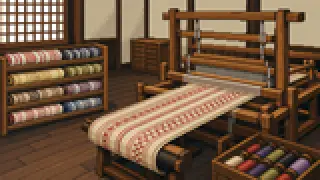
A silk weaving prized for its firm body and lustrous surface, created by packing fine warp threads tightly together. Its origins are said to trace back to the arrival of continental weaving techniques in the Kamakura period, and it is renowned for its kenjo pattern, which stylizes Buddhist symbols such as the dokko and hanazara. Beloved by samurai as a belt that ties securely, it is designated a national Traditional Craft.
Hakata Ningyo (博多人形)
Hakata's signature fired-clay figurine, decorated with delicate hand-painting over an unglazed bisque body. Subjects range widely — beauties, kabuki characters, children — and the characteristic appeal lies in the gentle expressions and three-dimensional modeling. Some accounts hold that artisans who worked on the construction of Fukuoka Castle laid the foundations of this tradition.
Festivals and Performing Arts That Animate Hakata
Hakata Dontaku in May and the autumn Hojoya anchor the festival calendar, while Hakata Niwaka comedy and the celebratory Iwai Uta keep the performing arts alive.
Hakata Dontaku (博多どんたく)
Held annually on May 3–4, this festival fills the streets with participants who beat shamoji rice-paddle clappers as they process through the city. "Dontaku" is said to derive from the Dutch word for a day off, "zondag." With attendance figures among the largest in Japan, the entire city is dyed in the colors of celebration.
Hojoya (放生会)
An autumn festival held at Hakozaki-gu Shrine in September, during which living creatures are released in gratitude for their lives. For a full week the approach to the shrine is lined with numerous stalls, making it an iconic herald of Hakata's autumn. New ginger (shoga) and champon glass crafts are cherished as traditional lucky charms of the festival.
Hakata Niwaka (博多にわか)
A traditional local performing art in which performers wear a half-mask covering the eyes and stage punchy short comedies in Hakata-ben dialect. The hallmark is satirizing the times while drawing laughter, and the distinctive mask design is also well known through the souvenir cookie "Niwaka Senbei." It is a comic art form that carries the wit of ordinary townspeople into the present.
Hakata Iwai Uta (博多祝い唄)
A celebratory song known as "Iwai Medeta," passed down through Hakata's festive gatherings. It is well known as the song the ichiban yamakasa lead float sings during the Yamakasa oiyama race, where it energizes the audience with hand-clapping. Still performed at weddings and commemorations today, it is one element of Hakata's festival culture.
FAQ
What does "dontaku" in Hakata Dontaku actually mean?
It is said to have settled into use from the Dutch word "zondag," meaning a day off or holiday, pronounced through Japanese ears as "dontaku." Combined with the original festival called Hakata Matsubayashi, it evolved into the city-wide celebration of a holiday that Hakata holds together.
Where can I see or buy Hakata-ori belts and textiles?
Specialty stores, department stores, and craft-focused facilities in the city carry Hakata-ori. Smaller items featuring the kenjo pattern are easy to bring home as souvenirs and offer a hands-on way to feel the artisan tradition up close.