Aizu Cuisine: Wappa-Meshi, Kozuyu, and Pickled Herring, Sourced
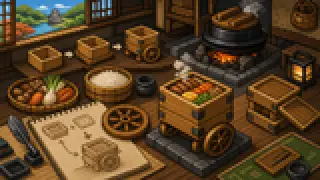
Wappa-meshi, kozuyu, herring pickled with sansho pepper, and karatsuyu soba: Aizuwakamatsu's local dishes each have a different story, from resourceful use of inland seafood to food culture a domain lord brought with him. Here they are, with sources.
Aizu sits in an inland basin surrounded by mountains, a place where fresh seafood was historically hard to come by. Its local dishes reflect that constraint, whether through dried goods put to clever use or food culture carried in from a domain lord's home region.
This article covers wappa-meshi, served in a bent-cedar box from Hinoemata, kozuyu, served at weddings and other celebrations, and dishes tied to two different supply routes that once carried seafood into landlocked Aizu: the herring road and the Kitamae-bune shipping route.
How recently did wappa-meshi become an Aizu specialty?
It is a fairly recent dish, invented around 1970 when an Aizuwakamatsu restaurant owner adapted a bentwood box from Hinoemata.
The invention of "wappa-meshi"
Wappa-meshi was invented around 1970 by the founding owner of Takino, a long-running Aizuwakamatsu restaurant. Inspired by the bentwood boxes made in Hinoemata, a village near the foot of the Oze wetlands, the owner began serving Aizu ingredients steamed inside that same kind of box. The dish struggled to win over local diners at first, but travelers gradually helped it take root in Aizuwakamatsu.
Source:About Takino
The bent-cypress box itself
The "wappa" in wappa-meshi is a cylindrical box made by bending thin sheets of cypress. It was originally a practical tool, a container that forestry workers carried their lunch in, valued for staying breathable enough to keep rice from spoiling. Steaming Aizu rice and local ingredients inside this box is what turned it into the dish known today as wappa-meshi.
Source:Food culture: wappa-meshi, Samurai City Aizuwakamatsu
Kozuyu, a dish for celebrations
Kozuyu is served in small lacquered plates called tesarazara, filled with ingredients simmered in scallop dashi, at weddings and other celebrations.
The name, and its lacquered dish
The name kozuyu is said to come from a slurring of kojuu no tsuyu. It is served in a small, shallow, red-lacquered Aizu lacquerware dish called a tesarazara, and was traditionally divided between two separate bowls, called ichi no ju and ni no ju, though since roughly the 1980s it has more often been served together in a single bowl.
Source:Kozuyu, Fukushima Prefecture, MAFF local cuisine database
Scallop dashi carried by Kitamae-bune ships
Kozuyu's dashi comes from dried scallops. In an era before modern distribution, Kitamae-bune trading ships carried dried goods from Hokkaido through Niigata's ports and on into Aizu, and dried scallops became the base of a dish simmering both mountain and sea ingredients together, including kikurage mushrooms, bracken, and taro. An odd number of ingredients, seven or nine, is considered good luck.
Source:Kozuyu, Fukushima Prefecture, MAFF local cuisine database
Seafood that reached landlocked Aizu
Dried herring carried in along the herring road, and soba a domain lord brought from Shinshu, both became distinctly Aizu dishes.
Pickled herring with sansho, and the herring road
Dried herring caught off Hokkaido reached Aizu via Kitamae-bune ships to Niigata and then an overland route known as the herring road. From spring into early summer, as young sansho pepper leaves come into season, the herring is still pickled today with sansho leaves in a rectangular Aizu-Hongo ware dish called a nishinbachi, sized to fit the length of a dried herring.
Source:Pickled herring with sansho, Fukushima Prefecture, MAFF local cuisine database
Karatsuyu soba (Takato soba)
Hoshina Masayuki, who took over Aizu domain from Shinshu's Takato domain in 1643, is said to have brought soba artisans with him, along with a way of eating soba dipped in a sauce made from grated daikon radish and miso rather than a dashi-based broth. Visitors often know the dish by the place-name nickname Takato soba, but locals have long called it karatsuyu soba, and it is still served at soba restaurants within Aizuwakamatsu city today.
Two more Aizu specialties: basashi and mishirazu-gaki
Raw horse meat eaten with soy sauce, and a large seedless persimmon, are also Aizu specialties.
Basashi
Aizu's meat-eating culture is said to trace back to the Aizu War itself. In August 1868, Nisshinkan, the domain school just west of Tsuruga Castle, was converted into a makeshift hospital, and shogunate physician Matsumoto Ryojun, practicing Dutch-style medicine, is recorded as having slaughtered cattle and horses to feed the wounded and sick there, an episode credited as the start of meat-eating in the Aizu region. Eating horse meat raw, in the form basashi takes today, came later, in the 1950s: professional wrestler Rikidozan, after a bout at Tsuruga Castle's western Nishi-demaru bailey, is said to have gone to a butcher shop on Nanukamachi-dori and eaten raw horse meat there with karashi-miso he had brought along, an anecdote still told as basashi's origin story.
Mishirazu-gaki
Aizu Mishirazu-gaki is an astringent persimmon variety grown mainly around the Oyama district of Kadota-machi in Aizuwakamatsu. It is shipped only after its astringency is removed, producing a large, seedless fruit, and selected persimmons are presented to the Imperial family each year. Its name, mishirazu, meaning roughly "not knowing itself," is said to come from a tradition that the tree bears fruit so heavily its branches break as if they don't know their own limits.
Source:Mishirazu-gaki, JA Aizu YotsubaFukushima's "Aizu Mishirazu-gaki", Food Artisan
FAQ
Isn't wappa-meshi a traditional Aizu dish?
It is not a dish with centuries of history behind it; it was invented around 1970. A similar ekiben, or train-station bento, exists in neighboring Niigata Prefecture, but the wappa-meshi that pairs Hinoemata bentwood boxes with Aizu ingredients is credited to Aizuwakamatsu, and it has since become one of the area's signature local dishes.
Are there dishes similar to kozuyu elsewhere?
Tsuyuju, a soup from the city of Koriyama, is considered a close relative. Aside from a bean-based flour dumpling not used in kozuyu, the ingredients are largely the same, showing how similar food cultures can develop in different corners of the same prefecture.
When is pickled herring with sansho eaten?
It is pickled in spring through early summer, when young sansho leaves appear, and needs time to sit before the flavors settle, so it is usually eaten from summer onward, often around seasonal festivities.
What do Aizu's local dishes have in common?
Because the region sits inland, far from the coast, many dishes make resourceful use of dried goods and other preserved ingredients. A number of them also trace back to something brought in from outside, whether by Kitamae-bune ships, the herring road, or a transplanted domain lord, and then reshaped into something distinctly Aizu.
What river flows through Aizuwakamatsu?
The Aga River, part of the Agano River system and a nationally classified Class A river, flows through central Aizuwakamatsu, known locally as the Okawa. Aizu sits in an inland basin with no coastline, and even though this same river eventually becomes the Agano River and reaches the Sea of Japan once it crosses into Niigata Prefecture, Aizuwakamatsu itself remained a place where fresh seafood was historically hard to come by.
Sources & references
- About Takino
- Food culture: wappa-meshi, Samurai City Aizuwakamatsu
- Kozuyu, Fukushima Prefecture, MAFF local cuisine database
- Pickled herring with sansho, Fukushima Prefecture, MAFF local cuisine database
- Wikipedia, Takato Soba (高遠そば)
- Aizu horse meat (basashi), Aizu ni Rekishi Ari
- Mishirazu-gaki, JA Aizu Yotsuba
- Fukushima's "Aizu Mishirazu-gaki", Food Artisan