Aizu Domain: From Hoshina Masayuki to the Aizu War, Sourced
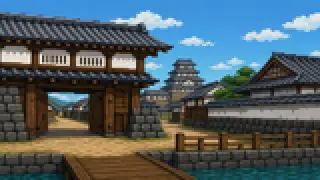
Aizu domain traced its founding to Hoshina Masayuki, a half-brother of a Tokugawa shogun, and in its final years, lord Matsudaira Katamori commanded the Shinsengumi as Kyoto's military governor. This article follows that tradition of loyalty through to its outcome in the 1868 Aizu War, with sources.
Aizu domain's history built a distinct tradition of loyalty to the Tokugawa shogunate after Hoshina Masayuki took it over in 1643. In the closing years of the shogunate, lord Matsudaira Katamori carried that tradition into his post as Kyoto's military governor, commanding the Shinsengumi.
This article covers Hoshina Masayuki's Fifteen Precepts, Matsudaira Katamori's activities in Kyoto, and the 1868 Aizu War and its aftermath for the domain, with sources. This article addresses the Aizu War as a whole; the specific tragedy of the Byakkotai youth corps is covered in a separate article.
Founding lord Hoshina Masayuki's code of loyalty
In 1668, Hoshina Masayuki set down the Fifteen Precepts, opening with a clause demanding loyalty to the Tokugawa shogunate.
Hoshina Masayuki takes Aizu
Hoshina Masayuki was born a son of the second shogun, Tokugawa Hidetada, and was a half-brother of the third shogun, Iemitsu. After holding domains including Takato in Shinano, he took over Aizu domain in 1643 with 230,000 koku, moving from Yamagata. In 1696, under the third-generation lord Masakata, the family was granted permission by the shogunate to use the Matsudaira surname and the Tokugawa hollyhock crest.
The Aizu Domain's Fifteen Precepts
In 1668, Hoshina Masayuki set down the Aizu Domain's Fifteen Precepts. Its first article declares single-minded loyal service to the shogun and states that anyone who harbors divided loyalty is no descendant of his, and that retainers should refuse to follow such a lord. The code stood as the domain's spiritual backbone for the next two centuries, and the last lord, Matsudaira Katamori, held to it especially firmly during the shogunate's final years.
Kyoto's military governor: Matsudaira Katamori and the late-shogunate domain
Lord Matsudaira Katamori became Kyoto's military governor in 1862 and commanded the Shinsengumi against radical loyalist factions.
Appointment as Kyoto's military governor
The domain's last lord, Matsudaira Katamori, was appointed Kyoto's military governor at age 28, responsible for keeping order in the capital. He placed the Shinsengumi under his command, and in the political upheaval of August 18, 1863, he drove radical loyalist court nobles and Choshu forces out of Kyoto, earning praise from the imperial court itself. In the 1864 Hamaguri Gate Incident, he again commanded Aizu and Shinsengumi troops to repel Choshu forces.
Source:Matsudaira Katamori, the last Aizu lord, Kyoto military governor, and Aizu chujo
From the return of power to the Toba-Fushimi battle
Even after the shogun formally returned political power to the emperor in 1867, Matsudaira Katamori chose to share the Tokugawa family's fate. When former shogunate forces lost the Battle of Toba-Fushimi in January 1868, Aizu domain became the core of the Ouetsu Reppan Domei, an alliance of northern domains opposing the new government, and the war gradually moved toward Aizu itself.
The Aizu War, and what followed for the domain
The August to September 1868 Aizu War ended in surrender after a month-long siege, and the domain later faced harsh punishment.
The Joshitai women's corps and the fighting at its height
When government forces broke through Bonari Pass and pushed into Aizu territory, not only samurai but a women's unit called the Joshitai, organized by Nakano Takeko and others, joined the fighting. Takeko fell to gunfire in combat at Yanagi Bridge, also called Namida Bridge (Tears Bridge), on August 25, 1868. Tsurugajo held out through a month-long siege before the domain surrendered and handed over the castle in September.
Source:The Joshigun: the women-only unit organized by Nakano Takeko and others
What became of Matsudaira Katamori
After the surrender, Matsudaira Katamori had his sentence commuted from death and was placed under house arrest, held by Wakayama domain among others. Aizu domain was allowed to continue as a family line, but the new Meiji government relocated it to Tonami, on the barren Shimokita Peninsula in what is now Aomori Prefecture, and many retainers and their families endured harsh conditions there. Katamori himself was appointed chief priest of Nikko Toshogu shrine in 1880, and spent his later years in that post.
Shiba Goro and other Aizu retainers' children
Shiba Goro was born into an Aizu retainer family and endured the deaths of his grandmother, mother, and sisters during the Aizu War. He went on to become an army officer, and during the 1900 Boxer Rebellion he commanded Japanese forces defending the besieged foreign legations in Beijing, earning praise from other nations for his conduct. Shiba was far from alone: many children of Aizu retainer families lost their homes and relatives in the war, yet went on to build lives in the new era that followed.
Source:Wikipedia, Shiba Goro (柴五郎)Shiba Goro, Portraits of Modern Japanese Historical Figures, National Diet Library
FAQ
Why was Aizu domain branded an enemy of the imperial court?
Beyond its role as a core former-shogunate domain, Aizu's outsized presence in Kyoto is thought to have made it a target as the new government moved to punish former shogunate domains after the Battle of Toba-Fushimi. Aizu domain itself maintained to the end that it had never intended to oppose the imperial court.
What was the Ouetsu Reppan Domei?
It was an alliance formed by domains across the Tohoku and Echigo regions, including Aizu and Sendai domains, to resist the new government's forces. Aizu drew support from fellow member domains during the Aizu War, but the alliance gradually collapsed under the pressure of the government's advance.
Who was Nakano Takeko?
She was born into an Aizu domain family and trained in naginata spear-fighting. According to tradition, after she fell in battle, her sister and mother beheaded her body on the spot to prevent the enemy from taking her head as a trophy.
What happened to Aizu retainers after the move to Tonami?
The cold, agriculturally poor land they were relocated to is said to have brought hunger and hardship to many retainer families. In later years, some former Aizu retainers and their descendants relocated again, including to Hokkaido, to rebuild their lives in new territory.
Sources & references
- Wikipedia, Hoshina Masayuki (保科正之)
- The Aizu Matsudaira family and the Fifteen Precepts
- Matsudaira Katamori, the last Aizu lord, Kyoto military governor, and Aizu chujo
- Wikipedia, Matsudaira Katamori (松平容保)
- The Joshigun: the women-only unit organized by Nakano Takeko and others
- Matsudaira Katamori, Japanese History Dictionary
- Wikipedia, Shiba Goro (柴五郎)
- Shiba Goro, Portraits of Modern Japanese Historical Figures, National Diet Library