Saigo Takamori and Okubo Toshimichi: Kagoshima's Restoration Sites
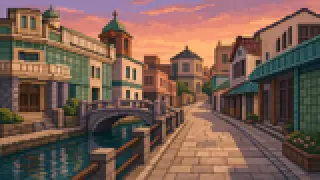
Saigo Takamori and Okubo Toshimichi, two men who led the Meiji Restoration, were born in the very same neighborhood of Kagoshima City. This article traces that neighborhood, Kajiyamachi, through to Shiroyama, the hill where Saigo made his last stand during the Satsuma Rebellion.
A striking share of the Satsuma domain figures active from the late Edo period through the Meiji Restoration came from one small corner of castle-town Kagoshima: Kajiyamachi. The novelist Shiba Ryotaro once described the neighborhood by saying it was, in effect, as if one town alone had produced everything from the Meiji Restoration through the Russo-Japanese War.
One of that Restoration's central figures, Saigo Takamori, spent his final five days and met his end at Shiroyama. This article follows the story from his birthplace to that final hill, along with how each site is officially designated today, and also covers a third thread: the independent mission that sent Satsuma students to Britain ahead of the shogunate itself.
Kajiyamachi, birthplace of Restoration leaders
This neighborhood produced Saigo Takamori, Okubo Toshimichi, and other Restoration-era Satsuma figures, and today centers on the Ishin Furusatokan museum.
Kajiyamachi
This neighborhood along the Kotsuki River produced Saigo Takamori and his brother Tsugumichi, Okubo Toshimichi, and a striking number of other Satsuma domain figures active from the Meiji Restoration through the Russo-Japanese War era. The novelist Shiba Ryotaro is often quoted for his remark that the neighborhood had, in effect, carried out on its own everything from the Restoration through the Russo-Japanese War.
Ishin Furusatokan and the Ishin Furusato-no-Michi walking route
Ishin Furusatokan, located in Kajiyamachi, is a history museum that uses video, dioramas, and animatronic figures to tell the story of late-Edo Satsuma and the Meiji Restoration. Around the museum, a roughly 440-meter route called Ishin Furusato-no-Michi runs along the left bank of the Kotsuki River, passing the birthplace of Saigo Takamori and Tsugumichi and the childhood home of Okubo Toshimichi, along with a stone inscribed with the Iroha uta, a poem used as the basis of Satsuma domain education, and information panels that include Braille.
Source:Kagoshima City tourism site, the Ishin Furusato-no-Michi heritage walk
Shiroyama, where the Satsuma Rebellion ended
In 1877, the Satsuma army made its final stand at this hill during the Satsuma Rebellion, and Saigo Takamori died here.
The Satsuma Rebellion and the siege of Shiroyama
The Satsuma Rebellion began in February 1877 with an uprising by students of the private academies Saigo had founded. The Satsuma army marched out of Kagoshima and fought across Kyushu, but was effectively broken up by August. Saigo and his remaining followers crossed the mountains back toward Kagoshima, reentered the city on September 1, and dug in at Shiroyama. Government forces surrounded the hill, and the rebellion ended in a final assault on September 24.
The site of Saigo Takamori's death and Saigo's Cave
Besieged at Shiroyama, Saigo Takamori is said to have spent his final five days in this cave alongside Kirino Toshiaki and other leaders of his private academies before he was killed. On September 24, 1877, as he ran down the ravine of Iwasakidani under government bombardment, he was struck in the hip and thigh, and a fellow officer, Beppu Shinsuke, is said to have delivered the final blow, kaishaku, ending his life at age 49. Shiroyama is a nationally designated historic site, while the cave and the death site itself carry city-level designation.
Why did Satsuma send students to study in Britain
Ahead of the shogunate itself, Satsuma domain sent 19 students to Britain in 1865 to build the expertise its modernization would need.
Satsuma Student Mission
Ahead of the shogunate itself, Satsuma domain independently sent 19 students to Britain in 1865, an undertaking now known as the First Satsuma Student Mission to Britain. The group studied in London, and after returning home, many went on to serve as officials and business leaders in the new Meiji government.
Source:Wikipedia, First Satsuma Student Mission to Britain (薩摩藩第一次英国留学生)Kagoshima City official tourism, Young Figures of Satsuma (若き薩摩の群像)
Terashima Munenori
Matsuki Koan, who led the 1865 Satsuma mission to Britain, later changed his name to Terashima Munenori and went on to serve as the Meiji government's Minister of Foreign Affairs. Matsuki had already traveled to Europe once before, in 1862, as part of the shogunate's own Bunkyu mission, before leading Satsuma's separate mission three years later.
Source:Wikipedia, First Satsuma Student Mission to Britain (薩摩藩第一次英国留学生)
FAQ
What was the relationship between Saigo Takamori and Okubo Toshimichi?
They grew up together as childhood friends in Kajiyamachi and jointly led the movement to overthrow the shogunate and establish the Meiji government. They later split over the new government's direction, and by 1877, with Okubo at the center of that government, the Satsuma Rebellion effectively pitted the two former friends against each other.
Does the Kajiyamachi neighborhood still exist today?
Yes, it remains an active neighborhood name in Kagoshima City, and it is where visitors find Ishin Furusatokan and the birthplaces of Saigo Takamori, Saigo Tsugumichi, and Okubo Toshimichi.
Why is it called the "southwestern" war?
The name refers to location: Kyushu sits southwest of Tokyo, the new government's seat. Several shizoku (former-samurai) uprisings had already broken out elsewhere, including the Saga Rebellion, but the Satsuma Rebellion was the largest and the last of them, with combined casualties on both sides estimated at around 13,000 dead.
How certain are the details of Saigo Takamori's death?
The commonly told account rests on the testimony of survivors, including the officer said to have delivered the final blow, but since most of the people directly involved died that day, some details rely on secondhand recollection. The broad outline, his death on September 24 at Shiroyama, is treated as solid historical fact, supported by multiple historic-site designations and records.
Did the shogunate allow Satsuma to send these students?
No. The shogunate did not officially lift its ban on Japanese citizens traveling abroad until 1866, so Satsuma's 1865 mission went ahead on the domain's own authority, before that ban was lifted.
Sources & references
- Kagoshima City tourism site, Ishin Furusatokan
- Kagoshima City tourism site, the Ishin Furusato-no-Michi heritage walk
- Kagoshima City tourism site, remembering Saigo at Shiroyama, the last battlefield of the Satsuma Rebellion
- Kagoshima City tourism site, Saigo's Cave
- Wikipedia, First Satsuma Student Mission to Britain (薩摩藩第一次英国留学生)
- Kagoshima City official tourism, Young Figures of Satsuma (若き薩摩の群像)