Sengan-en and the Shuseikan Project: Kagoshima's World Heritage Sites
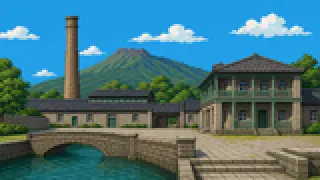
The Sites of Japan's Meiji Industrial Revolution, inscribed as a UNESCO World Heritage property in 2015, includes three component sites in Kagoshima City. All three trace back to the Shuseikan project, an ambitious industrial program that Shimazu Nariakira built on the grounds of Sengan-en.
In the closing years of the Edo period, Satsuma domain lord Shimazu Nariakira built a cluster of factories at the Iso district of Sengan-en, combining shipbuilding, ironworking, textile spinning, and glassmaking under one program. Known as the Shuseikan project, it is regarded as a forerunner of Japan's industrial modernization.
This article covers the three Kagoshima City sites that made up part of that World Heritage listing, and Sengan-en, the garden where the project itself took shape, all with sources.
Kagoshima's three component sites of the World Heritage listing
Kagoshima City's three component sites are the Old Shuseikan, the Terayama charcoal kiln, and the Sekiyoshi sluice, each with its own role.
The Old Shuseikan
This site combines the ruins of a reverberatory furnace with the Old Shuseikan Machine Factory, today used as the Shoko Shuseikan museum, and the Former Kagoshima Spinning Mill Engineer's House, known locally as the Foreigners House. Together they represent the core of the factory complex built for the Shuseikan project; the reverberatory furnace itself was built to melt iron for casting cannon.
Source:Kagoshima City, "Kagoshima Area's Component Assets" (鹿児島エリアの構成資産)
The Terayama charcoal kiln ruins
Shimazu Nariakira had this charcoal kiln built in 1858 to increase production of white charcoal, the fuel the Shuseikan project needed. Drawing on charcoal-making techniques from the Kishu region, now part of Wakayama Prefecture, it was built on a nationally significant scale on Mount Terayama, chosen for its abundant oak and chinquapin trees, and supplied fuel used for both the reverberatory furnace and Satsuma kiriko glassmaking. Heavy rain in 2019 collapsed part of its stone retaining wall, and restoration work is still ongoing.
Source:Kagoshima City, "Kagoshima Area's Component Assets" (鹿児島エリアの構成資産)
The Sekiyoshi sluice
This is the remnant of a water channel that carried water from the Inari River to the Iso district, providing the power needed to drive waterwheel-operated bellows at the smelting furnaces. Running roughly seven to eight kilometers (sources vary) over welded tuff bedrock, its remarkably gentle, consistent gradient reflects the advanced surveying and civil-engineering skill available at the time. A visitor center opened at the site in 2018, staffed by volunteer guides on weekends and holidays.
The Shuseikan project, and the garden that hosted it
The Shuseikan project was Shimazu Nariakira's push into shipbuilding, ironworking, spinning, and glass, based at Sengan-en.
The Shuseikan project
Building on glassmaking that had begun under the tenth domain lord, Shimazu Narioki, the eleventh lord, Shimazu Nariakira, launched the Shuseikan project as a combined push into shipbuilding, ironworking, textile spinning, and glass, all aimed at strengthening the domain. When the Dutch physician Johannes Pompe van Meerdervoort visited in 1858, he recorded that more than one hundred people were at work in the Iso factory complex alone. Historians regard it as one of Japan's earliest industrial factory clusters.
Sengan-en
Built along the Iso coastline as a villa garden for the Shimazu lords of Satsuma domain, Sengan-en is known for borrowing Sakurajima as its artificial hill and Kinko Bay as its pond, creating a sweeping, borrowed-scenery landscape. The Shuseikan factory complex itself was built on a corner of these grounds, and the adjoining Shoko Shuseikan museum today displays Satsuma kiriko glassware and historical materials from the project. The garden is now a nationally designated Place of Scenic Beauty and is open to visitors year round.
FAQ
Is the Sites of Japan's Meiji Industrial Revolution listing specific to Kagoshima?
No. The 2015 listing covers a much wider set of iron and steel, shipbuilding, and coal industry sites spread mainly across Kyushu and Yamaguchi Prefecture but reaching into several other prefectures as well, all inscribed together as a single World Heritage property. Kagoshima's three sites are only part of that larger whole.
What year was the site inscribed as World Heritage?
July 8, 2015. In 2025 the listing marked its tenth anniversary, and Kagoshima City and related organizations held events to commemorate it.
Does the original reverberatory furnace building still stand?
What survives is mostly underground remains, such as the furnace foundation, rather than the operating-era structure itself. The Old Shuseikan Machine Factory building that visitors can tour today, now the Shoko Shuseikan museum, was actually built later than the furnace.
Can visitors still see the Terayama charcoal kiln in person?
Heavy rain in 2019 collapsed part of the kiln's stone retaining wall, and the kiln itself and the fallen stonework are now fenced off while restoration continues. The surrounding nature trail, however, remains open to walkers.