Nagamachi Samurai District: Walls, a Canal, and the Nomura House
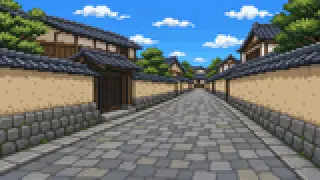
The Nagamachi Samurai District once housed mid- and upper-ranking Kaga Domain samurai. Here is the story behind its surviving earthen walls and stone lanes, the canal that runs behind them, and daily life as preserved at the Nomura House, with sources.
The Nagamachi Samurai District preserves a row of residences once occupied by mid- and upper-ranking Kaga Domain samurai, its earthen walls and stone-paved lanes still intact today. The Onoshu Canal running behind those walls is considered one of the oldest of Kanazawa's 55 surviving waterways.
This article covers what makes Nagamachi's streetscape distinctive, the role played by the Onoshu Canal, and the traces of daily life still visible at the residence of the Nomura family, Kaga Domain retainers, with sources.
What kind of streetscape survives in Nagamachi?
Low earthen walls line stone-paved lanes, wrapped every winter in straw matting to guard against snow and frost.
Earthen walls and stone-paved lanes
The Nagamachi Samurai District preserves a row of residences once belonging to mid- and upper-ranking Kaga Domain samurai. Its earthen walls are noticeably lower than the walls found around temples and noble estates in Kyoto or Nara, and together with its stone-paved lanes, they still capture the atmosphere of an Edo-period samurai quarter.
Komo-gake, a winter tradition
Every winter, Nagamachi's earthen walls are wrapped in straw matting called komo to protect them from snow and frost. This practice, komo-gake, takes place around November each year and, alongside yukitsuri in the gardens, has become one of the seasonal rituals that mark winter's arrival in Kanazawa.
What is the Onoshu Canal running behind the residences?
It's Kanazawa's oldest surviving canal, once used to float timber and to help build Kanazawa Castle itself.
The Onoshu Canal and the building of Kanazawa Castle
The Onoshu Canal, running alongside Nagamachi's earthen walls, is considered the oldest of the 55 canals still flowing through Kanazawa today. It was once used to float timber downstream, and it played a role in supplying building materials during the construction of Kanazawa Castle itself. Today the area near the "Nagamachi Ichi-no-hashi" bridge is a popular photo spot along its banks.
What does the Nomura House reveal about mid-rank samurai life?
Retainers of the Maeda family since 1583, the Nomura family held 1,200 koku and left behind a well-preserved residence.
The Nomura family's pedigree and rank
The Nomura family served as direct retainers from the moment Maeda Toshiie moved into Kanazawa Castle in 1583, with their stipend eventually rising from 1,000 to 1,200 koku across eleven generations, during which family members held posts including command of the mounted guard corps. The residence preserved in the Nagamachi Samurai District is a rare surviving record of how a mid-ranking samurai family of that era actually lived.
Kano-school sliding-door paintings and a Michelin-starred garden
The Nomura House displays sliding-door paintings by the Kano school, official painters to the Kaga Domain, alongside weapons and armor passed down through the family. Its garden combines formal design with a naturalistic touch, earning two stars in the 2009 Michelin Green Guide Japan and a third-place ranking in a 2003 American gardening magazine's survey of Japanese gardens.
FAQ
Were the samurai in Nagamachi all high-ranking?
Rank varied with the size of each residence, spanning mid- to upper-rank samurai. Some families, like the Nomura, held stipends over 1,000 koku, while others kept more modest homes, and the difference in status often shows in how each street was laid out.
Why are Nagamachi's earthen walls built so low?
The exact reason isn't settled, but unlike the earthen walls around temples and noble estates in Kyoto or Nara, Nagamachi's walls are thought to reflect a quarter built more for everyday living than as a defensive stronghold.
Is the Onoshu Canal still in use today?
Yes. It still flows through the city as a working waterway, and beyond Nagamachi, its gentle current is a familiar, well-loved feature throughout central Kanazawa.
Are there other samurai residences open to the public besides the Nomura House?
Yes. Nagamachi is also home to the Kanazawa City Ashigaru Museum, which relocated and preserved two homes once belonging to ashigaru, or foot soldiers, and opens them to the public for free. Comparing them with the Nomura House makes the gap between ranks easy to see firsthand.