Little Kyoto? Kanazawa's Nicknames and Local Names, With Sources
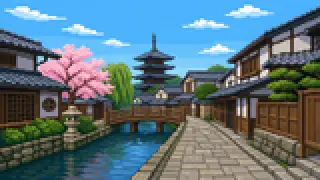
From the Showa era into the Heisei era, Kanazawa was widely called "Little Kyoto," but since 2008 the city itself has stopped promoting that label. Meanwhile, homegrown nicknames are everywhere: Omicho Market is "Omicho," and the 21st Century Museum of Contemporary Art is "21bi" or "Marubi." Here is where each name comes from, with sources.
"Little Kyoto" is a nationwide label applied to cities whose streetscapes and culture resemble Kyoto's, and Kanazawa was long considered one of its leading examples. In 2008, however, the city withdrew from the association behind that label, the Japan League of Little Kyoto Towns, choosing instead to promote its own distinct history and culture.
At the same time, Kanazawa has plenty of nicknames that locals use every day. This article traces the origin and current standing of "Little Kyoto," plus the homegrown nicknames for Omicho Market and the 21st Century Museum of Contemporary Art, with sources.
Kanazawa was once "Little Kyoto." What changed?
Shared gardens and streetscapes earned Kanazawa the label, but the city dropped it officially in 2008.
Why Kanazawa was called "Little Kyoto"
Kanazawa was once widely known as "Little Kyoto." The label is usually explained by features it shares with Kyoto: gardens that shift with the seasons, streetscapes built around temples, stone lanterns, and paved lanes, plus traditional crafts and culture woven into daily life. Even so, Kanazawa's culture grew out of the samurai and merchant culture of the Kaga Domain rather than Kyoto's court culture, giving it a distinct history of its own.
Source:Little Kyoto, meant as a compliment, is actually a taboo word in Kanazawa
Leaving the Japan League of Little Kyoto Towns
"Little Kyoto" also functioned as a label tied to the Japan League of Little Kyoto Towns, founded in 1985 for cities with Kyoto-like streetscapes. Kanazawa was a member from the League's founding but withdrew in 2008. City officials reportedly revised their promotional strategy, moving away from selling "Kyoto-likeness" and toward showcasing Kanazawa's own distinct history and culture instead.
Source:Where is "Little Kyoto"? Explaining why Kanazawa earned that name, from history and culture
What do locals call the market and the museum?
Omicho Market is nicknamed "Omicho," and the 21st Century Museum is "21bi" or "Marubi."
Omicho Market, known as "Omicho"
Omicho Market began in 1721 as an official supplier of food to the Maeda family, rulers of the Kaga Domain. For roughly 300 years since, it has fed the people of Kanazawa, but locals almost always call it by its nickname, "Omicho," rather than its full name.
Source:Omicho Market: 300 years as Kanazawa's kitchen, still supporting daily life today
The 21st Century Museum's nicknames, "21bi" and "Marubi"
The 21st Century Museum of Contemporary Art, Kanazawa, opened in 2004, and locals commonly shorten its name to "21bi." Because the glass building looks like a round disc from any angle, it also carries the nickname "Marubi," roughly "round museum." Having two nicknames stick to a single building is itself a distinctly Kanazawa habit.
FAQ
Are there other cities in Japan called "Little Kyoto"?
Yes. The Japan League of Little Kyoto Towns includes castle towns and temple towns from across the country, and Kanazawa was once one of its member cities. "Little Kyoto" isn't a label unique to one town; it's a kind of regional brand used in many places.
Who designed the 21st Century Museum's building?
The architecture firm SANAA, led by Kazuyo Sejima and Ryue Nishizawa, designed it. The open, circular glass design is said to be meant as a park-like space that anyone can wander into freely, even as it keeps each gallery self-contained.
Does Omicho Market sell anything besides fish and produce?
Yes. Seafood and produce stalls form the core of the market, but flower shops and clothing stores line its lanes too, making it a hub for daily life well beyond food.
Which part of Kanazawa did "Little Kyoto" originally describe?
It wasn't tied to one specific spot. The label was usually applied to the city's overall streetscape, including the temple cluster on Teramachi Hill and districts like the Higashi Chaya District, functioning as shorthand for Kanazawa's image as a whole.
Where does the name "Kanazawa" itself come from?
Local legend credits a man named Imohori Togoro, who is said to have washed wild yams in a spring here and found the water full of gold flakes. The spot became known as "the marsh where gold was washed," kanazawa, giving the city its name. The spring said to be the legend's setting, Kinjo Reitaku, still exists today near Kanazawa Shrine, beside Kenrokuen.