The Maeda Clan and Kaga Domain: Building Kaga Hyakumangoku
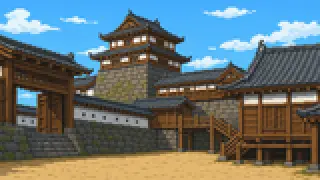
The Kaga Domain, ruled by the Maeda clan, held the largest domain of any outside lord throughout the Edo period. From Maeda Toshiie's rise to power, to the moment its famous kokudaka of a million koku was formally set, to fifth lord Maeda Tsunanori's push for scholarship, here is its story, with sources.
The Kaga Domain governed 1,192,760 koku across the three provinces of Kaga, Noto, and Etchu, making it the wealthiest domain of any tozama, or outside, lord throughout the Edo period. Its founder, Maeda Toshiie, rose to power serving Oda Nobunaga and then Toyotomi Hideyoshi, and his descendants governed the region all the way to the Meiji Restoration.
This article explains how Maeda Toshiie laid the groundwork for what became known as Kaga Hyakumangoku, when that famous kokudaka was formally set, and what fifth lord Maeda Tsunanori achieved through his cultural policies, with sources.
How did Maeda Toshiie lay the groundwork for Hyakumangoku?
He rose from an Oda vassal to a Toyotomi-era lord ruling Noto, Kaga, and Etchu, becoming one of the Five Regents.
Maeda Toshiie's rise to power
Maeda Toshiie was born in Owari Province and served Oda Nobunaga from a young age. Nobunaga granted him the whole of Noto Province, and after Nobunaga's death, Toshiie served Toyotomi Hideyoshi through campaign after campaign, eventually ruling Kaga and Etchu in addition to Noto, building a domain that spanned three provinces. Late in life, he was named one of the Five Regents who oversaw decision-making under the Toyotomi regime.
Source:Maeda Toshiie, the man who built Kaga Hyakumangoku: a Sengoku warlord profile
Toshiie's death and the tension it left behind
Maeda Toshiie died in 1599, and his eldest son Toshinaga succeeded him. Relations between the Maeda family and Tokugawa Ieyasu grew tense almost immediately afterward, and the crisis was defused only when Toshinaga's mother, Hoshun-in, known as Matsu, went to Edo as a hostage. How the family handled this early crisis is often credited with preserving the domain that would later be known as Kaga Hyakumangoku.
When was the "million koku" figure actually set?
An official 1634 land grant to third lord Maeda Toshitsune fixed it at 1,192,760 koku, the largest of any outside lord.
The 1634 land grant and 1,192,760 koku
In August 1634, third shogun Tokugawa Iemitsu issued an official land grant to third domain lord Maeda Toshitsune, formally fixing the nominal kokudaka across Kaga, Etchu, and Noto at 1,192,760 koku. This figure was the largest held by any outside lord throughout the Edo period, and the label "Kaga Hyakumangoku," Kaga's million koku, is generally dated to this moment.
Source:Kaga Domain
An unusual standing among outside lords
Despite having no blood ties to the Tokugawa family, the Kaga Domain was treated as a major domain second in status only to the shogun's own Gosanke branch families. Spanning Kaga, Noto, and Etchu, far from Edo in the Hokuriku region, it maintained a stable relationship with the shogunate through obligations like alternate attendance in Edo and construction duty on Edo Castle.
Source:The Kaga Domain: ruled by the prestigious outside-lord Maeda family
What did Maeda Tsunanori actually accomplish?
Fifth lord Maeda Tsunanori ruled for 80 years, promoted scholarship and relief programs, and adopted Kaga-Hosho Noh.
An 80-year reign devoted to scholarship
Fifth domain lord Maeda Tsunanori was born in 1643 and ruled for a full 80 years until his retirement in 1723, before dying the following year, in 1724, at age 82. He placed great value on scholarship, amassing books and documents that formed the basis of the Sonkeikaku Bunko archive, while also pushing forward land reclamation and organizing the tomura system that coordinated villages across the domain, building out the administrative foundations of Kaga rule.
The Kanbun famine and relief for the poor
Tsunanori's reign also weathered crises, including the Kanbun famine that struck the Hokuriku region broadly. He established facilities to support people in dire poverty, among other efforts to stabilize daily life across the domain, and this record is said to have earned him treatment from fifth shogun Tokugawa Tsunayoshi on a level usually reserved for the Gosanke branch families.
Kaga-Hosho Noh, the tradition Tsunanori helped spread
The Maeda family originally favored the Konparu school of Noh theater, but under fifth lord Maeda Tsunanori, the domain adopted the Hosho school instead, at the request of shogun Tokugawa Tsunayoshi, who favored it himself. In 1686, Tsunanori performed the play "Sakuragawa" before the shogun at Edo Castle, and the Hosho school became so deeply rooted afterward, with even craftsmen humming its chants at work, that Kanazawa earned the saying "Noh songs fall from the sky." Known today as Kaga-Hosho, this Noh tradition survives in Kanazawa to this day.
FAQ
Where is Maeda Toshiie enshrined today?
At Oyama Jinja Shrine in Kanazawa, alongside his wife, Matsu. Former Kaga Domain retainers founded the shrine in 1873 to preserve his legacy, and its gate is known for blending Japanese, Chinese, and Western architectural styles, complete with inlaid stained glass.
What was the Kaga Sodo incident?
It's the general name for a string of internal power struggles within the Kaga Domain, one of which is said to have involved an attempted assassination of the domain lord. Even in as wealthy a domain as Kaga, internal rivalries could escalate into major incidents.
What exactly does the 1,192,760-koku figure represent?
It's the combined nominal kokudaka of Kaga, Noto, and Etchu. Thanks to land reclamation, the domain's actual harvest yield is believed to have exceeded this nominal figure, and that gap between nominal and real output helped underwrite Kaga's financial strength.
Did later lords continue Tsunanori's legacy?
Yes. Twelfth lord Maeda Narinaga was involved in naming Kenrokuen in 1822, and thirteenth lord Maeda Nariyasu planted the Karasaki Pine that still stands in the garden today, showing that cultural patronage continued well beyond Tsunanori's own reign.
What Kaga Domain-era culture can still be seen in Kanazawa today?
Kaga Tobi, the daimyo firefighting brigade that once protected the domain's Edo residence, brought its techniques to Kanazawa after former domain firefighters relocated there following the Meiji Restoration, and its ladder-top acrobatics are still performed today at events like the New Year's dezome-shiki.
Sources & references
- Maeda Toshiie, the man who built Kaga Hyakumangoku: a Sengoku warlord profile
- Why was the Kaga Domain the only one to reach a million koku in the Edo period? What the Maeda family tree reveals about its lords' efforts
- Kaga Domain
- The Kaga Domain: ruled by the prestigious outside-lord Maeda family
- Maeda Tsunanori, who ruled for 80 years: what did the fifth lord achieve to elevate Kaga Hyakumangoku?
- What is Kaga-Hosho? Kanazawa Noh Theater Association