Kanazawa's Hard-to-Read Place Names, With Sources
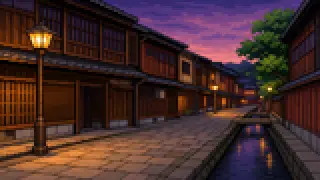
Kazue-machi. Hikoso. Kanaiwa. Walk through Kanazawa and you'll run into place names that are nearly impossible to read from the kanji alone. Still used as official addresses today, these names trace back to Kaga Domain samurai households and centuries-old Chinese sayings.
Most hard-to-read place names trace back to a person's name or an old saying, yet they've survived every round of address reorganization since the Meiji era. Kanazawa has quite a few of them.
This article covers names with clearly documented origins, including Kazue-machi, famous as the first old town name in Japan ever officially revived, explained through both their readings and their history.
Place names that are simply a samurai's name
Kazue-machi and Hikoso are both named directly after the Kaga Domain samurai who once lived there.
Kazue-machiKazue-machi
Kazue-machi is written with characters that would ordinarily be read "Shukei-machi," but the correct reading is Kazue-machi. The name comes from Toda Kazue, a Kaga Domain samurai known for his role in the Siege of Osaka, whose residence once stood on this spot. A 1970 address reorganization erased the name, folding it into "Owari-cho 2-chome," but in 1999 Kazue-machi became the first old town name in Japan to be officially restored.
Source:Can you read Kanazawa's hard-to-read place names? Kazue-machi, Hikoso, Kanaiwa, and more
Hikoso-machiHikoso-machi
Hikoso-machi looks like it should read "Hikozo-machi," but the correct reading drops the final consonant, becoming Hikoso. The name sits in central Kanazawa near Omicho Market, and it is said to come from Fuwa Hikozo, a senior retainer of the Kaga Domain whose family once lived on the site, one more case of a samurai's own name surviving intact as a place name.
Source:Can you read Kanazawa's hard-to-read place names? Kazue-machi, Hikoso, Kanaiwa, and more
Place names born from sayings and legends
Kanaiwa, Shijima, and Kagatsume all take their reading or origin from a Chinese saying or a local legend.
KanaiwaKanaiwa
Written with characters that usually read "Kanaishi," this district is actually read Kanaiwa. When the towns of Ono and Miyakoshi merged in the Edo period, the name is said to have been chosen in homage to a phrase from the Chinese classic Book of Han, describing an unbreakable friendship as being "as firm as metal and stone," a wish for an equally solid union. The district sits on the coast near Kanazawa Port.
Source:Can you read Kanazawa's hard-to-read place names? Kazue-machi, Hikoso, Kanaiwa, and more
ShijimaShijima
Written with characters that literally mean "four hundred thousand," which would normally read "yonjuman," this district is instead read Shijima. Local legend traces the name to a tale of the Amida Buddha describing his journey from the kingdom of Baekje as four hundred thousand ri, an impossibly long distance, turning a number into an oddly-read place name.
Kagatsume-choKagatsume-cho
Written with characters for "mosquito" and "claw," this district is read Kagatsume-cho. "Kaga" here is thought to be an old word for grassy or turf-covered land, and Edo-period documents record the same place written with different characters meaning "Kaga-claw" instead, a variant spelling that survives today in a same-named district in neighboring Tsubata Town.
FAQ
Has Kanazawa revived any other old town names besides Kazue-machi?
Yes. Kazue-machi's 1999 revival was only the first step; the city has continued reviving old town names since, and this pioneering effort is often credited with inspiring similar name-revival movements in other Japanese cities.
Why is Korinbo read that way?
Korinbo takes its name from a Mt. Hiei monk who married into a local merchant family there; he is said to have compounded eye medicine and presented it to Kaga Domain lord Maeda Toshiie. Because the reading is common local knowledge, it isn't considered as difficult as the other names here.
Is the name Kanaiwa still used today?
Yes. Beyond the address itself, "Kanaiwa" survives in the name of a local elementary school, a park, and various shop names, remaining a familiar part of daily life for residents.
Why do hard-to-read place names happen in the first place?
Most simply preserve the circumstances of the era when they were named, whether a person's name or an old legend. Readings are rarely standardized after the fact, so even as fewer people know the backstory, the spelling and reading stay locked in place, and the name only gets harder to guess with time.