Kanazawa's Three Chaya Districts: Higashi, Nishi, and Kazue-machi
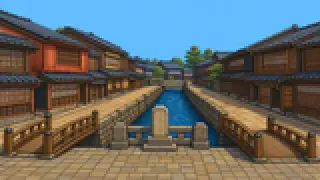
The Higashi Chaya District, Nishi Chaya District, and Kazue-machi Chaya District are Kanazawa's three surviving teahouse districts, each licensed by the Kaga Domain. Here is how each came to be, what makes each one distinct, and the writer linked to one of them, with sources.
Kanazawa still preserves three teahouse districts: the Higashi Chaya District, the Nishi Chaya District, and the Kazue-machi Chaya District. Higashi and Nishi were both officially licensed by the Kaga Domain in 1820, while Kazue-machi followed later, gaining recognition as a chaya district in the Meiji era.
This article explains how all three districts came to be, what sets each streetscape apart, and the history behind Kazue-machi's connection to the novelist Izumi Kyoka, with sources.
When and how did the chaya districts come to be?
In 1820, with 12th lord Maeda Narinaga's approval, scattered teahouses were consolidated into Higashi and Nishi.
The 1820 licensing of the Higashi and Nishi districts
Kanazawa's chaya districts were born in 1820, with the approval of 12th domain lord Maeda Narinaga. Teahouses once scattered across the castle town were consolidated under official Kaga Domain license into two new districts, one east of the Asano River (Higashi) and one west of the Sai River (Nishi). At its peak, the Higashi Chaya District alone is said to have held more than 90 teahouses.
Source:Kanazawa's chaya districts, with a history dating back to the domain era
What sets the Higashi and Nishi districts apart?
Higashi preserves the nationally protected Shima teahouse, while Nishi is a smaller district tied to a novelist.
Shima and the kimusuko lattice of the Higashi district
The Higashi Chaya District preserves Shima, a teahouse built in the same year the district itself was founded, 1820. Its ground floor uses a delicate wooden lattice called kimusuko, while the upstairs functioned as a reception room. Preserved essentially as it originally stood, it survives today as a rare, fully intact example of chaya architecture and holds status as a National Important Cultural Property.
The Nishi district and novelist Shimada Seijiro
The Nishi Chaya District was licensed the same year as Higashi, in 1820, but it is smaller in scale and keeps a quieter profile on the west bank of the Sai River. It is linked to novelist Shimada Seijiro, who spent part of his boyhood at a teahouse called Yoshiyoneryo there; that same building today houses the Nishi Chaya Museum, which recreates a teahouse reception room from that era.
Source:The Nishi Chaya District that produced the celebrated novelist Shimada Seijiro
The Kazue-machi Chaya District, born along the Asano River
Licensed in 1869, the youngest of the three districts is known for its riverside setting and ties to Izumi Kyoka.
The founding of the Kazue-machi Chaya District
The Kazue-machi Chaya District received official recognition later than Higashi and Nishi, in 1869. Its buildings line the bank of the Asano River from the foot of the Asanogawa Ohashi bridge, and the sight of its wooden facades reflected in the water is counted among Kanazawa's signature views.
Source:Kazue-machi (Kanazawa City)
Izumi Kyoka and Kuragari-zaka slope
Novelist Izumi Kyoka was born in neighboring Shimonoshin-machi, and Kazue-machi was part of his route to elementary school as a boy. At the foot of Kuragari-zaka, the stone-stepped slope leading up from Kazue-machi, stands a cherry tree named "Teruha-zakura" after his novel "Teriha Kyogen," a quiet reminder of how patrons once slipped up that slope toward the teahouses, out of public view.
Source:Kuragari-zaka: the stone-stepped slope from Kazue-machi to the Izumi Kyoka Memorial Museum
FAQ
Does "ochaya" in these districts just mean a teahouse serving tea?
No. An ochaya in this context is a venue where geisha entertain guests with traditional song and dance, distinct from an ordinary tea shop or restaurant. Kanazawa's three districts still maintain active geisha who perform in shows like the annual Kanazawa Odori.
Which of the three districts draws the most visitors?
The Higashi Chaya District is generally the largest and has the most souvenir shops and restaurants, so it tends to draw the heaviest visitor traffic. The Nishi and Kazue-machi districts, by comparison, keep a quieter, more understated atmosphere.
Are there other famous writers associated with Kanazawa besides Izumi Kyoka?
Yes. Kanazawa honors Izumi Kyoka alongside Tokuda Shusei and Muro Saisei as its "three great writers," each with a dedicated memorial museum in the city. Tokuda Shusei wrote in the naturalist tradition, known for novels like "Arakure" that closely observed the lives of ordinary people.
Are the historic buildings in these districts still working teahouses?
Some remain active teahouses, but many have been converted into sweets shops, craft stores, or small museums open to the public. The lattice facades and street layout are preserved even as what happens inside has changed over time.
Sources & references
- Kanazawa's chaya districts, with a history dating back to the domain era
- Shima, a National Important Cultural Property
- The Nishi Chaya District that produced the celebrated novelist Shimada Seijiro
- Kazue-machi (Kanazawa City)
- Kuragari-zaka: the stone-stepped slope from Kazue-machi to the Izumi Kyoka Memorial Museum