The Three Great Unifiers and Nagoya: Nobunaga, Hideyoshi, Ieyasu
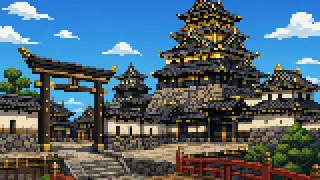
Three of Japan's great unifiers — Nobunaga, Hideyoshi, and Ieyasu — all rose to prominence from Owari, the land that is now Nagoya.
The castle grounds, battlefields, and affiliated shrines and temples where they walked still remain scattered throughout the city.
Here we trace their stories through the keywords that link the three great figures to Nagoya.
The Story Linking the Three Great Unifiers to Owari
Nobunaga's Nagoya-jo base and Okehazama victory, Hideyoshi's Nakamura birthplace, and Ieyasu's castle-building each tie a unifier to Owari — a pride relived every autumn in the Nagoya Festival.
Oda Nobunagaおだのぶなが
A Sengoku-period warlord of Owari who expanded his power base from Nagoya Castle (Nagoya-jo) and other strongholds in his early years. His decisive victory over Imagawa Yoshimoto at the Battle of Okehazama propelled him onto the national stage and opened the road to unification. Numerous tales from his Nagoya-connected youth — including the 'fool' (utsuke) reputation he bore as a young man — are still told today.
Source:名古屋観光情報サイト Nagoya Info
Toyotomi Hideyoshiとよとみひでよし
Traditionally said to have been born in what is now Nakamura Ward, he rose from foot soldier to Regent (Kanpaku) and Grand Minister of State — a legendary story of self-made success. The area believed to be his birthplace is home to Toyokuni Shrine and has been developed as Nakamura Park. He is a source of immense local pride as a symbol of social mobility.
Source:名古屋観光情報サイト Nagoya Info
Tokugawa Ieyasuとくがわいえやす
Although born in Mikawa province, he built Nagoya Castle in Owari and installed his ninth son Yoshinao as the first lord of the Owari domain, thereby founding the Owari Tokugawa clan — foremost among the Three Gosanke branch houses. This act gave Nagoya the foundation it needed to develop into a castle town of 620,000 koku. He is the man who laid the groundwork for Nagoya as a city.
Source:名古屋観光情報サイト Nagoya Info
Nagoya-jo (Nagoya Castle, old name)なごや
A castle that stood on or near the site of the later Nagoya Castle, used for a time as a base by the young Nobunaga. It is read both 'Nagoya' and 'Nago-no,' and is considered the origin of the place name Nagoya. The castle lost its role as the new castle town took shape, but it remains essential to any account of Nobunaga's youth.
Source:名古屋市 公式ウェブサイト
Okehazamaおけはざま
The site of the battle in 1560 (Eiroku 3) in which Nobunaga ambushed and defeated the vastly larger army of Imagawa Yoshimoto. The area spans parts of Midori Ward and Toyoake City, and the old battlefield remains as a historical site. The stunning upset — a small force overturning overwhelming odds — launched Nobunaga's reputation across the country.
Source:名古屋市 公式ウェブサイト
Nagoya Festivalなごやまつり
Nagoya's largest annual festival, held every autumn, whose centrepiece is the 'Hometown Heroes Procession' (Kyodo Eiketsu Gyoretsu) — a parade through the city centre in which participants dressed as the three great unifiers march in splendor. Lords and ladies, Nobunaga, Hideyoshi, Ieyasu, and the samurai and court ladies who accompany them process in pageantry, carrying forward the city's pride in the land that produced all three.
Source:名古屋観光情報サイト Nagoya Info
FAQ
Of the three great unifiers, which ones were actually born in Nagoya?
Nobunaga was born in Owari (present-day western Aichi Prefecture), and Hideyoshi is traditionally said to have been born in what is now Nakamura Ward. Ieyasu was born in Mikawa (eastern Aichi) and is not strictly a Nagoya native, but his construction of Nagoya Castle gives him an indelible connection to the city.
If I want to visit sites connected to all three great unifiers, where should I start?
Linking Nakamura Park (associated with Hideyoshi's birthplace), the Okehazama battlefield (where Nobunaga achieved his breakthrough), and Nagoya Castle (built by Ieyasu) traces the stories of all three men through geography. In autumn, the Nagoya Festival's heroes' procession is an additional highlight not to be missed.