Nagoya's Hard-to-Read Place Names: Chikaramachi, Gokiso, Irinaka
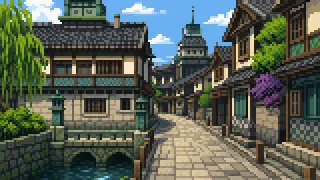
Can you read '御器所' as 'Gokiso'? Nagoya is home to a remarkable number of place names whose kanji give no obvious clue to their pronunciation.
Place names rooted in the castle town's street grid, old manorial estates, and the natural terrain are alive and well throughout the city.
Here we work through representative hard-to-read place names in order, pinning down the reading and origin of each.
Hard-to-Read Place Names from the Castle Town and Old Roads
The classic is Gokiso (御器所), joined by Chikaramachi, Irinaka, and Kasumori — names whose kanji offer little hint of how locals actually read them.
Chikaramachi (主税町)ちからまち
A town name said to derive from the personal name (Chikara) of an Owari domain retainer whose residence stood in this area — a part of the samurai-estate district that spread to the east of the castle. Together with Shumokumachi (橦木町) and Shirakabe in the same Higashi Ward, it is cherished as a historic townscape preservation area.
Source:名古屋市 公式ウェブサイト
Gokiso (御器所)ごきそ
Said to derive from a place where earthenware vessels (goki) offered to Atsuta Jingu were fired. The Tsurumai Line has a Gokiso Station, and the name is a classic first-sight misread — guesses like 'Gyokisho' are common among newcomers. Quiz questions habitually put 'Gokisho' among the wrong-answer choices.
Source:名古屋市 公式ウェブサイト
Irinaka (杁中)いりなか
The character '杁' is a kokuji (Japan-made kanji) unique to the Tokai region, denoting a sluice gate or conduit used to lead water into fields; it is virtually unknown outside the region. The name survives in Irinaka Station on the Tsurumai Line, the nearest stop to Nanzan University, and the character itself is the core of the difficulty.
Source:名古屋市 公式ウェブサイト
Kasadera (笠寺)かさでら
An area that developed as the gate-town of Ryufukuji temple, popularly known as Kasadera Kannon — one of the four guardian Kannon temples of Owari. JR's Tokaido Main Line has a Kasadera Station. While the formal temple name is difficult to read, the place name itself is a straightforward 'Kasadera,' and the contrast between the two readings is a charming quirk.
Source:名古屋市 公式ウェブサイト
Kasumori (烏森)かすもり
The distinctive feature here is that the kanji, which would normally be read 'Karasumori,' is contracted to 'Kasumori.' The Kintetsu Nagoya Line has a Kasumori Station, and the reading differs from Karasumori in Shinbashi, Tokyo, making it a deceptively easy trap for those who think they know it.
Source:名古屋市 公式ウェブサイト
Biwajima (枇杷島)びわじま
An area that flourished as a river-crossing and produce-market town along the Shonai River. The JR Tokaido Main Line has a Biwajima Station and the Meitetsu Nagoya Main Line has a Nishi-Biwajima Station. Read 'Biwajima,' the name is easily confused with island-name compounds ending in '-shima' or '-to.' The character '枇杷' (loquat) is itself rarely written correctly, adding a further layer of difficulty.
Source:名古屋市 公式ウェブサイト
Oise (笈瀬)おいせ
An old place name derived from the Oisegawa River (笈瀬川), which once flowed through the western part of the city and is read 'Oise.' The river has largely been culverted, and the name survives only in a road name and parts of a neighborhood address — making it one of the higher-difficulty readings even for locals.
Source:名古屋市 公式ウェブサイト
FAQ
Do place names containing '杁' exist outside Nagoya? And how do you type the character?
Yes. Irigaike in Nagakute City is one nearby example that even has a Linimo station of the same name. On a computer or smartphone, typing 'iri' and converting will bring up the character as a candidate. If it does not appear, you can use the handwriting input function of your IME or look it up by its Unicode code point (U+6741).
What is the most efficient way to memorize hard-to-read place names?
The quickest approach is to start with those that have survived as station names. Tracing the subway, JR, and private-railway route maps pairs readings like Gokiso, Irinaka, and Kasumori with their locations, helping both stick in memory together.