Nagoya Castle: Golden Shachi, Tenka-bushin, and the Restored Palace
The golden shachi dolphins gleaming on its rooftop are Nagoya's ultimate symbol. Nagoya Castle was built to project the full authority of the Tokugawa house.
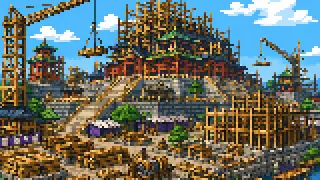
From the tenka-bushin (nationwide castle construction) through wartime destruction and reconstruction, to the completion of the restored Honmaru Goten palace, the castle's history mirrors the arc of Nagoya itself.
Here we tour the highlights using the keywords that define the castle.
Key Terms That Define Nagoya Castle
Built under Ieyasu's tenka-bushin levy and crowned by the golden shachi, the castle's essentials also include the restored Honmaru Goten, Kiyomasa's Stone, and the city-founding Kiyosu-goshi relocation.
Tenka-bushinてんかぶしん
A vast construction project ordered by Tokugawa Ieyasu, beginning around 1610 (Keicho 15), in which roughly twenty western-domain lords including Kato Kiyomasa and Fukushima Masanori divided responsibility for the stone walls and other elements. It is considered one of the defining large-scale enterprises of early-modern Japanese castle construction, intended both as a stronghold against the Toyotomi and as a means of draining the finances of rival lords.
Source:名古屋城 公式ウェブサイト
Kinshachi (Golden Shachi)きんしゃち
A male-female pair of shachi — mythical tiger-headed, fish-tailed creatures — placed on the roof of the great keep, differing slightly in size. Famed as an extravagant decoration proclaiming Tokugawa power and wealth, they are nationally recognized as the 'golden shachi.' As the castle's defining symbol, their image appears on countless souvenirs.
Source:名古屋城 公式ウェブサイト
Honmaru Goten (Main Keep Palace)ほんまるごてん
The palace that served as the domain lord's residence and as the shogun's lodging when traveling to Kyoto, regarded as the finest extant example of early-modern shoin-zukuri architecture. Destroyed in the wartime air raids, it was painstakingly restored using historical records and old photographs, completing in 2018 with its wall paintings reinstated in full glory.
Source:名古屋城 公式ウェブサイト
Kiyomasa-ishi (Kiyomasa's Stone)きよまさいし
One of the largest stones in the castle's stone walls, placed in the masugata (square enclosure) of the main keep and called Kiyomasa-ishi due to the legend that Kato Kiyomasa transported it. It is also said that the actual responsible domain lord may have been a different lord, and the anecdote lives on as one of the great tales attached to this monumental stone.
Source:名古屋城 公式ウェブサイト
Kiyosu-goshiきよすごし
Concurrent with the castle's construction, samurai, temples, shrines, and commoners were relocated wholesale from Kiyosu — previously the heart of Owari — to Nagoya. Beginning around 1610, town names and temples were carried over intact. This massive migration was the founding act from which the city of Nagoya grew.
Source:名古屋市 公式ウェブサイト
Ninomaru Gardenにのまるていえん
A garden attached to the Ninomaru Goten (second citadel palace), which served as the lord's secondary residence, incorporating a dry landscape (karesansui) element within a pond-and-path strolling layout — a classic daimyo garden. Recent improvements have made it a pleasant destination for seasonal scenery, offering a quieter corner away from the bustle of the main keep.
Source:名古屋城 公式ウェブサイト
FAQ
Has the golden shachi ever been stolen?
Records from the Meiji era document a case in which part of the golden shachi was stolen, and after the war there was also an incident in which scales were removed. These episodes are often cited as testimony to just how valuable the ornaments have always been.
What is the recommended route for an efficient visit to Nagoya Castle?
Entering through the main gate, taking time to thoroughly explore the Honmaru Goten palace, then passing through the masugata enclosure to see Kiyomasa-ishi before flowing into the Ninomaru Garden allows you to take in the palace, stone walls, and garden in one comfortable loop.