Yokohama Port Opening: Why Japan's Firsts Began Here
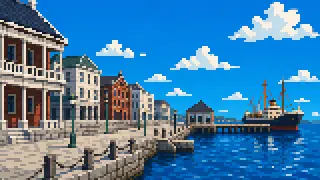
With the opening of its port in 1859 (Ansei 6), Yokohama became Japan's gateway to the wider world. People, goods, and new technologies and culture flowed through, and a remarkable number of Japanese firsts were born here. Let's trace how the port came to open, and the modern pioneers that Yokohama gave rise to.
Yokohama was once just a small village. The opening of its port transformed it, in only a few decades, into one of Japan's leading trading cities.
Railways, gas lamps, modern waterworks, daily newspapers and more—Yokohama is home to a surprising number of things said to be the first in Japan.
An Overview of the Port Opening
Opened in 1859 under the treaties, the port was set not at the busy Kanagawa post town but at the humble Yokohama Village, which grew rich on silk and tea exports.
The Opening of Yokohama PortYokohama kaikou
Under treaties such as the Treaty of Amity and Commerce between the United States and Japan, the ports of Yokohama, Nagasaki and Hakodate opened in 1859, and free trade with foreign countries began. Once a small fishing village, Yokohama took its first steps from here toward becoming one of Japan's leading trading ports.
Source:横浜市「横浜港の歴史(横浜港の開港)」
Starting from a Humble Village
The treaties designated "Kanagawa" on the Tokaido as the port to be opened, but the shogunate avoided the busy post town and instead established the port grounds at Yokohama Village, a humble settlement on the opposite shore. Raw silk and tea were the main exports, and from this grew the districts of Kannai and Kangai.
Source:横浜市「横浜港の歴史(開港と貿易)」
The Japanese Firsts Born in Yokohama
Japan's first railway, gas lamps, modern waterworks, daily newspaper, and Western-style park were all born in Yokohama in the early Meiji era.
Japan's First Railway
In 1872 (Meiji 5), Japan's first railway opened between Shimbashi and Yokohama. The original terminus, "Yokohama Station," stood on the site of present-day Sakuragicho Station.
Source:横浜市「横浜市のあゆみ(略年表)」
Gas Lampsgasutou
In 1872, Japan's first gas lamps were lit along Bashamichi and Honcho-dori. A monument commemorating the birthplace of gas lamps still stands on Bashamichi today.
Source:馬車道商店街 公式「馬車道の歴史」
Modern Waterworkskindai suidou
In 1887 (Meiji 20), Japan's first modern water supply system was laid in Yokohama under the guidance of the British engineer Palmer. The Yokohama Waterworks Bureau marks October 17 as the anniversary of the founding of modern waterworks.
Source:横浜市水道局「近代水道創設記念日」
Daily Newspapernikkan shinbun
In 1871, the Yokohama Mainichi Shimbun, Japan's first Japanese-language daily newspaper, was born in Yokohama. Printed on both sides of Western paper, it was a groundbreaking publication for its time.
Source:横浜開港資料館 企画展「日刊新聞、誕生ス」
Japan's First Western-Style Park
In 1870, Yamate Park was created by foreign residents. Regarded as Japan's first Western-style park, it was cherished as a place where foreigners spent their days off.
Source:横浜市「山手公園(日本最初の洋式公園)」
FAQ
When is Yokohama's Port Opening Anniversary?
It is June 2. In keeping with this, Yokohama's municipal elementary, junior high and high schools are closed on this day—a custom unique to Yokohama.
What is a good half-day route to trace the city's modern legacy?
Starting from Kannai or Bashamichi Station, it's a pleasant walk from Bashamichi to Sakuragicho and on to Yamate. Information boards and monuments are dotted along the way, so you can cover it comfortably.
Why does Yokohama have so many Japanese firsts?
Because it became the gateway through which foreign people, technology and culture first entered. Many new systems were tried out in Yokohama before anywhere else.
Are there facilities where I can learn about the history of the port opening?
Yes—the Yokohama Archives of History and the Yokohama History Museum let you learn what the town was like during the port-opening era through period documents and photographs.