What is a "Hamakko"? Yokohama's local nickname & origin
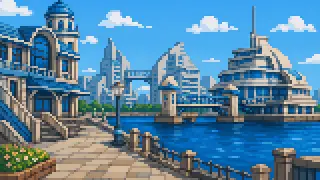
How long must you live in Yokohama to be a "Hamakko"? By one saying, just three days — that is how open this port city likes to picture itself.
"Hamakko" is an affectionate word for someone born and raised in Yokohama, and it is not even written just one way.
Here is where it came from, why the spelling varies, and the story behind "three days and you're a Hamakko."
What "Hamakko" means
Dictionaries define hamakko as a person born and raised in Yokohama, and a local dictionary widens it to anyone living in the city.
Hamakko (浜っ子)hamakko
The Nihon Kokugo Daijiten (2nd ed.) defines "hamakko" as "a person born and raised in Yokohama." The local Yokohama-Hama-kotoba dictionary also calls it "a resident, a citizen of Yokohama," widening it beyond birthplace to anyone who lives in the city.
Since when? (mid-Meiji)
The word dates from the mid-Meiji era, and 'hama' is simply an abbreviation of Yokohama — a hamakko is a child of Yokohama.
From the mid-Meiji era
According to the Yokohama-Hama-kotoba dictionary, the word dates from the mid-Meiji era. Yokohama gained city status in 1889 (Meiji 22), when "Yokohama" covered only a small area around the port, so at first it likely meant people born in that quarter.
Source:国立国会図書館 レファレンス協同データベース(横浜市中央図書館)「はまっこ」の定義(『横浜・ハマことば辞典』ほか)
"Hama" is short for Yokohama
Kojien (6th ed.) lists "hama" as an abbreviation for Yokohama, with "-kko" among its examples. "Hama" has long meant Yokohama itself, so hamakko is simply "a child of Yokohama."
Source:国立国会図書館 レファレンス協同データベース(横浜市中央図書館)「はまっこ」の定義(『広辞苑』第六版ほか)
Spelling variants (ハマっ子 / はまっ子 / 浜っ子)
The word appears in katakana, hiragana, and kanji; none is uniquely correct, and writers choose by context.
ハマっ子 / はまっ子 / 浜っ子
The same word appears in katakana (ハマっ子), hiragana (はまっ子) and kanji (浜っ子). None is uniquely "correct"; writers pick by context. Library headings even list several forms side by side.
Where "three days" comes from
The 'three days' line is known as a saying by essayist Aoki Amehiko (accounts vary), and the word spread widely mainly after the war.
Three days and you're a Hamakko
"An Edokko takes three generations; a Hamakko, three days" is known as a line by the Yokohama-linked essayist Aoki Amehiko (accounts vary). It captures a port town that takes in newcomers at once.
Source:国立国会図書館 レファレンス協同データベース(横浜市中央図書館)「3日住めばハマっ子」について書かれた資料
It spread after the war
Once, only people around Kannai and Kangai were said to qualify. The word came into wide use mainly after World War II, carried by the media and the city itself. The warmth it names is a strength, though some have also called it fickle.
Source:国立国会図書館 レファレンス協同データベース(横浜市中央図書館)「3日住めばハマっ子」について書かれた資料
FAQ
Where in Yokohama must you be born to be a "Hamakko"?
No particular district is fixed. A city library found that "where in Yokohama one must be born to be a hamakko" could not be confirmed, and today the word is used widely across the city.
Is there a "three generations" rule like the Edokko's?
No — there is no set requirement of generations. The readiness to welcome newcomers at once is exactly what the word is about.