Yokohama's Tricky Place Names: How to Read Gumyōji & Nōkendai
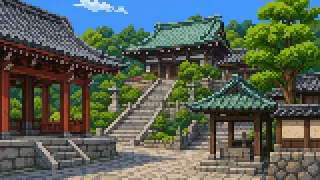
Gaze at a map of Yokohama and you'll meet place names that make you ask, "How on earth do you read this?" Many preserve the names of old temples and shrines or of historic lands just as they were, and their readings hold the time that Yokohama has lived through. Let's look at some of the most notable tricky place names.
Many tricky place names are also station names. Learn the readings and getting around becomes far easier.
Here we introduce the readings of place names often talked about in Yokohama, along with a bit of their origins.
Names That Look Readable but Aren't
Names like Gumyōji (弘明寺), Kami-ōoka (上大岡), and Hodogaya (保土ケ谷) preserve old temple and land names, and their readings hold Yokohama's history.
Gumyōji (弘明寺)Gumyoji
You may be tempted to read it "Kōmyōji," but the correct reading is "Gumyōji." It is one of the oldest temples in the city and lends its name to stations on both the Keikyu Line and the Blue Line.
Source:京浜急行電鉄「弘明寺駅」
Nōkendai (能見台)Nokendai
It is not "Nōmidai" but "Nōkendai." It was once called Yatsuzaka, and the present place name and station name came about with the development of the residential area.
Source:京浜急行電鉄「能見台駅」
Kami-ōoka (上大岡)Kami-ooka
The correct reading is "Kami-ōoka," with three "o" sounds in a row. It is the heart of Konan Ward and has a large station served by both the Keikyu Line and the Blue Line.
Source:京浜急行電鉄「上大岡駅」
Hodogaya (保土ケ谷)Hodogaya
The reading is "Hodogaya." In writing, the official form uses a full-size "ケ" rather than a small "ヶ." It flourished as "Hodogaya-juku," a post town on the Tōkaidō.
Source:横浜市保土ケ谷区「保土ケ谷宿の成り立ち」
Kanazawa-hakkei (金沢八景)Kanazawa-hakkei
It is read "Kanazawa-hakkei." The name derives from the eight scenic spots that Utagawa Hiroshige depicted in his ukiyo-e prints, and it is also a Keikyu station name.
Source:京浜急行電鉄「金沢八景駅」
FAQ
Is "Zōshiki" (雑色) a place name in Yokohama?
No. Zōshiki is a place name and station name in Ōta Ward, Tokyo, and is not found in Yokohama. It is sometimes mixed up with Yokohama place names, so take care.
Are there any tips for memorizing tricky place names?
Since many are station names, the quickest route is to learn them along with their readings from a route map. For those derived from temple and shrine names or old place names, tying them to that background makes them harder to forget.
What kind of town was "Hodogaya"?
It was a town that flourished as "Hodogaya-juku," a post town on the old Tōkaidō. It was the fourth post town counting from Nihonbashi, and a key waypoint for travelers facing the difficult Gontazaka slope.
Why did tricky place names come about?
They are thought to have arisen because old place names derived from the names of ancient temples and shrines, or from the terrain and history of the land, were handed down just as they were.