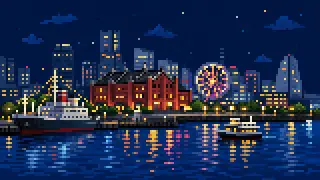
Clear the Yokohama Local Quiz and earn the Yokohama Local title. Want to know Yokohama even better, or already confident? The tougher courses are next.
Yokohama is where many of Japan's firsts came ashore, and this quiz follows that story outward from the harbor. Expect questions on Minato Mirai and the Red Brick Warehouse, on Chinatown's gates and temples, on Kiyoken's shumai and iekei ramen, and on place names like Gumyoji and Nokendai that trip up even long-time residents. The Western houses on the Yamate bluff, relics of the old foreign settlement, take their turn as well, alongside everyday Hamakko topics from stadiums to shopping streets. Each tier reaches a little further below the waterline than the last. Start with the practice questions and catch the sea breeze of the port town's knowledge before the real voyage.
Q1.What is the landmark skyscraper that towers over Yokohama's Minato Mirai district?
Tokyo Skytree
Yokohama Landmark Tower
Abeno Harukas
Yokohama Marine Tower
Reveal the correct answer
Correct answerYokohama Landmark Tower
Completed in 1993, the 70-story Yokohama Landmark Tower is beloved as a symbol of the city's skyline. The 69th-floor Sky Garden observatory looks out over the harbor, while the preserved stone dry dock at its base recalls the shipyard that once occupied the site.
Q2.Nationally famous as a Yokohama specialty, what is the star of Kiyoken's boxed lunch?
Eel
Crab
Beef tongue
Shumai (steamed dumplings)
Reveal the correct answer
Correct answerShumai (steamed dumplings)
Kiyoken opened as a shop inside Yokohama Station in 1908 and launched its signature shumai in 1928, adding dried scallop to the pork filling so the dumplings taste good even cold. The Shumai Bento boxed lunch, introduced in 1954, remains Yokohama's iconic ekiben.
Q3.Among Japan's three great Chinatowns, which is considered the largest?
Yokohama Chinatown
Kobe Nankinmachi
Nagasaki Shinchi Chinatown
Ikebukuro Chinatown
Reveal the correct answer
Correct answerYokohama Chinatown
Yokohama Chinatown grew from the Chinese community that settled after the port opened in 1859. With some 600 shops and restaurants, it is known as one of the largest Chinatowns in Japan, its streets framed by ornate gates and the Kanteibyo and Masobyo temples.
Q4.How many administrative wards does Yokohama have?
14 wards
16 wards
18 wards
23 wards
Reveal the correct answer
Correct answer18 wards
Yokohama comprises 18 wards, the second-most of any government-designated city in Japan after Osaka (24 wards). When the ward system began in 1927 there were only five; repeated subdivisions followed the city's growth, and the lineup was completed in 1994 with the creation of Aoba and Tsuzuki wards.
Q5.Roughly in which decade were the Yokohama Red Brick Warehouses (No. 1 and No. 2) built?
1860s
1890s
1910s
1930s
Reveal the correct answer
Correct answer1910s
Warehouse No. 2 was completed in 1911 and No. 1 in 1913, built as bonded warehouses for the new Shinko Pier to designs by Finance Ministry architect Tsumaki Yorinaka. State-of-the-art fireproofing and earthquake resistance went into them, yet half of No. 1 was lost in the 1923 earthquake.