Hokkaido's Great Outdoors: Parks, Lakes, Drift Ice
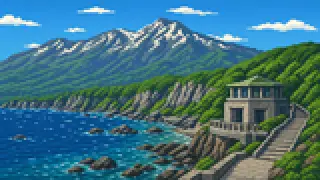
Making up roughly a fifth of Japan's land area, Hokkaido is a treasure house of untouched nature. From a World Heritage peninsula to one of Japan's largest marshes and the drift ice that blankets the winter sea, it offers landscapes you won't find on the main island of Honshu.
Here we take up the natural spots that represent Hokkaido, along with what makes each one special.
Many are protected as national parks or UNESCO-listed sites, and each changes its face with the four seasons.
Nature on a scale worth seeing once
From World Heritage Shiretoko to Japan's largest marsh at Kushiro and the Okhotsk drift ice, Hokkaido's landscapes reach a scale you won't find on Honshu.
Shiretoko
Inscribed as a World Natural Heritage Site in 2005 for its rich ecosystem, in which nutrients cycle from sea to land. It is characterized by a chain of life linking brown bears, Blakiston's fish owls, and the seafood nurtured by drift ice.
Source:知床データセンター(環境省)
Daisetsuzan and Mount Asahidake
The Daisetsuzan range, whose main peak is Mount Asahidake, is called 'Kamuy Mintar' (playground of the gods) in Ainu. It is known for highland plateaus filled with alpine plants and for some of Japan's earliest autumn foliage.
Source:大雪山国立公園連絡協議会
Lake Mashu
With almost no rivers flowing into it, the water stays pure and exceptionally transparent. Often wrapped in mist, it has long been cherished as 'Lake Mashu of the fog.'
Source:弟子屈町 公式サイト
Lake Kussharo
Japan's largest caldera lake, located in Teshikaga. It freezes over completely in winter and is known as a destination for migrating swans. Along its shore there are open-air baths where hot water wells up when you dig into the sand.
Source:弟子屈町 公式サイト
Lake Saroma
A brackish lake connected to the Sea of Okhotsk, the largest by area in Hokkaido and the third largest in Japan. It is also known for scallop farming and its colonies of glasswort.
Source:環境省
Kushiro Marsh
Japan's largest marsh, which in 1980 became the country's first Ramsar-listed wetland. It is also important as a habitat for the red-crowned crane, a Special Natural Monument.
Drift ice of the Okhotsk Sea
In midwinter, drift ice surges onto the Sea of Okhotsk coast. At Abashiri and Monbetsu you can cruise the icy sea aboard an icebreaker, a signature sight of the northern winter.
Source:環境省
Lake Toya and Mount Usu
Recognized as a UNESCO Global Geopark for its landscape of coexistence with an active volcano. Showa-Shinzan, a lava dome that rose during the eruptions of Mount Usu in 1943-45, can be seen up close.
Source:洞爺湖町 公式サイト
FAQ
When can I see the drift ice?
Typically from late January to around March, along the Sea of Okhotsk coast (Abashiri, Monbetsu, and the like). Aboard an icebreaker you can observe it up close from a ship as it cracks through the ice.
Can beginners climb Mount Asahidake?
A ropeway takes you up to the fifth station (Sugatami), where you can enjoy alpine plants and autumn colors along the nearby walking trails. If you aim for the summit, checking your gear and the weather is essential.