Discovering Ainu Culture and Language
At the root of Hokkaido's place names and everyday words lies the culture of the indigenous Ainu people. Their worldview, in which a deity (kamuy) dwells in all of nature, is deeply tied to the wisdom of living in the northern land.
Here we take up words and places that offer a doorway into Ainu culture.
The transmission and creation of this culture continue today, and places to see, touch, and learn are maintained across the region.
Keywords and places for understanding the culture
Key entry points include Upopoy, words like chise, kamuy, and yukar, and places such as Nibutani and the many Ainu-derived place names across Hokkaido.
Upopoy
Opened in 2020 on the shore of Lake Poroto in Shiraoi, it is a hub for the revival and creation of Ainu culture, comprising the National Ainu Museum and other facilities. The name is said to mean 'singing (together in a large group)' in Ainu.
Source:ウポポイ(民族共生象徴空間)公式
Chise
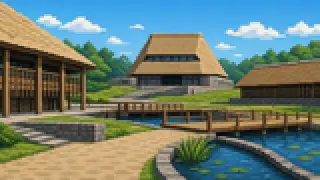
A house thatched with reeds or bamboo grass, with a hearth set inside. Built to suit the climate and way of life, chise made up the settlements known as kotan.
Kamuy
In the Ainu worldview, a deity (kamuy) is said to dwell in animals, plants, and natural phenomena. The brown bear was revered as Kimun Kamuy (god of the mountains) and Blakiston's fish owl as Kotan-kor Kamuy (god who guards the village).
Source:ウポポイ(民族共生象徴空間)公式
Yukar
There are yukar, which tell the tales of heroes, and kamuy yukar (divine epics), in which the gods speak in the first person. The 'Ainu Shin'yoshu,' transcribed and translated by Chiri Yukie, conveys their beauty to this day.
Source:ウポポイ(民族共生象徴空間)公式
Nibutani
Nibutani, in the Saru River basin, is a place where Ainu culture has been richly handed down. Through the efforts of Kayano Shigeru and others, materials and crafts (such as Nibutani-ita trays) have been preserved and can be studied at the local museum.
Source:平取町立二風谷アイヌ文化博物館
Ainu place names
Many place names across Hokkaido, such as Sapporo, Shiretoko, and Wakkanai, derive from Ainu. Through these names, you can touch the Ainu view of nature and the memory of the land.
Source:北海道庁 公式サイト
FAQ
Can the Ainu language still be learned today?
Yes. You can learn it through exhibits and programs at Upopoy, classes in various regions, and dictionaries and teaching materials. Words derived from Ainu also live on within place names and everyday vocabulary.
Where can I experience the culture?
At Upopoy in Shiraoi, Nibutani in Biratori, and the Ainu Kotan by Lake Akan, among other places, you can encounter exhibits, crafts, and traditional dance. These are places to visit with respect.