From Ezo to Hokkaido: The People Behind the Frontier
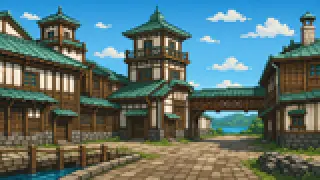
Just over 150 years ago, this land was still called 'Ezo.' From the birth of the name 'Hokkaido' to the building of the city of Sapporo, we trace the pioneering effort compressed into such a short span of time.
Here we introduce the people and systems that were key to the pioneering of Hokkaido, along with the roles they played.
The settlement carried out by the Japanese is also a history that unfolded over the land and lives of the indigenous Ainu people.
The people and systems that were key to the frontier
Explorer Matsuura Takeshiro, who inspired the name 'Hokkaido,' plus the Kaitakushi agency, the tondenhei soldier-farmers, and figures like Shima Yoshitake, Dr. Clark, and Horace Capron drove the frontier era.
Matsuura Takeshiro
An explorer who surveyed Ezo (Hokkaido) repeatedly in the late Edo period. When the region was renamed in 1869, today's name 北海道 (Hokkaido) grew out of his proposed form 北加伊道. Its middle character 'kai' (加伊) was borrowed from a word the Ainu used for themselves, and was later replaced by the homophone 海 ('sea').
Source:松浦武四郎記念館
The Kaitakushi
The agency the Meiji government set up to develop Hokkaido. It advanced the building of the city of Sapporo and the nurturing of industries such as beer and sugar refining, and was abolished in 1882.
Source:北海道庁 公式サイト
Tondenhei
They moved in with their families and, in peacetime, served as farmers and, in emergencies, as soldiers, carrying out both pioneering and defense. Building 'soldier villages' across the region, they were central to opening up farmland.
Source:北海道庁 公式サイト
Shima Yoshitake
Sent to Sapporo as a pioneer commissioner, he laid the groundwork for the city plan that carved the streets into a grid. He is also called the 'father of Hokkaido's pioneering.'
Source:札幌市 公式サイト
Dr. Clark
He taught at Sapporo Agricultural College (now Hokkaido University) and is said to have left the words 'Boys, be ambitious.' He had a great influence on agricultural education and the cultivation of talent.
Source:北海道大学
Horace Capron
Arriving in Japan in 1871, he had served as the top official of agricultural administration in the United States (Commissioner of Agriculture). He guided broad fields of pioneering such as roads, mining, and agriculture, and helped set the course of modernization.
Source:北海道庁 公式サイト
The Kaitakushi Brewery
A government-run brewery the Kaitakushi opened in Sapporo. It began in Hokkaido, blessed with abundant ice and barley, and the red star on its label comes from the Kaitakushi's emblem, the North Star.
Source:サッポロビール 公式
Goryokaku and the Battle of Hakodate
Goryokaku, the star-shaped fortress designed by Takeda Ayasaburo, became the stage of the Battle of Hakodate, which ended in 1869. Enomoto Takeaki, who led the former shogunate forces, later took up senior posts in the Meiji government.
Source:函館市 公式サイト
FAQ
When was 'Hokkaido' named?
In 1869 (Meiji 2), when the former name 'Ezo' was revised, it was set as 'Hokkaido.' The divisions of provinces and districts were also organized at the same time, and a full-fledged era of pioneering began.
What does the red star on Sapporo Beer represent?
Sapporo grew up under the Kaitakushi (the Development Commission), whose emblem was a red star. Sapporo Beer still carries it today as a mark of inheriting the commission's brewing enterprise, linking the brand to the city's pioneer roots.