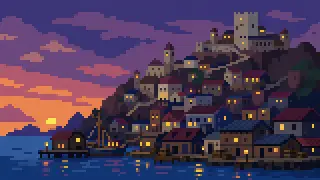
Kobe Local Quiz Practice: Questions and Explanations
40QEasyIntermediateAdvanced
Review questions from the real quiz with answers, explanations and sources. Think it through first, then reveal the correct answer.
This is a selection from the question pool — the real quiz also draws questions you won’t find here.
Last updated: 2026-09-14
EasyTier 1 — 10 questions
Kobe is a long, narrow city pressed between the mountains and the sea. The first ten questions trace its outline through the classics: a record-setting suspension bridge, an ancient hot spring in the hills, the red tower on the harbor, and the memory of 1995. You know Kobe's face from photographs — can you put precise names and years to each of them? Open each answer for the explanation and its sources.
Q1.Which premium wagyu brand represents Kobe?
Kobe Beef
Matsusaka beef
Omi beef
Hida beef
Reveal the correct answer
Correct answerKobe Beef
Kobe Beef is the name reserved for meat from Hyōgo-raised Tajima cattle that clears the quality standards of the Kobe Beef Marketing and Distribution Promotion Association, founded in 1983 to define the brand. Few wagyu names travel further — "Kobe" is shorthand for fine Japanese beef around the world.
Q2.Which giant suspension bridge links Kobe with Awaji Island?
Seto Ohashi
Akashi Kaikyo Bridge
Kanmon Bridge
Rainbow Bridge
Reveal the correct answer
Correct answerAkashi Kaikyo Bridge
The Akashi Kaikyō Bridge links Maiko in Kobe's Tarumi Ward with Iwaya on Awaji Island, opened in 1998. For years it held the record as the world's longest suspension bridge. It carries the expressway that ties Honshū to Shikoku.
Nankinmachi, Kobe's Chinatown, spreads just south of Motomachi — one of Japan's big three alongside Yokohama and Nagasaki. More than a hundred shops crowd a compact grid about 200 by 110 meters. It began, the story goes, when Chinese merchants settled just west of the foreign concession after the port opened.
Q4.Which mountain rises north of Kobe, famous for its night view?
Mt. Ikoma
Mt. Kongo
Mt. Rokko
Mt. Hiei
Reveal the correct answer
Correct answerMt. Rokko
Mount Rokkō is the long ridge at Kobe's back, famous for a night view sweeping the city and harbor. The old nickname "the million-dollar night view" — coined from the estimated electric bill of the visible lights — was upgraded to ten million dollars after a 2005 recalculation. A cable car makes the heights an easy trip.
Q5.Which famous hot spring in Kobe's Kita Ward is among Japan's three great springs?
Arima Onsen
Kinosaki Onsen
Shirahama Onsen
Dogo Onsen
Reveal the correct answer
Correct answerArima Onsen
Arima Onsen, tucked into the hills of Kobe's Kita Ward, is counted with Kusatsu and Gero among Japan's three famous springs — and among its three oldest, appearing in the earliest chronicles. Its waters come in two kinds: the iron-red "kinsen" and the clear "ginsen." Toyotomi Hideyoshi was famously devoted to its baths.
Q6.What red tower is the symbol of the Port of Kobe?
Tsutenkaku
Tokyo Tower
Kyoto Tower
Kobe Port Tower
Reveal the correct answer
Correct answerKobe Port Tower
Kobe Port Tower rises from the Naka Pier, completed in 1963. Its lattice of red steel pipes narrows at the waist like a tsuzumi hand drum, earning it the nickname "beauty of the iron towers." After seismic strengthening and renovation it reopened in April 2024.
Q7.What is the name of the major 1995 earthquake disaster that struck Kobe?
Great Kanto Earthquake
Great East Japan Earthquake
Great Hanshin-Awaji Earthquake
Nobi Earthquake
Reveal the correct answer
Correct answerGreat Hanshin-Awaji Earthquake
The Great Hanshin-Awaji Earthquake is the disaster caused by the magnitude-7.3 quake of early morning, January 17, 1995 — the first to strike directly beneath a major Japanese city and the first ever to register the maximum seismic intensity of 7. Kobe rebuilt from devastating damage, and its lessons reshaped disaster planning nationwide.
Q8.What are the Meiji-era foreign residences clustered in Kobe's Kitano called?
Kura warehouse
Ijinkan
Samurai residence
Machiya townhouse
Reveal the correct answer
Correct answerIjinkan
After the port opened, Western residents built their houses — "ijinkan" — on the heights of Kitano and Yamamoto-dōri from the Meiji era into Taishō. The Weathercock House and Moegi House lead the roster, and in 1980 the district became the first port-town area in Japan preserved as a historic building district; a TV drama made it famous.
Q9.Which griddle dish of fried noodles and rice originated in Kobe's Nagata?
Takoyaki
Akashiyaki
Sobameshi
Monjayaki
Reveal the correct answer
Correct answerSobameshi
Sobameshi — sauce-seasoned fried noodles chopped and griddled together with rice — was born in Kobe's working-class Nagata district. The tale goes that factory hands asked an okonomiyaki shop to fry the cold rice from their lunchboxes into the noodles. A frozen-food version later carried the dish nationwide.
Q10.In which era was the Port of Kobe opened to foreign trade?
Early Edo period
End of Edo / early Meiji
Taisho period
Postwar Showa
Reveal the correct answer
Correct answerEnd of Edo / early Meiji
The Port of Kobe opened to foreign trade in the last days of the shogunate, at the dawn of the Meiji era. The treaty port of "Hyōgo" had been postponed amid court opposition, and the harbor was actually laid out east of old Hyōgo, at the village of Kobe, which grew with the settlement trade into an international city.
The next fifteen turn to what shaped daily life in the port town: the five sake villages behind Japan's greatest brewing district, the shrine households that gave "Kobe" its name, the seaside where a storybook prince waited out his exile. The open port brought industry too — a pioneer of canned coffee, a giant of shipbuilding. Step past the sightseeing Kobe into the working one.
Q11.Which Kobe wards are known as part of the Nada sake district?
Kita Ward
Nishi Ward
Nada & Higashinada Wards
Suma Ward
Reveal the correct answer
Correct answerNada & Higashinada Wards
Nada Gogō — five sake villages spanning Nada Ward, Higashinada Ward and Nishinomiya — is Japan's premier brewing district, producing roughly a quarter of the nation's sake. Cold winter winds off Rokkō, the famed miyamizu water, and fine sake rice built its name from the Edo period on.
Q12.Which Kobe shrine, fondly called 'Nankō-san,' enshrines Kusunoki Masashige?
Ikuta Shrine
Minatogawa Shrine
Nagata Shrine
Minume Shrine
Reveal the correct answer
Correct answerMinatogawa Shrine
Minatogawa Shrine enshrines Kusunoki Masashige, the loyalist commander who fell facing Ashikaga Takauji's army at the Battle of Minatogawa in 1336. It was founded in 1872 at Emperor Meiji's direction, on grounds embracing Masashige's grave and the site of his death. Locals call it "Nankō-san" and crowd it at New Year.
Q13.Which shrine, linked to the origin of the name 'Kobe,' is famed for love matches?
Minatogawa Shrine
Nagata Shrine
Ikuta Shrine
Kitano Tenman Shrine
Reveal the correct answer
Correct answerIkuta Shrine
Ikuta Shrine, dedicated to the goddess Wakahirume, was granted forty-four "kanbe" — households assigned to support the shrine — by the court in the early Heian period. That word is held to have shifted over the centuries from kanbe through konbe to "Kōbe," naming the city. Today it is beloved as "Ikuta-san," a shrine of matchmaking.
Q14.Which major canned-coffee maker, founded in Kobe, do people reach for at vending machines and convenience stores?
UCC Ueshima Coffee
Suntory
Key Coffee
Dydo
Reveal the correct answer
Correct answerUCC Ueshima Coffee
UCC Ueshima Coffee, headquartered in Kobe's Chūō Ward, is credited with the world's first canned coffee — the milk-blend "UCC Coffee" of 1969 — the drink that made vending-machine and convenience-store coffee an everyday habit. The company also runs a coffee museum on Port Island.
Q15.Which heavy-industry maker, known for shipbuilding, is based in and closely tied to Kobe?
Kawasaki Heavy Industries
Mitsubishi Heavy Industries
IHI
Hitachi Zosen
Reveal the correct answer
Correct answerKawasaki Heavy Industries
Kawasaki Heavy Industries traces to 1886, when founder Kawasaki Shōzō took over the government's Hyōgo shipyard and opened the Kawasaki Dockyard the following year. From ships it expanded into rolling stock, motorcycles, and aerospace, and it keeps its head office in Kobe — a company whose history runs parallel to the port's.
Q16.Which Kobe airport, on a man-made island, is linked to Sannomiya by the Port Liner?
Itami Airport
Kansai Airport
Kobe Airport
Tajima Airport
Reveal the correct answer
Correct answerKobe Airport
Kobe Airport opened in February 2006 on its own reclaimed island about a kilometer beyond Port Island; its nickname is "Marine Air." Built and run by the city itself, it connects straight to Sannomiya by the Port Liner — an airport unusually close to downtown.
Q17.Where are the Tajima cattle behind Kobe Beef mainly raised?
Northern Hyogo (Tajima)
Only central Kobe
Only Awaji Island
Osaka
Reveal the correct answer
Correct answerNorthern Hyogo (Tajima)
Tajima cattle are Japanese Black cattle raised mainly in the Tajima region of northern Hyōgo, a bloodline so prized that it has seeded brand-name herds across Japan. Only animals meeting strict quality standards may be sold as Kobe Beef or Tajima beef — the famous brand begins in these mountain pastures.
Q18.Which famous Kitano residence has a brick exterior topped by a weathercock?
Weathercock House
Moegi House
Uroko House
Rhine House
Reveal the correct answer
Correct answerWeathercock House
The Weathercock House — the former Thomas residence — went up around 1904 as a German trader's home, the only brick-walled ijinkan in Kitano. Designed by the German architect Georg de Lalande and crowned by the rooster vane that gives it its name, it is a nationally designated Important Cultural Property.
Q19.Every February-March, families across Kobe and the Hanshin area simmer baby sand lance in a sweet-savory glaze, sometimes sharing the results with neighbors and relatives. What is this spring specialty called?
Ikanago no kuginni
Chirimen sansho
Simmered clams (tsukudani)
Shio kombu
Reveal the correct answer
Correct answerIkanago no kuginni
Ikanago no kuginni is a simmered dish of fresh baby sand lance (shinko) cooked down in soy sauce, sugar and ginger. Kobe is said to be its birthplace, and every year when the short fishing season opens between late February and April, the smell of soy sauce and sugar drifts through neighborhoods as households cook batches at once — often sharing the results with neighbors and relatives far away. It remains a beloved sign of spring along the Seto Inland Sea.
Q20.Which long-established department store, standing in Kobe's former foreign settlement, is the area's top-selling store?
Daimaru Kobe
Isetan
Hankyu Umeda Main Store
Kintetsu Department Store
Reveal the correct answer
Correct answerDaimaru Kobe
Daimaru Kobe opened in Motomachi in 1908 and moved to its present site in the former foreign settlement (Akashi-cho, on Kyomachi-suji) in 1927. Badly damaged in the Great Hanshin-Awaji Earthquake, it reopened fully in 1997 and reclaimed its place as the area's top-selling store. It remains a shopping anchor of the Sannomiya-Motomachi district today.
Q21.Which city is credited with popularizing giving Valentine's chocolate early on?
Yokohama
Kobe
Tokyo
Nagasaki
Reveal the correct answer
Correct answerKobe
In February 1936 a Kobe confectioner, begun by a Russian émigré family, ran what is held to be Japan's first Valentine chocolate advertisement, in an English-language newspaper: chocolates for your Valentine. How the custom then spread is debated, but Kobe's claim as its pioneer rests here.
Q22.Which lookout near Mt. Maya's summit is among Japan's three great night views?
Kikuseidai
Rokko Garden Terrace
Venus Bridge
Ikariyama
Reveal the correct answer
Correct answerKikuseidai
Kikuseidai is the lookout plaza near Mount Maya's summit, about 690 meters up — its name means "a terrace where you could scoop up stars." The panorama of Kobe and the Hanshin coast is the celebrated "ten-million-dollar night view," ranked with Hakodate and Nagasaki among Japan's top three. A ropeway does the climbing.
Q23.Which main street in Kobe's former foreign settlement is still lined with fashionable cafes and shops today?
Nakamise-dori
Ginza-dori
Kyomachi-suji
Suzurandai-dori
Reveal the correct answer
Correct answerKyomachi-suji
Kobe's former settlement, laid out when the port opened, keeps its neat historic street grid. Kyomachi-suji, one of its five east-west avenues, serves as the main artery, today lined with cafes and shops set in early modern architecture, popular for browsing and shopping.
Q24.Select all that are districts ('gō') of Nada Gogō.
Mikage-gō
Uozaki-gō
Fushimi-gō
Nadahama-gō
Reveal the correct answer
Correct answerMikage-gō / Uozaki-gō
From west to east, the five villages of Nada are Nishi-gō in Nada Ward, Mikage-gō and Uozaki-gō in Higashinada, and Nishinomiya-gō and Imazu-gō in Nishinomiya; the grouping took its present shape with a brewers' association founded in 1886. Fushimi is Kyoto's sake town, and "Nadahama-gō" does not exist.
Q25.About how long is the Akashi Kaikyo Bridge in total?
About 1,000 m
About 2,000 m
About 3,900 m
About 6,000 m
Reveal the correct answer
Correct answerAbout 3,900 m
The Akashi Kaikyō Bridge measures about 3,911 meters overall, with a central span of 1,991 meters between its towers — the world's longest for a suspension bridge from its 1998 opening until 2022. Famously, the 1995 earthquake struck mid-construction, and the shifting ground stretched the bridge by about a meter.
The last fifteen run from the ancient harbor where Kiyomori staked his dreams to the fault line on Awaji that tells the earthquake's story, and on to the modern pastimes foreign residents carried up the mountain. Kobe's history is one of taking in what the sea delivers and making it local — music, shoes, and more. In the ordering questions, watch the harbor's leading role pass from one age to the next.
Q26.Which ancient Kobe port did Taira no Kiyomori rebuild as a hub for Sino-Japanese trade?
Sakai
Owada-no-tomari
Hakata
Tsuruga
Reveal the correct answer
Correct answerOwada-no-tomari
Ōwada-no-tomari, near today's Hyōgo Ward, was the ancient harbor that Taira no Kiyomori rebuilt as his base for trade with Song China — complete, tradition says, with the artificial breakwater island of Kyōgashima, finished in 1173. Through its successor Hyōgo-no-tsu, the port's lineage runs straight to modern Kobe.
Q27.Which young Taira warrior, a famed flute player, fell at the Battle of Ichi-no-Tani?
Taira no Tomomori
Taira no Shigehira
Taira no Munemori
Taira no Atsumori
Reveal the correct answer
Correct answerTaira no Atsumori
Taira no Atsumori was the young Heike warrior — said to have been seventeen by the traditional count — slain by Kumagai Naozane at Ichi-no-Tani. Naozane, haunted by killing a boy his own son's age, later took Buddhist vows. Atsumori's flute, the "Aoba no Fue," is kept at Suma-dera, and his story lives on in Noh and kōwakamai.
Q28.What did foreigners open on Mt. Rokko in 1903—a first of its kind in Japan?
Ski resort
Tennis club
Golf course
Racecourse
Reveal the correct answer
Correct answerGolf course
In 1903 the British trader Arthur Hesketh Groom and fellow residents opened the Kobe Golf Club on the heights of Mount Rokkō — reckoned Japan's first golf course, with just four holes at its debut. Groom, who pioneered the mountain as a summer retreat, is remembered as the "father of Rokkō."
Q29.What is the name of the famed water from Nishinomiya, essential to Nada sake?
Rokko water
Miyamizu
Nada-sui
Kiyomori-sui
Reveal the correct answer
Correct answerMiyamizu
Miyamizu is the brewing water drawn southeast of Nishinomiya Shrine, its virtues discovered in the late Edo period. Unusually for the soft-water Kansai region it is medium-hard: rich in the phosphorus and potassium that feed the yeast, yet low in iron, sake's enemy — the secret behind Nada's robust brews.
Q30.Which waterfall behind Shin-Kobe Station is counted among Japan's three sacred falls?
Minoo Falls
Nachi Falls
Shiraito Falls
Nunobiki Falls
Reveal the correct answer
Correct answerNunobiki Falls
The Nunobiki Falls, just behind Shin-Kobe Station on the Ikuta River, are four cascades in one — Ontaki, Meoto-daki, Tsuzumigadaki, and Mentaki — with the 43-meter Ontaki the greatest. Sung in classical poetry, they rank with Nachi and Kegon as Japan's three sacred falls and appear among its hundred finest.
Q31.Which fault, which caused the 1995 quake, surfaced in northern Awaji Island?
Median Tectonic Line
Nojima Fault
Itoigawa-Shizuoka Line
Atotsugawa Fault
Reveal the correct answer
Correct answerNojima Fault
The 1995 quake sprang from the Nojima Fault, part of the Rokkō-Awaji fault zone. In northern Awaji the ground surface tore visibly, slipping one to two meters, and the rupture was designated a national Natural Monument in 1998. A stretch of it is preserved intact at the Nojima Fault Preservation Museum in Hokudan.
Q32.Which traditional rite with appearing 'oni' is held at Nagata Shrine at Setsubun?
Tsuina rite (oni-oi)
Gion Matsuri
Tenjin Matsuri
Danjiri Matsuri
Reveal the correct answer
Correct answerTsuina rite (oni-oi)
In Nagata Shrine's ancient tsuina rite, oni dance with blazing torches at Setsubun, burning away misfortune to purify the coming year. Here the demons serve as messengers of the gods — the opposite of the bean-pelted villains of ordinary Setsubun. Sketched in Edo-period essays, the rite is a designated intangible folk cultural property of Hyōgo.
Q33.What was the old name of the Kobe port town that thrived on Kitamaebune trade in the Edo period?
Sakai
Hyogo-no-tsu
Tsuruga
Sakamoto
Reveal the correct answer
Correct answerHyogo-no-tsu
Hyōgo-no-tsu, heir to the ancient port of Ōwada, carried the name "Hyōgo" from medieval times. In the Edo period it thrived as a key stop on the western shipping circuit, its Kitamaebune traffic supporting a town said to number more than ten thousand people. The treaty port of 1868 was laid out just east of it, at Kobe village.
Q34.Which port city is regarded as a birthplace of jazz in Japan?
Yokohama
Osaka
Tokyo
Kobe
Reveal the correct answer
Correct answerKobe
Kobe claims a founding role in Japanese jazz: in 1923 the violinist Ida Ichirō — remembered as "the father of Japanese jazz" — formed the country's first professional jazz band, the Laughing Stars, here. The music had arrived with crews on the foreign shipping lines, and the port city has kept swinging ever since.
Q35.Which local industry, built on rubber technology, grew up around Kobe's Nagata?
Chemical (synthetic) shoes
Eyeglass frames
Blades
Towels
Reveal the correct answer
Correct answerChemical (synthetic) shoes
Chemical shoes — footwear made with synthetic materials — grew out of Nagata's rubber industry to make the district one of Japan's leading shoe centers; the national industry association was founded there in the 1950s. Hit hard by the 1995 earthquake, Nagata has rebuilt around its identity as "the town of shoes."
Q36.Which world-renowned architect designed the Hyogo Prefectural Museum of Art?
Kengo Kuma
Tadao Ando
Kenzo Tange
Kisho Kurokawa
Reveal the correct answer
Correct answerTadao Ando
The Hyōgo Prefectural Museum of Art opened in 2002 on the waterfront of HAT Kobe, the new district built as a symbol of recovery from the earthquake. Its architect is Tadao Andō, master of bare concrete; since 2019 an in-house "Ando Gallery" has permanently displayed his models and drawings.
Q37.Which Kobe-born manga artist created 'Tetsujin 28' and 'Sangokushi'?
Osamu Tezuka
Fujiko Fujio
Shotaro Ishinomori
Mitsuteru Yokoyama
Reveal the correct answer
Correct answerMitsuteru Yokoyama
Yokoyama Mitsuteru (1934–2004), born in Kobe's Suma Ward, drew everything from "Tetsujin 28" and "Sally the Witch" to "Babel II" and the sixty-volume epic "Sangokushi." In Shin-Nagata a full-scale Tetsujin 28 monument now stands guard, a symbol of the neighborhood's recovery from the earthquake.
Q38.Select what Kobe is credited as a Japan-first or world-first for.
World's first driverless transit system (Port Liner)
Japan's first subway
Japan's first railway
Japan's first international airport
Reveal the correct answer
Correct answerWorld's first driverless transit system (Port Liner)
The Port Liner opened in February 1981 as what is regarded as the world's first fully automated, driverless transit system, linking Sannomiya with Port Island; in 2006 it was extended to Kobe Airport. Japan's first subway, for the record, ran in Tokyo, and its first railway between Shimbashi and Yokohama.
Q39.Put these Kobe-related events in chronological order (oldest first).
Port of Kobe opens
Battle of Ichi-no-Tani
Battle of Minatogawa
Capital moved to Fukuhara
Reveal the correct answer
Correct answerCapital moved to Fukuhara → Battle of Ichi-no-Tani → Battle of Minatogawa → Port of Kobe opens
Oldest first: the move of the capital to Fukuhara (1180), the Battle of Ichi-no-Tani (1184), the Battle of Minatogawa (1336), and the opening of the port (1868). Kiyomori's half-year capital, two storied battlefields, and the treaty port — all four turning points lie within today's city.
Mount Rokkō's highest point stands at about 931 meters. Because the range rises directly behind the city, the sheer drop puts dramatic night views and hiking within easy reach. From the Meiji era, foreign residents opened the mountain for climbing and leisure, making Rokkō a cradle of modern Japanese mountaineering.