History of Kobe: Kiyomori, Fukuhara and the Genpei War
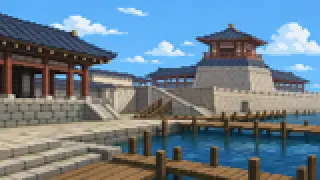
Known as a trade port, Kobe was a maritime hub from ancient times. Kiyomori briefly set a capital here, and the Genpei War was fought on its ground.
Here we trace the events and places of Kobe's history from its ancient port to the end of the Edo period.
Kiyomori's works, the Genpei War, Masashige's last stand and a late-Edo navy—Kobe stood at the turning points.
Stages of the port city's history
From the ancient port of Owada-no-tomari and Kiyomori's Fukuhara capital to the battles of Ichi-no-Tani and Minatogawa, Kobe has long been a stage of maritime history.
Owada-no-tomari
Forerunner of Kobe's harbor, said to have been improved by the monk Gyoki in the Nara era and later developed by Kiyomori for trade with Song China.
Source:神戸市立博物館
Fukuhara-kyo
In 1180 Kiyomori moved the capital to today's Hyogo Ward; though it soon returned to Kyoto, Kobe was briefly the capital.
Source:神戸市 公式サイト
Kyogashima
An artificial island said to have been built by Kiyomori to shelter Owada from waves, named from a legend of sunken sutra stones.
Source:神戸市立博物館
Battle of Ichi-no-Tani
The 1184 battle where Yoshitsune is said to have charged down the steep Hiyodorigoe—a major turning point in the Genpei War.
Source:神戸市 公式サイト
Atsumori and Kumagai Naozane
The tragic tale of young Atsumori, killed at Ichi-no-Tani, and Kumagai Naozane who slew him appears in the Heike Monogatari, tied to Suma-dera.
Source:Feel KOBE 神戸公式観光サイト
Battle of Minatogawa
In 1336 Kusunoki Masashige fought and fell here; Minatogawa Shrine, which enshrines him, is fondly called 'Nanko-san.'
Source:湊川神社 公式サイト
Hyogo-no-tsu and Hyogo Castle
Hyogo-no-tsu, heir to Owada, thrived on Kitamaebune trade, and in 1581 the Ikeda clan built Hyogo Castle.
Source:神戸市 公式サイト
Kobe Naval Training Center
A shogunate naval school set up in 1864 led by Katsu Kaishu, said to have involved figures such as Sakamoto Ryoma.
Source:神戸市立博物館
FAQ
Why is Kobe so tied to Taira no Kiyomori?
Kiyomori developed Owada-no-tomari and in 1180 moved the capital to Fukuhara, aiming to make Kobe a hub of trade and politics.
Where in Kobe was the Genpei War fought?
The Battle of Ichi-no-Tani is placed around Suma and Nagata; sites like Hiyodorigoe, the Atsumori mound at Sumaura Park, and Suma-dera remain.