Zushi–Hayama: Coast and landscape | LoreMania
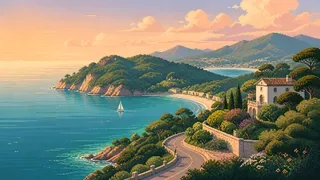
The coast and landscape of Zushi and Hayama are built on the peninsula's oldest bedrock, layered under beaches, harbors, and hilltop viewpoints.
Zushi and Hayama sit at the base of the Miura Peninsula, where the coastline and hills meet at close range.
The named places tested in the quiz span a wide range of time, from ancient rock formations to today's beaches and harbors — each is checked here against a primary source.
The bedrock: the Miura Peninsula and the Hayama Group
The foundation is the Hayama Group, marine strata laid down 15 to 18 million years ago and the peninsula's oldest bedrock — its formation names borrow local place names like Morito and Abuzuri.
Hayama Group
A belt of marine strata running through the central Miura Peninsula, deposited roughly 15 to 18 million years ago. From oldest to youngest it is divided into the Morito, Abuzuri, Oyama, Kinugasa, and Yabe formations, the oldest bedrock on the peninsula. Several of these formation names directly borrow Zushi and Hayama place names such as Morito and Abuzuri.
Miura Peninsula
A peninsula jutting out between Sagami Bay and Tokyo Bay, spanning Yokosuka, Kamakura, Zushi, Miura, and Hayama. Zushi and Hayama sit at the peninsula's base on its western, Sagami Bay-facing side, and their mild climate made them resort and villa destinations from the Meiji era onward.
Where the sea meets daily life
Zushi Beach, Morito Beach, Hayama Port — a sub-venue for 1964 Olympic sailing — and the hilltop park on Hiroyama are where the sea and daily life meet.
Zushi Beach
A beach in Zushi marketed with the slogan "the Half Mile Beach where the sun is born." Known for its gentle waves and shallow water, it draws families, and during the official swimming season a floating inflatable playground called the "Water Park" is installed offshore.
Source:City of Zushi, "Zushi Beach"
Morito Beach
A beach in Hayama with Morito Shrine standing at its southern end. On the offshore islet of Najima stands the Hayama Lighthouse, popularly called "Yujiro Lighthouse" because it was built in 1989 to mark the third anniversary of actor Yujiro Ishihara's death — the beach is well known for its sunsets.
Hayama Port
A harbor that served as a sub-venue for sailing during the 1964 Tokyo Olympics. Hayama Marina, Japan's first private multi-purpose marina, opened right next door the same year, and the area is counted among the birthplaces of Japanese yachting.
Hiroyama
A 100-meter hill whose summit park overlooks Sagami Bay, Enoshima, and Mount Fuji. It held an Imperial Japanese Navy gun battery during WWII, and the summit was developed into a public park in 1958.
FAQ
What's the difference between Zushi Beach and Morito Beach?
Zushi Beach is a shallow, family-friendly beach in Zushi known for its floating "Water Park"; Morito Beach is in Hayama and is best known for the pairing of Morito Shrine and the Yujiro Lighthouse. Pairing each beach with its municipality and landmark keeps them straight.
Why is the Hayama Group called the peninsula's oldest formation?
Among the strata found on the Miura Peninsula, the Hayama Group, deposited roughly 15 to 18 million years ago, sits at the bottom, with every other formation having built up on top of it since.