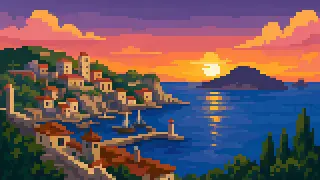
Kagoshima Local Quiz Practice: Questions and Explanations
40QEasyIntermediateAdvanced
Review questions from the real quiz with answers, explanations and sources. Think it through first, then reveal the correct answer.
This is a selection from the question pool — the real quiz also draws questions you won’t find here.
Last updated: 2026-09-14
EasyTier 1 — 10 questions
Begin with ten questions at Kagoshima's front gate: the volcano smoking right across from downtown, the lordly family that ruled Satsuma, a snow-white shaved ice born in the arcades. These are the faces you meet on day one, asked with one extra step. Questions about living beside an active volcano are mixed in. Get all ten and you pass as a first-time guide. Open the answers for explanations with sources.
Q1.Which active volcano rises from Kinko Bay and can be reached by ferry from central Kagoshima City?
Sakurajima
Mount Fuji
Mount Aso
Mount Kaimon
Reveal the correct answer
Correct answerSakurajima
Sakurajima is the active volcano rising in Kinko Bay directly across from downtown Kagoshima. It still trails smoke, and residents live in company with its ashfall. City-run ferries shuttle between the urban waterfront and the volcano's port — less a sight to visit than a part of daily life.
Q2.The garden Sengan-en, which looks out across Kinko Bay toward Sakurajima, was built in the Edo period as a villa for which daimyo family?
The Maeda family
The Date family
The Shimazu family
The Mori family
Reveal the correct answer
Correct answerThe Shimazu family
Sengan-en is the daimyo garden built as a villa of the Shimazu, lords of Satsuma, and a nationally designated Place of Scenic Beauty. Commanding Kinko Bay and Sakurajima, it served the clan as a kind of guesthouse — and in the Bakumatsu era, modernization itself began next door.
Q3.Which figure from the Satsuma domain, active during the Meiji Restoration, led the Satsuma Rebellion (Seinan War) in Kagoshima in 1877?
Saigo Takamori
Sakamoto Ryoma
Katsu Kaishu
Ito Hirobumi
Reveal the correct answer
Correct answerSaigo Takamori
Saigo Takamori, samurai and statesman of Satsuma, was a chief architect of the Meiji Restoration. Leaving the new government, he returned home and in 1877 raised the Satsuma Rebellion, the largest civil war of the Meiji era. Sites connected to it remain scattered across Kagoshima today.
Q4.What famous Kagoshima dish is made by deep-frying ground fish paste in oil, also known locally as "tsuke-age"?
Kiritanpo
Gameni
Satsuma-age (fried fish cake)
Chikuwabu
Reveal the correct answer
Correct answerSatsuma-age (fried fish cake)
Satsuma-age — called tsukeage at home — is fried fish paste, by one account descended from Okinawan chikiagi, which may also explain the name. Seasoned on the sweet side with sugar, it is eaten as is or lightly grilled, a fixture of Kagoshima tables at feast and on weekdays.
Q5.What traditional Kagoshima distilled spirit is most often made primarily from sweet potatoes?
Beer
Wine
Shaoxing wine
Shochu
Reveal the correct answer
Correct answerShochu
Kagoshima is the heartland of imo-jochu, sweet-potato shochu, with distilleries scattered across the prefecture. Sweet potatoes and a warm climate shaped a spirit culture all its own, traditionally savored mixed with hot water — a drink that keeps company with everyday life here.
Q6.What shaved-ice dessert, generously topped with condensed milk and fruit, is said to have originated in Kagoshima City's Tenmonkan district?
Shirokuma ("white bear")
Ujikintoki
Mizore
Hawaiian shave ice
Reveal the correct answer
Correct answerShirokuma ("white bear")
Shirokuma is Kagoshima's own shaved ice: a snowy mound dressed with house-made milk syrup and studded with colorful fruit. It is said to have been devised at Mujaki in the Tenmonkan quarter, and remains a summer ritual and a fixture of any visit.
Q7.What is the world's largest fish species, a popular attraction kept in the main tank of Kagoshima City's "Ioworld Kagoshima Aquarium"?
Ocean sunfish
Tuna
Orca (killer whale)
Whale shark
Reveal the correct answer
Correct answerWhale shark
At Io World Kagoshima City Aquarium, a whale shark — the largest fish on Earth — cruises the Kuroshio Tank. The aquarium is known for raising young sharks only to a certain size before returning them to the sea, living side by side with Kinko Bay at its doorstep.
Q8.What is Kagoshima City's leading downtown district, an arcade area packed with restaurants and shops?
Susukino
Tenmonkan
Dotonbori
Nakasu
Reveal the correct answer
Correct answerTenmonkan
Tenmonkan is the largest entertainment and shopping quarter in southern Kyushu, its arcades lined with restaurants and shops and rarely short of a crowd. Home to the birthplace of shirokuma shaved ice among much else, it is the busy public face of Kagoshima, day and night.
Q9.Grown in Sakurajima's volcanic-ash soil, which vegetable has been Guinness World Record-certified as the world's biggest of its kind?
Sakurajima komikan
Kyoto vegetables
Kaga lotus root
Sakurajima daikon (giant radish)
Reveal the correct answer
Correct answerSakurajima daikon (giant radish)
The Sakurajima daikon, grown in the volcano's ash-fed soil, is a Kagoshima heirloom vegetable. In 2003 a 31.1-kilogram specimen entered the Guinness records as the world's heaviest radish (the record has since passed to another variety). Fine-grained and slow to crumble, it suits simmered dishes and pickles.
Q10.Sakurajima is an island surrounded entirely by water, with no way to reach it except by boat.
True
False
Reveal the correct answer
Correct answerFalse
Sakurajima really was an island once. A major eruption in the Taisho era poured lava into the Seto strait and filled it, fusing the volcano to the Osumi Peninsula -- which is why you can now drive there as well. An eruption that literally redrew the map of Kagoshima.
Fifteen questions that reach into local memory: the other great statesman who stood beside Saigo, the year the streetcars first ran, the name of the vast caldera that bore Sakurajima. Precision with names and numbers is what this tier tests. The roots of kurobuta pork, the soil behind shochu, the story of a renamed station — dates are given as handholds; think in the arc from Bakumatsu to Meiji.
Q11.Along with Saigo Takamori, which fellow Kagoshima-born statesman became a central figure in the new Meiji government?
Okubo Toshimichi
Sakamoto Ryoma
Katsu Kaishu
Iwakura Tomomi
Reveal the correct answer
Correct answerOkubo Toshimichi
Okubo Toshimichi grew up in the same castle-town neighborhood as Saigo Takamori and went on to steer the young Meiji state. In 1878, the year after Saigo fell in the rebellion, Okubo was assassinated in Tokyo. Two boys from one street divided the Restoration's light and shadow.
Q12.How do you ride the Kagoshima City Tram (streetcar)?
Board through the front door and pay the fare before riding
Board through the middle door and pay the fare when you get off
Only advance smartphone payment is accepted; no cash
Board through the rear door and get off through the front door
Reveal the correct answer
Correct answerBoard through the middle door and pay the fare when you get off
Kagoshima's streetcars run on a "board at the middle, pay on exit" system: riders enter through the tram's center door and pay when they step off. With the Rapica IC card it's just a tap on boarding and alighting; paying cash means dropping the exact fare into the farebox. More than a century on, this is still how the city's everyday ride works.
Q13.How is Yamakataya, the long-established department store in Kagoshima City's Tenmonkan district, known among Japan's department stores?
The department store with the highest sales in Japan
The first department store in Japan open 24 hours a day
The first department store west of Kobe
A department store with locations only overseas
Reveal the correct answer
Correct answerThe first department store west of Kobe
Yamakataya traces its roots to a kimono shop founded in 1751 and later grew into a modern department store -- said to be the first one west of Kobe, a pioneer among Japan's regional department stores.
Q14.What is the name of the huge caldera at the head of Kagoshima Bay (Kinko Bay), at whose southern rim Sakurajima was born?
The Aira caldera
The Aso caldera
The Shikotsu caldera
The Towada caldera
Reveal the correct answer
Correct answerThe Aira caldera
A colossal eruption about 29,000 years ago carved the vast Aira Caldera at the head of Kinko Bay; Sakurajima was born on its southern rim some 26,000 years ago. The inner bay itself is understood to be the flooded floor of that ancient caldera.
Q15.The name "kibinago" is said to combine the local dialect word "kibi" (meaning "band/stripe") with "nago," meaning what?
Seaweed
Sandy beach
Tide
Small fish
Reveal the correct answer
Correct answerSmall fish
The kibinago, a small herring-family fish, takes its name from southern Kagoshima dialect: kibi for the sash-like blue band along its silver flank, nago for small fish. Opened by hand and arrayed like chrysanthemum petals, its sashimi — the kikka-zukuri — is a local classic.
Q16.What is the name of the well-drained volcanic-ash soil said to be one reason sweet potatoes thrived in Kagoshima?
Shirasu plateau
Kanto loam
Kuroboku soil
Peatland
Reveal the correct answer
Correct answerShirasu plateau
The shirasu plateaus — deep beds of volcanic ash peculiar to Kagoshima — drain too freely for rice paddies. But they suit the drought-hardy sweet potato well, and on that footing grew the region's deep culture of sweet-potato farming and imo-jochu distilling.
Q17.About 400 years ago, where are the ancestors of Kagoshima Kurobuta pigs said to have come from before reaching Kagoshima?
Mainland China
The Ryukyu Kingdom (Okinawa)
The Korean Peninsula
The Netherlands
Reveal the correct answer
Correct answerThe Ryukyu Kingdom (Okinawa)
Kagoshima kurobuta traces back some four hundred years to pigs Shimazu Iehisa brought from Ryukyu. Meiji-era crossbreeding with pigs imported from England refined the breed, and today the brand requires a finishing diet that includes sweet potato — the source, it is said, of the meat's gentle sweetness.
Q18.The name of the shaved-ice dessert "Shirokuma" is said to come from its resemblance, viewed from above, to what?
A full moon
A snowman
Mount Fuji
A polar bear's face
Reveal the correct answer
Correct answerA polar bear's face
The name shirokuma — polar bear — is said to come from the view from above: raisins, cherries and candied angelica arranged on the milky ice suggest a bear's face. Some seventy years on, every bowl still gets its features drawn in fruit.
Q19.Under Io World Kagoshima Aquarium's "Kagoshima method," what happens to young whale sharks caught in local set nets once they are raised to a certain size?
Display continues for breeding purposes
They are transferred to another aquarium
They are released back to the sea
They are preserved as specimens
Reveal the correct answer
Correct answerThey are released back to the sea
Under the "Kagoshima method," Io World raises young whale sharks caught in local set nets to a certain size, then releases them back to the sea -- a philosophy of cycling generations between tank and ocean rather than keeping a giant fish for life.
Q20.What is the name of the Ferris wheel atop "Amu Plaza Kagoshima," the shopping complex in front of Kagoshima-Chuo Station?
Cosmo Clock
Kirara
Amuran
Himawari
Reveal the correct answer
Correct answerAmuran
Amuran is the Ferris wheel crowning the Amu Plaza mall above Kagoshima-Chuo Station, with gondola views across the city to Sakurajima. Reportedly only the fifth rooftop wheel in Japan, it has become the station's landmark.
Q21.Which Kagoshima dialect word means an evening drink at the end of the day?
Ogojo
Nise
Oidon
Daiyame
Reveal the correct answer
Correct answerDaiyame
"Daiyame" is Kagoshima dialect for an evening drink, said to come from "easing" (yameru) away the day's "weariness" (dare). "Ogojo" means a young woman, "nise" a young man, and "oidon" means "we/us" -- each a different piece of Kagoshima dialect.
Q22.What has been done to much of the Kagoshima City Tram's track bed?
It has been painted red
It has been planted with grass ("greening")
It has been permanently closed to traffic
It has been moved entirely underground
Reveal the correct answer
Correct answerIt has been planted with grass ("greening")
Kagoshima has turfed the trackbed of its tram lines, laying ribbons of lawn between the rails to ease the heat-island effect, soften noise and dress up the streetscape. Streetcars gliding along green corridors have become one of the city's signature scenes.
Q23.What is a distinctive feature of the exterior walls and rooftop of "Maruya Gardens," a shopping complex in Tenmonkan?
Greenery (plantings)
All-neon decoration
A giant Ferris wheel
A skating rink
Reveal the correct answer
Correct answerGreenery (plantings)
Maruya Gardens opened in 2010 after a renovation of the building that had housed the closed Mitsukoshi Kagoshima store. Its exterior walls and rooftop are covered in greenery, and it includes a rooftop garden called "Sora Niwa," with community spaces called "gardens" on each floor, all under its self-described concept of a "unitment store."
Q24.The Kagoshima City place name "Tenmonkan" comes from what kind of facility, built in the Edo period by Shimazu Shigehide?
A shipyard
An astronomical observatory
A sanatorium
A school
Reveal the correct answer
Correct answerAn astronomical observatory
"Tenmonkan" -- literally 'the astronomy hall' -- takes its name from an observatory that lord Shimazu Shigehide built in 1779 for calendar studies. The name of a scholarly institution ended up denoting southern Kyushu's liveliest quarter.
Q25.How long does the Sakurajima Ferry usually take to cross between Kagoshima Port and Sakurajima Port?
About 45 minutes
About 90 minutes
About 15 minutes
About 5 minutes
Reveal the correct answer
Correct answerAbout 15 minutes
The Sakurajima Ferry, run by the city's shipping bureau, crosses between Kagoshima and Sakurajima ports in about fifteen minutes — twenty in rough weather — every day of the year. Commuters, tourists and freight all ride it: the working artery between the city and its volcano.
The last fifteen are footnotes to the Satsuma story: the warlord who took cats to war, the play of color in Bakumatsu glass, the everyday tool that helps citizens live with ashfall. History, craft and disaster-readiness explain why Kagoshima looks the way it does. An eruption timeline to order and World Heritage sites to pick out await. Clear this tier, and you are ready for the top titles.
Q26.In the "borrowed scenery" (shakkei) design of Sengan-en, the celebrated Shimazu-clan garden, what serves as the artificial hill and the pond, respectively?
Mt. Taga and the Kotsuki River
Mt. Shiroyama and the Inari River
Iso hill and the waters off Tenpozan
Sakurajima and Kinko Bay
Hint: An active volcano seen across the bay
Reveal the correct answer
Correct answerSakurajima and Kinko Bay
Sengan-en is a borrowed-scenery garden on the grandest scale, treating Sakurajima as its artificial hill and Kinko Bay as its pond, as the saying goes. Built in 1658 as a villa by Shimazu Mitsuhisa, the 19th head of the clan, its genius is to annex the landscape itself.
Q27.The "Cat Shrine" (Nekogamisha) on the Sengan-en grounds honors cats connected to which Shimazu lord, who is said to have taken cats to Korea to tell the time by their pupils?
Shimazu Yoshihiro
Shimazu Nariakira
Shimazu Mitsuhisa
Shimazu Tadayoshi
Reveal the correct answer
Correct answerShimazu Yoshihiro
The Cat Shrine honors a tale of Shimazu Yoshihiro, who took seven cats on the Korean campaign and read the hour from the dilation of their pupils. The two cats that came home alive are enshrined here — the story of feline clocks kept quietly in a corner of Sengan-en.
Q28.What building material, commonly seen in late-Edo-period Satsuma domain construction, was used instead of brick in the Old Shuseikan Machinery Factory (now the Shoko Shuseikan museum)?
Granite
Plastered walls
Welded tuff (a volcanic stone)
Cedar planks
Hint: A stone derived from the region's volcanic ash plateau
Reveal the correct answer
Correct answerWelded tuff (a volcanic stone)
The former Shuseikan machine works, completed in 1865, is held to be Japan's first full-scale Western-style stone building — built not of brick but of locally quarried welded tuff, the stone of Bakumatsu Satsuma. It now houses the Shoko Shuseikan museum of Shimazu history.
Q29.Put these four historical Sakurajima eruptions in order from oldest to most recent.
The Bunmei eruption
The Tenpyo-hoji eruption
The Taisho eruption
The An'ei eruption
Hint: The one from the Nara period is oldest
Reveal the correct answer
Correct answerThe Tenpyo-hoji eruption → The Bunmei eruption → The An'ei eruption → The Taisho eruption
The order runs Tenpyo-hoji (764), Bunmei (1471–76), An'ei (1779–82), then Taisho (1914) — the four great recorded eruptions of Sakurajima. The last of them sent lava across the strait, joining the volcano to the Osumi Peninsula for good.
Kagoshima's components of the 'Meiji Industrial Revolution' World Heritage number three: the former Shuseikan in the Iso district, the Sekiyoshi sluice that channeled water to power its machinery, and the Terayama kilns that fired its charcoal. Factory, water and energy — the whole enterprise in outline.
Q31.Kagoshima City is sometimes called the "Naples of the Orient." Which pairing of landscapes inspired this nickname?
Mt. Shiroyama/Vesuvius, and the Kotsuki River/Bay of Naples
Iso hill/Etna, and the waters off Tenpozan/Bay of Naples
Sakurajima/Vesuvius, and Kinko Bay/Bay of Naples
Mt. Taga/Vesuvius, and the Inari River/Bay of Naples
Reveal the correct answer
Correct answerSakurajima/Vesuvius, and Kinko Bay/Bay of Naples
A smoking volcano above an arc of blue bay: the pairing of Sakurajima and Kinko Bay invited comparison with Vesuvius and the Bay of Naples, earning Kagoshima the name 'Naples of the Orient.' Few capitals anywhere look across the water at a live volcano — this view is where Kagoshima begins.
Q32.About how tall is Kitadake (also called Ontake), the highest of Sakurajima's three peaks?
1,060 m
1,117 m
373 m
848 m
Reveal the correct answer
Correct answer1,117 m
Kitadake (Ontake), Sakurajima's highest peak, rises 1,117 meters. Its summit eruptions ended long ago; today's activity belongs to Minamidake to the south, measured at 1,060 meters. Because the mountain climbs straight from the sea, it looms over the city with a presence beyond its numbers.
Q33.In Kagoshima dialect, as used in event names like "Ogojo Taiko" at Ohara Matsuri, what does "ogojo" mean?
Woman
Man
Child
Elder
Reveal the correct answer
Correct answerWoman
Ogojo is Kagoshima dialect for a young woman; 'Satsuma ogojo,' a phrase the dictionaries record, denotes the women of Kagoshima. The word lives on in the name of the rousing Ogojo Daiko drum performance at the Ohara Festival.
Q34.What incident the previous year, in which Satsuma samurai killed a British subject near Yokohama, directly triggered the Anglo-Satsuma War?
The Sakuradamon Incident
The Ikedaya Incident
The Namamugi Incident
The Teradaya Incident
Reveal the correct answer
Correct answerThe Namamugi Incident
In 1862, Satsuma retainers cut down a British subject who crossed their procession at Namamugi. The following year seven Royal Navy warships entered Kagoshima Bay demanding redress, and the Anglo-Satsuma War broke out — the collision that brought Satsuma face to face with the world.
Q35.Terukuni Shrine in Kagoshima City enshrines which Satsuma domain lord, the one who launched the Shuseikan industrial project?
Shimazu Hisamitsu
Shimazu Tadayoshi
Shimazu Shigehide
Shimazu Nariakira
Reveal the correct answer
Correct answerShimazu Nariakira
Terukuni Shrine enshrines Shimazu Nariakira, the eleventh lord of Satsuma, whose Shuseikan project led Japan's early modernization. After his death the imperial court granted him the divine title Terukuni Daimyojin in 1863, and the shrine was founded — still gathering the devotion his memory inspires.
Q36.Select the one Kagoshima festival held on November 2-3 along the Tenmonkan tram street.
Ohara Matsuri
Rokugatsu-do
The Kagoshima Spring Grand Hanya Festival
Sengan-en's Chrysanthemum Festival
Reveal the correct answer
Correct answerOhara Matsuri
The Ohara Festival fills Tenmonkan's tram street every November 2–3 — southern Kyushu's biggest festival, first held in 1949. Its centerpiece is the mass dance, some twenty thousand dancers moving to the strains of 'Ohara-bushi': the two days when autumn Kagoshima is at its brightest.
Q37.Satsuma Kiriko cut glass is known for a technique that creates a gradient of color by cutting the colored glass layer to varying depths. What is this technique called?
Kiriko
Bokashi (gradation)
Kise-garasu
Bekko
Reveal the correct answer
Correct answerBokashi (gradation)
Satsuma kiriko is the cut glass born of the Satsuma domain's industrial drive in the Bakumatsu years. Its hallmark is bokashi — the gradation carved from a thick overlay of colored glass, a softness Edo kiriko does not have. The craft died out, then was revived in 1985.
Q38.What is the special ash-collection bag, distributed by Kagoshima City for households to gather fallen volcanic ash, called?
Kohai-bukuro
Bohai-bukuro
Shuhai-bukuro
Kokuhai-bukuro
Hint: The name expresses the ambition to "conquer" the ash
Reveal the correct answer
Correct answerKokuhai-bukuro
To collect Sakurajima's ashfall, Kagoshima City distributes special kokuhai bags — the name declares the will to prevail over the ash. Residents bag the ash that settles on their lots and set it out at designated points for collection: everyday ingenuity in a city that lives with a volcano.
Q39.What August 1993 disaster led to the creation of Ishibashi Memorial Park, where three of the Kotsuki River's historic stone bridges were relocated?
Typhoon Vera (the Ise Bay Typhoon)
Typhoon Makurazaki
The '8.6' flood disaster
The Hokusatsu heavy rains
Reveal the correct answer
Correct answerThe '8.6' flood disaster
In the torrential '8.6 flood' of August 6, 1993, the Kotsuki River burst its banks and two of the five Edo-period stone bridges were swept away. The surviving three, including Nishida Bridge, were moved to Stone Bridge Memorial Park — still walkable, keeping both memory and masonry alive.
Q40.The fierce kiai shout actually used in Satsuma's Jigen-ryu swordsmanship training is not the "chesto" popularized by period dramas. Likened to an animal's cry, what is it actually called?
Kōko ('tiger's roar')
Enkyō ('monkey's cry')
Ryūgin ('dragon's cry')
Sensei ('cicada's cry')
Hint: A word likening it to a monkey's cry
Reveal the correct answer
Correct answerEnkyō ('monkey's cry')
The piercing cry raised in Jigen-ryu training is called enkyo — 'the monkey's shriek.' The famous 'Chesuto!' of samurai dramas spread through fiction and is said to differ from what is actually shouted in practice. The relentless drill of striking a standing trunk completes the picture of Satsuma swordsmanship.