Kamikochi and the Northern Alps: scenery, protection, and access
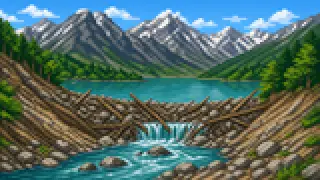
Kamikochi is not simply a beautiful place. A volcanic eruption shaped its terrain, and layers of protection and traffic control have kept that terrain intact ever since.
Kamikochi is best known as a gateway to the Northern Alps, but much of its scenery is the product of a natural event, volcanic activity, followed by a deliberate stack of human systems: heritage protection and traffic control. Setting aside general mountaineering technique and Azumino's farming, this article looks at what makes Kamikochi itself the way it is.
It follows three angles: the volcanic activity that created Taisho Pond, the special-scenery and special-natural-monument protections covering the area, and the private-vehicle restrictions that manage how visitors actually arrive.
Volcanic activity that shaped the landscape
Taisho Pond formed when mudflows from the 1915 eruption of Mount Yake dammed the Azusa River.
The formation of Taisho PondTaisho-ike
Taisho Pond was created by an eruption of Mount Yake on June 6, 1915. The eruption is said to have opened a roughly one-kilometer fissure on the mountain's eastern side and produced dozens of craters. Mudflows generated by the eruption dammed the Azusa River at the mountain's base, and the resulting body of water became the pond. It was originally large enough to be called "Azusa Lake," but the name Taisho Pond eventually took hold. Sediment flowing in from upstream has continued to build up on the pond's bed ever since, so the pond has been gradually growing shallower year by year. Mount Yake's broader activity is grouped into two active periods, 1907 to 1917 and 1919 to 1939, with recorded eruptions also in 1909 and 1911 to 1912.
Kappa BridgeKappa-bashi
Kappa Bridge is a suspension bridge over the Azusa River and Kamikochi's most iconic view, framing the Hotaka mountain range beyond it. It is less the bridge's own structure than the mountain skyline and the river's flow visible from it that gives most visitors their first defining impression of Kamikochi.
Source:Kappa Bridge
The protections that hold Kamikochi in place
Kamikochi was designated part of Chubu-Sangaku National Park in 1934, then a Special Place of Scenic Beauty and Special Natural Monument in 1952.
Chubu-Sangaku National ParkChubu-Sangaku Kokuritsu Koen
The Kamikochi area was designated part of Chubu-Sangaku National Park in 1934. Sitting on the Nagano side of the southern Hida Mountains, along the upper Azusa River, it was among the areas designated relatively early in Japan's national park system.
Source:Kamikochi (Special Place of Scenic Beauty and Special Natural Monument)
Special Place of Scenic Beauty and Special Natural MonumentTokubetsu Meisho, Tokubetsu Tennen Kinenbutsu
Kamikochi was designated a Special Place of Scenic Beauty and a Special Natural Monument on March 29, 1952. This designation, made under the Act on Protection of Cultural Properties, is reserved for natural landscapes and environments considered especially valuable. It runs alongside, and separately from, the national park designation, meaning Kamikochi's scenery is protected both as parkland and as a cultural property in its own right. The two systems are administered separately, by different national frameworks, but in practice they reinforce each other: development that a national park designation alone might allow can still be blocked on cultural-property grounds, and vice versa.
Source:Kamikochi (Special Place of Scenic Beauty and Special Natural Monument)
Vehicle restrictions and sustainable access
Kamikochi introduced summer vehicle restrictions in 1975, and made them year-round starting in 1996.
The start of vehicle restrictionsvehicle restrictions
Kamikochi introduced its first private-vehicle restrictions in 1975, aimed at easing congestion during the especially crowded summer vacation period and reducing the impact on the natural environment. In 1996, this was expanded into a year-round restriction regardless of season. Today, private vehicles cannot enter Kamikochi at any time of year. The shift from a seasonal rule to a year-round one reflects how visitor numbers, not just summer crowds, had grown enough to threaten the very scenery people were coming to see.
Shuttle buses and taxis from the parking areasthe park-and-ride system
Under the vehicle restrictions, visitors coming from the Matsumoto side park at Sawando, and those coming from the Takayama side park at Akandana, then switch to a shuttle bus or taxi to actually enter Kamikochi. This might surprise anyone picturing a resort you simply drive straight into, but this park-and-ride system is considered one of the reasons Kamikochi's landscape has stayed intact over the long term while still welcoming visitors.
FAQ
How did Taisho Pond form?
Mudflows from the June 6, 1915 eruption of Mount Yake dammed the Azusa River, creating the pond.
When did Kamikochi's protections begin?
Protection arrived in two separate waves nearly two decades apart, under two entirely different legal frameworks. Neither designation alone fully explains why building here stays so tightly limited today.
Can I drive my own car to Kamikochi?
No. Summer restrictions began in 1975, and year-round vehicle restrictions have been in effect since 1996. Visitors must switch to a shuttle bus or taxi at Sawando or Akandana parking areas.