Matsumoto and Azumino: What the region's names actually mean
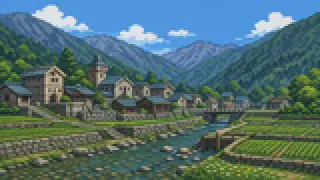
Matsumoto and Azumino sit side by side in the same basin, but their names carry very different histories.
Walk through the Matsumoto Basin and you will run into four names in quick succession: Matsumoto, Azumino, Chikuma, and Shinpu. They can sound interchangeable, but each one belongs to a different era, covers a different area, and is not equally alive today.
This article separates the two current administrative names, Matsumoto and Azumino, from two older labels, Chikuma and Shinpu, and checks against primary sources exactly which period and which boundary each name actually points to.
Where did the name Matsumoto come from?
Matsumoto was once called Fukashi, a lowland marsh name, before Ogasawara Sadayoshi renamed it in 1582.
Fukashi / FukaseFukashi / Fukase
The Shinpu Toki, a gazetteer compiled on the order of the Matsumoto domain in the Edo period, records that "this area was long called Fukashi, or also Fukase." The area was a wetland shaped by the Metoba River and other streams, which is why it carried a marsh-flavored name. The old name of Matsumoto Castle, Fukashi Castle, comes directly from this place name.
Source:Shinpu Toki
The renaming to MatsumotoMatsumoto
The Ogasawara clan, once the shugo (provincial governor) of Shinano, lost their home territory to the invading Takeda clan. In 1582, Ogasawara Sadayoshi recovered the territory, entered Fukashi Castle, and is said to have renamed it Matsumoto. A widely repeated account, drawn from the Shinpu Toki, links the new name to a line meaning roughly "after waiting so long, my long-held wish is fulfilled." After this, Fukashi faded as the name for the castle town, and Matsumoto took hold.
Where does the name Azumino come from, and what does it cover?
Azumino City was formed in 2005 by merging three towns and two villages, plus one town from a neighboring district.
The founding of Azumino CityAzumino-shi
Azumino City was established on October 1, 2005, through the merger of the towns of Toyoshina and Hotaka, the villages of Misato and Horigane (all from the former Minamiazumi District), and the town of Akashina from the neighboring Higashichikuma District. The name Azumino itself is much older, tracing back to the Azumi clan, a seafaring people said to have settled this area in ancient times, but it only became the name of a municipality with this merger. Azumino is a separate city from Matsumoto, not a district within it.
Source:City overview
The five former municipalitiesthe former five towns and villages
Each of the five former municipalities, Toyoshina, Hotaka, Misato, Horigane, and Akashina, had its own town or village office and its own local identity before 2005. Their names still survive today as district labels within Azumino City, such as the "Hotaka area" or the "Toyoshina area." This means the administrative boundary called Azumino is the sum of these five districts, and does not perfectly match the older, looser geographic sense of "Azumino" as the whole alluvial-fan plain.
Where do Chikuma and Shinpu still show up today?
Chikuma survives as a district and former county name; Shinpu survives as the title of an Edo-period gazetteer.
ChikumaTsukama / Chikuma
Chikuma takes its name from the former Chikuma District, which was later split into districts such as Higashichikuma. A district called Chikuma still exists within Matsumoto City today. The reading is not fixed: locally, the Matsumoto district is commonly read "Tsukama," while the older county name and other places using the same characters are widely read "Chikuma." The same kanji shifting its reading by location is exactly the kind of clue that matters when tackling this region's harder place-name questions.
Source:Former Matsumoto High School
ShinpuShinpu
Shinpu was an alternate name for the Matsumoto domain, built from characters meaning roughly "the seat of Shinano." It appears in the title of the Shinpu Toki, a domain gazetteer completed in 1724 under the order of the daimyo Mizuno Tadamoto, compiled by his retainers Suzuki Shigetake and Mitsui Hiroatsu. The Shinpu Toki records the geography and history not just of the domain but of Shinano province as a whole, and remains one of the oldest sources for the Fukashi-to-Matsumoto name change. It is not used as an administrative name today, but no serious study of the region's history can skip it.
Source:Shinpu Toki
FAQ
Which name is older, Matsumoto or Azumino?
As an administrative name, Matsumoto is far older (renamed in 1582), while Azumino City was only established in 2005. The geographic sense of "Azumino," tied to the Azumi clan, is old, but it did not become a municipal name until this merger.
Is Chikuma read "Chikuma" or "Tsukama"?
Both readings exist. The district inside Matsumoto City is locally read "Tsukama," while the older county name and other places using the same characters are usually read "Chikuma." Context decides which is correct.
Who wrote the Shinpu Toki?
It was compiled under the Matsumoto domain lord Mizuno Tadamoto, written and edited by his retainers Suzuki Shigetake and Mitsui Hiroatsu, and completed in 1724. It is the primary source most often cited for the Matsumoto name change.