Who Built Karuizawa's Summer Resort Culture?
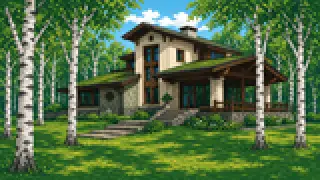
Karuizawa the resort wasn't built by outsiders alone. It took the people who welcomed them, organizing and changing trade, for a culture to actually take root.
In 1886, a single missionary introduced Karuizawa as a summer resort. But that introduction alone didn't create a resort culture. It took the self-governing organizations of villa residents, and post-town merchants who changed their trade, before Karuizawa's identity as a resort truly took hold.
This article looks at that interaction between imported culture and local response from three angles: the missionary who opened the way, the people behind villa culture, and the local commerce that took the resort in.
The Missionary Who Opened the Way
The British missionary A. C. Shaw introduced Karuizawa in 1886, and the town's later commemorations turned that introduction into a founding story.
Shaw's Introduction
A. C. Shaw, an Anglican missionary born in Canada, introduced Karuizawa as a suitable summer resort to notable figures at home and abroad in 1886. Shaw, who also taught at Tokyo Imperial University, gave the foreign community its first real reason to take notice of Karuizawa.
Source:History of Karuizawa Town
A Hospital With No Roof
Shaw is said to have praised Karuizawa's cool, clear air so highly that he called the place "a hospital with no roof." In 1888 he built his own villa on Otsuka-yama, the first villa in Karuizawa and the starting point of the foreign-led resort development that followed.
Source:Towner Real Estate: Why Karuizawa is called a hospital with no roofHistory of Karuizawa Town
Memory, Kept in Monuments
Shaw died in 1902 and was buried at the Aoyama foreign cemetery. A memorial monument went up in 1908, a commemorative bust followed in 1985 through the Karuizawa Rotary Club, and the restoration of Shaw House was completed in 1986. Nearly a century after the resort began, the town kept giving this missionary's memory new physical form.
Source:History of Karuizawa Town
The People Behind Villa Culture
A self-governing organization of foreign summer residents, alongside Japanese-built villas, kept the resort running.
Hatta Villa, a Japanese Resident Joins In
In 1893, Navy captain Yujiro Hatta built the first villa owned by a Japanese resident. In its early years the villa had neither electricity nor running water: residents drew water from a well, lit rooms with oil lamps, and carried a lantern nicknamed "the good-evening lantern" on evening walks. It shows Japanese daily life joining a resort that foreign residents had opened.
From a Welfare Committee to Karuizawa-kai
Foreign summer residents formed a welfare committee for mutual contact and aid, which was formally organized in 1916 as the Karuizawa Resident Summer Association, a foundation. In 1942 it merged with the Karuizawa Assembly Hall to become the Karuizawa Association, a foundation that still exists today. Step by step, the summer residents built their own governing body and took a hand in running the area.
Source:Town of Karuizawa: Hatta VillaHistory of Karuizawa Town
Foreigners Allowed to Live Inland
In 1899, a national policy change let foreign nationals reside freely within Japan, not only in designated foreign settlements. That same year, Karuizawa's post office began handling foreign-exchange business for foreign summer visitors. A shift in national policy gave Karuizawa's growth as a resort a further push.
Source:History of Karuizawa Town
Local Commerce Takes the Resort In
From a post-town inn to villa-rental businesses to a summer lecture series, local commerce kept reshaping itself around resort demand.
From Kameya to Mampei Hotel
Mampei Sato, who ran the Kameya inn on the Nakasendo in Karuizawa-juku, remodeled the building into a Western-style hotel exclusively for foreign guests in 1894. In 1896 he renamed it Mampei Hotel, spelled so foreign guests could pronounce it easily. It's a clear case of a local innkeeper switching trades to meet resort demand.
The Rise of Villa-Rental Businesses
In 1899, Iwazo Kashima built six villas for rent. In 1915, Genjiro Nozawa acquired land and began subdividing it for rental villas. In 1920, Yasujiro Tsutsumi founded Hakone Land Co., putting villa-lot development on a larger, corporate footing. Growing resort demand created new business for local operators and incoming companies alike. That same year, 1915, Hoshino Onsen (Tombo-no-yu) also opened, a sign that Karuizawa's growing resort bustle was extending into lodging and bathing facilities as well.
Source:History of Karuizawa TownHoshino Onsen Tombo-no-yu Official Site
A Summer University for the Mind
In 1918, the Karuizawa Popular Summer University began holding lectures, chaired by Shimpei Goto and headed by Inazo Nitobe. The resort had become more than a place to escape the heat; it now functioned as a venue for intellectual exchange, showing that a cultural foundation, not only a commercial one, had taken shape.
Source:History of Karuizawa Town
A Joint Festival at Fifty Years
In 1936, the Karuizawa Resident Summer Association, the Karuizawa union church, and Karuizawa Town jointly held a festival marking the 50th anniversary of the resort's development. A foreign residents' organization, a church, and the local government celebrating one event together marks a high point where imported culture and local society had become a single occasion.
Source:History of Karuizawa Town
FAQ
Did Shaw alone turn Karuizawa into a resort?
Shaw provided the introduction, but that alone wouldn't have made a lasting resort culture. It took the summer residents' own governing organization, and local merchants willing to take them in, before the culture became something that continued.
I want to know about Karuizawa's post-town era too.
Its history as an Edo-period post town is covered in a separate article, How Karuizawa Outgrew a Nakasendo Post Town. This article focuses on the years from 1886 onward, once the resort culture itself began forming.
Can you tell me current hotel or villa prices and amenities?
This article covers the historical process behind the resort culture, not pricing or amenities at facilities operating today. Check each facility's own official information for anything current.
What is the Karuizawa Association?
The Karuizawa Association is the foundation created in 1942 when the foreign residents' Karuizawa Resident Summer Association merged with the Karuizawa Assembly Hall. It carries forward a history of summer residents taking an active hand in running the area.