Izumo: Where shrines meet memory
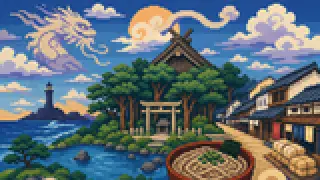
Read enough about where shrines meet memory in Izumo, and one idea keeps resurfacing: what waits at the end of the approach isn't a building, it's a direction. This piece follows Izumo Taisha's central buildings out to the Hinomisaki coastline to see why each structure actually faces the way it does, checking orientation rather than just touring the sights in order.
Inside the Izumo Taisha precinct, the honden sits at the center, with Kaguraden, Yatsuashimon Gate, and Soga Shrine arranged around it in stages. This piece sorts out what each building actually does, based on official sources, and follows that arrangement out to Inasa Beach and Hinomisaki.
Rather than repeating source text verbatim, it focuses on concrete differences: size, position, and which deity is enshrined where. Knowing how one shrine's role differs from its neighbor's turns the layout of the precinct itself into something worth reading.
Where shrines meet memory: Izumo Taisha and Kaguraden
Izumo Taisha is the name of the shrine as a whole, centered on the honden enshrining Okuninushi-no-Okami, while Kaguraden is one building within its precinct, used for rites and ceremonies.
Izumo Taisha
Izumo Taisha is a shrine enshrining Okuninushi-no-Okami, and its current honden, a National Treasure, is built in the taisha-zukuri style, considered one of the oldest forms of shrine architecture in Japan and marked by a gabled roof set on raised floors. The precinct also holds Kaguraden, Yatsuashimon Gate, and Soga Shrine among other buildings, and the name Izumo Taisha covers the whole complex, not any one of them.
Kaguraden
Kaguraden is one building within the Izumo Taisha precinct, used separately from the honden for weddings, prayer ceremonies, and other rites. The shimenawa hanging at its front is said to run about 13 meters long and weigh around 5.2 tonnes, among the largest in Japan. Where the honden is where Okuninushi-no-Okami is enshrined, Kaguraden is where people come to pray and hold ceremonies, a different role even within the same grounds.
Where shrines meet memory: Yatsuashimon Gate and Soga Shrine
Yatsuashimon Gate stands directly in front of the honden, while Soga Shrine is a separate shrine positioned right behind it.
Yatsuashimon Gate
Yatsuashimon Gate encloses the front of Izumo Taisha's honden, taking its name from its eight pillars. It's one of the closest points visitors can approach the honden, and outside of New Year's and a few other occasions, worship normally happens from in front of this gate. As a gate rather than a shrine enshrining a deity, its character differs from both Kaguraden and Soga Shrine nearby.
Soga Shrine
Soga Shrine sits directly behind Izumo Taisha's honden, enshrining Susanoo, said to be the father of Okuninushi-no-Okami. A small stone stairway behind the shrine building lets visitors touch Mt. Yakumo, which encloses the honden, and the shrine is also known for a sand-exchange custom in which sand taken here is swapped with sand from Inasa Beach. Unlike Yatsuashimon Gate, Soga Shrine is a shrine in its own right, and it sits further along the worship route, past the honden.
Where shrines meet memory: Inasa Beach and Hinomisaki
Inasa Beach is the shoreline within walking distance west of Izumo Taisha, while Hinomisaki is the headland further north, at the tip of the Shimane Peninsula.
Inasa Beach
Inasa Beach lies within walking distance west of Izumo Taisha and is said to be the setting of the kuni-yuzuri, or land-ceding, myth. In the tenth lunar month, a welcoming rite here greets deities said to gather from across Japan before they proceed to Izumo Taisha. A small rock called Bentenjima sits on the beach, and the spot is also known for its view of the sunset, a flat, sandy shore quite unlike the cliffs at Hinomisaki.
Hinomisaki
Hinomisaki is a headland further north from Inasa Beach, at the western tip of the Shimane Peninsula, known for its varied cliff coastline. Where Inasa Beach is a flat shore reachable on foot from Izumo Taisha, Hinomisaki sits in more rugged, distant terrain that usually needs a car or bus to reach. The Izumo Hinomisaki Lighthouse and Owashi Beach are both located at the tip of this headland.
Where shrines meet memory: Izumo Hinomisaki Lighthouse and Owashi Beach
Izumo Hinomisaki Lighthouse is the stone lighthouse standing at the tip of Hinomisaki, while Owashi Beach is the cove beach right behind it.
Izumo Hinomisaki Lighthouse
Izumo Hinomisaki Lighthouse was completed in 1903, and its tower is said to be the tallest stone lighthouse in Japan. It stands at the tip of Hinomisaki's cliffs and still serves as a marker for ships crossing the Sea of Japan. Where the nearby Hinomisaki Shrine is a vermilion-painted wooden structure, this lighthouse is built of white stone, different in material and in purpose.
Owashi Beach
Owashi Beach is a pebble beach in the cove tucked behind Izumo Hinomisaki Lighthouse. Where the lighthouse faces outward to guide ships at sea, Owashi Beach sits sheltered within the cove, and locals use it for swimming and walking. Though both are part of the same headland, the lighthouse and the beach face in different directions and serve entirely different purposes.
FAQ
What's a good route for this theme in Izumo?
Walk the Izumo Taisha precinct from the honden to Kaguraden, Yatsuashimon Gate, and Soga Shrine, then head out to Inasa Beach and on to Hinomisaki; the view shifts from shrine buildings to open coastline as you go.
Should these names be memorized as a list?
It helps to separate names for buildings, like Yatsuashimon Gate, from names for shrines with an enshrined deity, like Soga Shrine; that distinction keeps similar-sounding spots within the same precinct apart.
Where can I check the sources?
Each entry links to Izumo Taisha's own site, the Japan Coast Guard, or the Izumo Tourism Association. Rites and events can shift year to year, so check official sources before visiting.