The story behind the name 'Aso'
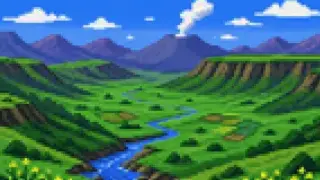
Where the name 'Aso' actually comes from is not settled. Theories point to a word for crumbling cliffs, to an Ainu-language origin, and to the name of an ancient clan, among others. Today's Aso City itself was once three separate towns and villages — Ichinomiya, Aso, and Namino. This article traces how names have layered and shifted over time.
Several theories compete to explain the origin of 'Aso': one ties it to 'asu/azu,' a word for crumbling terrain; another traces it to an Ainu-language root meaning 'burning' and 'floor'; another links it to Aso, an ancient clan or tribal name. No single theory has won out as definitive.
Today's Aso City was formed on February 11, 2005, through the merger of Aso Town, Ichinomiya Town, and Namino Village. This article follows the origin of the place name alongside the city's symbols and a line borrowed from literature, using 'names' themselves as a way to look at Aso.
Place names and a park's changing name
Aso City dates only to a 2005 three-way merger, and even the national park was renamed Aso-Kuju in 1986 — local names keep shifting with the times.
阿蘇市の合併と旧町村名
Today's Aso City was born on February 11, 2005, from the merger of Aso Town, Ichinomiya Town, and Namino Village. Ichinomiya Town took its name from Aso Shrine, the Ichinomiya of former Higo Province, standing in the Miyaji area within the town. Aso Town itself formed in 1954 from the merger of five towns and villages including Uchinomaki, its name drawn from the Aso region and Mount Aso. Namino Village's name is said to come from the undulating, wave-like highland terrain at 700 to 900 meters elevation.
Source:阿蘇市誕生の記録
阿蘇くじゅう国立公園Aso-Kuju National Park
The park designated in 1934 as 'Aso National Park' absorbed the Kuju mountain range in Oita Prefecture in 1986 and was renamed 'Aso-Kuju National Park.' Even an institutional name like a national park's has shifted over time, much like the place name Aso itself.
Source:阿蘇くじゅう国立公園
草千里Kusasenri
The sightseeing spot known as Kusasenri has the formal name Kusasenri-ga-hama. One of Naka-dake's old craters became a hollow, and the 'hama' ('beach') in its name is said to recall a time when the hollow held water before grass took root there — a case where the land's memory survives in its name.
Source:観光
City symbols and a writer's words
The rindou gentian, Miyama Kirishima azalea, and green pheasant serve as the city's official symbols, while Natsume Soseki's storm-blocked 1899 climb is said to have inspired his novel 'Nihyakutoka'.
リンドウrindou gentian
Aso City's official flower is the rindou gentian. Alongside the Roman letters 'A' and 'S' in the city emblem, it symbolizes the city's guiding image, a 'homeland of the fire god, alive with green,' as set out together with the citizens' charter.
Source:市章・市花・市木・市鳥・市民憲章
キジgreen pheasant
The green pheasant, chosen as the city bird, is also Japan's national bird. Together, the city flower (rindou gentian), tree (Miyama Kirishima azalea), bird (green pheasant), and emblem form a symbol system through which Aso City presents and names itself.
Source:市章・市花・市木・市鳥・市民憲章
ミヤマキリシマMiyama Kirishima azalea
The city tree, the Miyama Kirishima azalea, is a low shrub that turns the slopes of the outer rim and the Kuju mountains pink in early summer. Despite the name referencing 'Kirishima,' it points not to the Kirishima range in Kagoshima but to the clusters found across Aso and Kuju.
Source:市章・市花・市木・市鳥・市民憲章
夏目漱石Natsume Soseki
From late August to early September 1899, while teaching at Kumamoto's Fifth Higher School, Natsume Soseki took a short trip to Aso with colleague Yamakawa Shinjiro. He tried to reach the summit but turned back in a storm, and that experience is said to have become the basis for his novel 'Nihyakutoka.'
Source:文学碑・記念碑
文学碑literary monument
Aso City is dotted with literary monuments, including one commemorating Soseki's 'Nihyakutoka,' each marking the memory of a writer who visited the region. The title 'Nihyakutoka' itself means 'the 210th day' counted from the start of spring, a traditionally unlucky day that lines up with when Soseki actually visited.
Source:文学碑・記念碑
FAQ
So which theory about the origin of 'Aso' is correct?
Several theories — crumbling terrain, an Ainu-language root, an ancient clan name — stand side by side, and there is no single settled answer. Comparing the competing theories is part of the appeal of place-name history.
What's the difference between Aso City, Aso Town, and Aso District?
Aso District is a county-level unit within Kumamoto Prefecture, Aso Town was a town that existed until 2005, and Aso City is today's city, formed when Aso Town merged with Ichinomiya Town and Namino Village. The names look similar but cover different areas.
How does Namino soba relate to the former Namino Village?
Namino soba is a specialty still grown today in the Namino district, which was an independent municipality, Namino Village, before the 2005 merger. The district simply kept the old village's name.
Where can I check the city's official symbols?
Aso City's official website lists the city emblem, flower, tree, bird, and citizens' charter together. Check it alongside the origins covered in this article.