Okinawa's Performing Arts & Crafts: Eisa, Sanshin & Bingata
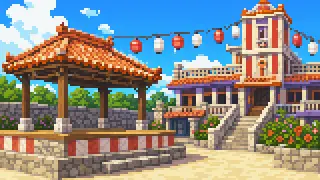
The boom of the drum, the tone of the sanshin, the vivid colors of dyed cloth. In Okinawa's performing arts and crafts live prayer, celebration, and the wishes of daily life. Let's savor the most representative of them, along with their backgrounds.
What makes them feel so Okinawan is that the performing arts and crafts are not just showy to look at but deeply tied to festivals and faith.
Here we take up performing arts to enjoy on stage, and crafts where the work of the hand comes alive.
Okinawa's Signature Performing Arts and Crafts
Okinawa's signature arts include eisa, the sanshin and kumi odori on stage, and bingata dyeing, Tsuboya ware and shisa among crafts—all deeply tied to festivals and faith.
Eisaeisa
Originally a dance to see off and welcome ancestors at the old-calendar Bon, performers beat drums and parade through the community in formation. Today it is also loved as a star attraction of summer festivals.
Source:沖縄観光コンベンションビューロー(おきなわ物語)
Sanshinsanshin
A three-stringed instrument with python skin stretched over its body, indispensable to Okinawan music. It grew from an instrument brought from China, and in time led to the mainland's shamisen.
Source:沖縄観光コンベンションビューロー(おきなわ物語)
Kumi odorikumi odori
A musical drama combining spoken lines, music and movement, founded in 1719 by Tamagusuku Chokun to entertain envoys from China. It was inscribed on UNESCO's Intangible Cultural Heritage list in 2010.
Source:文化庁「無形文化遺産」
Bingatabingata
A dyed cloth that lays many colors using stencils. The "bin" (紅, literally "red") in bingata is said to mean color in general, not just red, and it is marked by a bright palette boldly using reds, yellows and blues. In the kingdom era it was also worn by people of high rank.
Tsuboya wareTsuboya yaki
Pottery (yachimun) that developed as kilns gathered in the Tsuboya district of Naha. Shisa, sake vessels and plates are made here, and its appeal lies in bold painting and the look of its glazes.
Source:那覇市公式ホームページ
Shisashisa
Lion figures set on roofs and gates, long believed to ward off misfortune. A well-known way to display them is as a pair—one with its mouth open and one with its mouth closed.
Source:沖縄観光コンベンションビューロー(おきなわ物語)
FAQ
When can I see eisa?
It was originally a rite of the old-calendar Bon, but eisa festivals are held all over in summer. The All-Island Eisa Festival in Okinawa City is among the best known.
How does the sanshin differ from the shamisen?
The sanshin is an Okinawan instrument with snake skin over its body. It is thought that this passed to the mainland and changed into the shamisen, which uses cat or dog skin.
On what occasions was kumi odori performed?
It was originally performed to entertain the sappushi, envoys who came from China. It was a prestigious art presented in the kingdom's diplomatic settings.
Is there a correct way to place shisa?
There is no strict rule, but they are often placed as a pair, one with mouth open and one closed. There is also a traditional style of setting a single figure on the roof.