Nara City: Names Worth Knowing
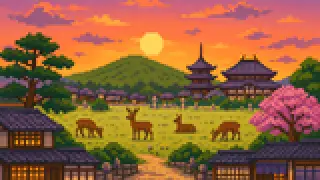
Mount Wakakusa rises 342 meters above the city; Miwa somen noodles claim a history of more than 1,200 years; deer crackers are made without a grain of sugar. Nara City and the area around it hold plenty of names that look different once you know the story behind them. This guide covers mountains, food, and festivals through specific facts.
Nara City is more than its giant Buddha and its deer — the names of its mountains and its food carry their own local history. The Mount Wakakusa fire festival, the roots of Miwa somen, and other names that sound familiar but rarely get explained are worth checking one by one.
The entries below cover each name with specific facts, including numbers and dates, rather than general description.
Mount Wakakusa and Kasugayama Primeval Forest
Mount Wakakusa is a 342-meter grassy mountain; Kasugayama Primeval Forest has banned hunting and logging since 841.
Mount Wakakusa
Mount Wakakusa rises 342 meters and consists of three rounded, grass-covered tiers stacked on top of each other, which is also why it is sometimes called Mikasa-yama, or “three-tiered hat mountain.” Every January the entire mountainside is set alight in a controlled burn known as Yamayaki, and the ring of fire glowing against the night sky has become a fixture of Nara's winter calendar.
Kasugayama Primeval Forest
Kasugayama Primeval Forest has remained largely untouched since 841, when it was designated sacred ground belonging to Kasuga Taisha and hunting and logging inside it were banned. That long, unbroken protection is part of why it earned UNESCO World Heritage status. It spreads out just east of Mount Wakakusa, and the shift from open grassy slope to dense forest is one of the more striking contrasts in the area.
Kakinoha-zushi and Miwa somen
Kakinoha-zushi is pressed sushi wrapped in persimmon leaves; Miwa somen is hand-stretched noodles from the Miwa area of Sakurai.
Kakinoha-zushi
Kakinoha-zushi is vinegared rice topped with fish and wrapped in a persimmon leaf. It is thought to have developed as a way to carry fish into landlocked Nara without it spoiling, relying on the natural antibacterial qualities of the persimmon leaf to help preserve it. Mackerel is the standard filling, though salmon and other options appear depending on the region and the shop.
Miwa somen
Miwa somen is a hand-stretched noodle said to originate in the Miwa area of Sakurai, in Nara Prefecture, with a history stretching back more than 1,200 years, making it one of the oldest noodle-producing regions in Japan. The technique of stretching the dough into thin, even strands still relies heavily on manual skill, and the region's dry winter climate is considered well suited to the process.
Nara pickles and Yamato tea
Nara pickles are vegetables fermented in sake lees; Yamato tea is grown in areas such as the Yamato highlands.
Nara pickles
Nara pickles are made by repeatedly re-packing vegetables such as shiro-uri melon in fresh sake lees over a long fermentation period. Shops that opened in Nara during the Edo period are still operating today, and the number of times the lees are changed, along with how they are blended, shapes the pickles' final flavor and color. The strong aroma and faint trace of alcohol make them a common accompaniment to rice or a drink.
Yamato tea
Yamato tea is the collective name for tea grown across Nara Prefecture, including the Yamato highlands. Tradition holds that the Heian-period monk Kukai brought tea seeds back from Tang China and helped spread cultivation in the region, making Nara one of the places credited as an early center of Japanese tea growing. The wide swing between day and night temperatures across the area's varied elevation is said to shape the character of the leaves.
Deer crackers and Nara Tokae
Deer crackers are made without sugar for feeding Nara's deer; Nara Tokae is a summer lantern event that began in 1999.
Deer crackers
Deer crackers are made from nothing but wheat flour and rice bran, with no sugar added at all, unlike crackers made for people. The lack of sweetness is meant to protect the deer's health. Inside Nara Park, licensed vendors wearing armbands sell the crackers, and visitors are only meant to feed deer the crackers bought from them.
Nara Tokae
Nara Tokae is a summer event that began in 1999, lighting roughly 20,000 candles across Nara Park over several nights in early August. The candles are set out across multiple sites, including Sarusawa Pond and the Ukimido pavilion, giving the park a dreamlike appearance that looks nothing like it does by day.
FAQ
What is a useful route for this theme in Nara City?
Look up at Mount Wakakusa and the edge of Kasugayama Primeval Forest first, then move on to shops selling kakinoha-zushi and Nara pickles to get a sense of how the mountain and the food connect.
Should these names be memorized in isolation?
Keep one number — a height, a start year — attached to each name, and it becomes much easier to tell similar terms apart.
Where should visitors verify the details?
Each entry points to a first-party source from a municipality or tourism body. Check the official page again for dates and sales details before visiting.