Nara City: Food and Craft
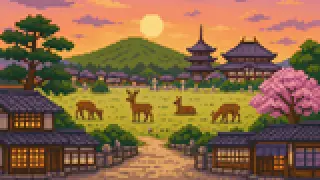
In central Nara, shops that trace back to the Edo period sit alongside a Buddhist rite said to have continued unbroken for more than 1,200 years. From the lattice-fronted houses of Naramachi to the torch-lit nights at Nigatsudo and the workshops that still make brushes and ink by hand, this guide looks at each name through concrete facts.
Nara City is often summed up by its giant Buddha and its deer, but its streets hold plenty of names tied to food and craftsmanship. Naramachi's old townscape, preserved dishes like kakinoha-zushi and Nara pickles, and workshops that turn out brushes and ink all grew out of daily life here.
The entries below explain the origin and character of each name with specific facts, so a name alone won't leave you guessing on a quiz.
Naramachi and Kakinoha-zushi
Naramachi is the old quarter built on Gango-ji's former precinct, and Kakinoha-zushi is pressed sushi wrapped in persimmon leaves.
Naramachi
Naramachi is the old quarter that grew up on the former precinct of Gango-ji, a temple that once held vast halls in the Nara period. Townhouses dating from the Edo period still line its streets, giving the area its distinctive lattice-fronted look. Many houses hang a small red cloth monkey called migawari-zaru, or “substitute monkey,” under their eaves — a custom rooted in koshin folk belief that the charm takes on illness or misfortune in the household's place.
Kakinoha-zushi
Kakinoha-zushi is vinegared rice topped with fish, most often mackerel, wrapped individually in a persimmon leaf and lightly pressed. Landlocked Nara has no coastline, and the dish is thought to have originated as a way of carrying salted fish from the Yoshino and Gojo areas into the mountains without it spoiling; the leaf's natural antibacterial properties helped keep the fish fresh. It remains a staple souvenir in Naramachi's shops today.
Nara pickles and Omizutori
Nara pickles are vegetables fermented in sake lees, and Omizutori is the water-drawing ceremony held at Todai-ji's Nigatsudo.
Nara pickles
Nara pickles are made by repeatedly repacking vegetables such as shiro-uri melon in fresh sake lees over an extended period. Several shops in Nara that opened during the Edo period are still in business, and the number of times the lees are changed shapes the pickles' final color and aroma. Because they keep well, they have long served as a travel souvenir as much as a household food.
Omizutori
Omizutori is performed on the night of March 12 into the early hours of March 13, as part of Todai-ji's Shuni-e observance at the Nigatsudo hall. Monks draw sacred water from a well called Wakasai to offer to the temple's principal image. The procession of monks carrying enormous flaming torches through the hall at night, known as Otaimatsu, draws large crowds each year who come to watch sparks scatter into the dark.
Shuni-e and Nara brushes
Shuni-e is a rite at Todai-ji said to have continued unbroken since 752, and Nara brushes are a craft said to trace back to techniques Kukai brought from China.
Shuni-e
Shuni-e is an annual observance at Todai-ji's Nigatsudo said to have continued every year without interruption since it began in 752. For two weeks starting March 1, monks called rengyoshu confess wrongdoing on behalf of ordinary people before the hall's principal image, an eleven-headed Kannon, and pray for peace and a good harvest. Omizutori and Otaimatsu are part of this longer rite, and locals often say that spring arrives in Nara once Shuni-e ends.
Source:Shuni-e — official reference
Nara brushes
Nara brushes are a traditional craft said to have begun when the Heian-period monk Kukai brought brushmaking techniques back from Tang China and passed them on to monks at Kofuku-ji. A distinctive method called nerimaze, which blends different types and grades of animal hair before shaping the brush tip, remains central to the craft. Fine brushes for calligraphy and painting are still made one at a time by hand.
Nara ink and Roku-en
Nara ink is an ink craft said to trace back to Kofuku-ji's monks, and Roku-en is a facility that protects and shelters Nara's deer.
Nara ink
Nara ink is said to have originated when monks at Kofuku-ji began making ink from soot produced by burning rapeseed oil and from pine smoke, with production expanding from the Muromachi period onward. Today the great majority of solid ink made in Japan comes from Nara. Kneading soot with animal glue and then drying the resulting stick can take anywhere from several months to several years, a slow process that defines the craft.
Roku-en
Roku-en is a facility that takes in deer from around Nara Park that are injured or otherwise need protection. Every October it hosts Shika no Tsunokiri, the deer antler-cutting ceremony, timed to when the antlers of male deer grow long enough to become a hazard. The event is said to date back to the Edo period and is open to the public as an annual tradition.
Source:Roku-en — official reference
FAQ
What is a useful route for this theme in Nara City?
Start in Naramachi, built on Gango-ji's former grounds, then work south past shops selling kakinoha-zushi and Nara pickles to get a feel for how food and craft connect.
Should these names be memorized in isolation?
Attach one concrete fact — an origin story or a date — to each name. Knowing that Nara ink traces back to Kofuku-ji's monks, for instance, is enough on its own to tell it apart from similar terms.
Where should visitors verify the details?
Each entry points to a first-party source from a municipality, shrine, temple, transport operator, or tourism body. Check the official page again for dates and operating information before visiting.