Nagasaki City: Exchange and memories of prayer
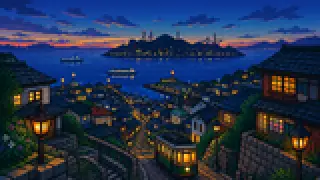
From an artificial island built for foreign trade to the churches and settlements that followed Japan's reopening, and finally to the prayers offered after 1945, Nagasaki's memory of exchange and faith stacks up across several distinct eras rather than one straight line.
Dejima, an artificial island completed in 1636, became Japan's only window onto Europe once the Dutch trading post moved there in 1641. Roughly 220 years later, the opening of Japan at the end of the Edo period brought new sites of exchange like Oura Church and Glover Garden, and after the atomic bombing of 1945, Peace Park added a place for prayer to that history.
This article covers eight names — Dejima, Glover Garden, Former Glover House, Oura Church, Nagasaki Kunchi, Suwa Shrine, Peace Park, and Nagasaki Atomic Bomb Museum — anchored to the dates behind each one. References to the atomic bombing are kept plain and factual.
Exchange and memories of prayer: Dejima and Glover Garden
Dejima was an artificial island completed in 1636 that served as Japan's only opening to Europe during national isolation, while Glover Garden opened in 1974 as a collection of Western-style buildings.
Dejima
Dejima is a fan-shaped artificial island completed in 1636. After the Dutch trading post moved there from Hirado in 1641, it became Japan's sole opening to Europe throughout the country's period of national isolation, channeling not just trade but Western scholarship into Japan for roughly two centuries. The Dejima Omotemon Bridge, completed in 2017, now lets visitors walk directly onto the island from the opposite bank.
Source:Dejima — official reference
Glover Garden
Glover Garden opened in 1974, built around the residence of the trader Thomas Glover and gathering other Western-style houses that once stood scattered across the Minami-Yamate hillside into a single garden. It preserves the memory of the foreign settlement era, more than a century after Dejima, and related structures became part of a UNESCO World Heritage listing in 2015.
Exchange and memories of prayer: Former Glover House and Oura Church
Former Glover House, built in 1863, is designated an Important Cultural Property, while Oura Church, built in 1864, holds the higher designation of National Treasure.
Former Glover House
Former Glover House was built in 1863 and is considered one of the oldest surviving Western-style wooden buildings in Japan. It anchors Glover Garden and carries the designation of Important Cultural Property, a notch below the National Treasure status held by Oura Church, described next.
Oura Church
Oura Church was built in 1864 by the French missionary Bernard Petitjean and is the oldest surviving Christian building in Japan. The following year, 1865, it became the site of the Discovery of Hidden Christians, when Catholics from Urakami who had practiced their faith in secret for generations revealed themselves to Petitjean. It is the only Christian building in the country designated a National Treasure, and it was added to the UNESCO World Heritage list, along with related sites, in 2018.
Exchange and memories of prayer: Nagasaki Kunchi and Suwa Shrine
Nagasaki Kunchi is Suwa Shrine's autumn grand festival, believed to date from 1634, while Suwa Shrine itself is traditionally said to have been founded in 1625.
Nagasaki Kunchi
Nagasaki Kunchi is the autumn grand festival of Suwa Shrine, traditionally said to have begun in 1634. It runs every year from October 7 to 9 and is designated a National Important Intangible Folk Cultural Property. Individual neighborhoods take turns presenting their own performances, and the festival only exists because of the shrine that hosts it.
Suwa Shrine
Suwa Shrine is traditionally said to have been founded in 1625 and serves as the guardian shrine of Nagasaki, sometimes called Chinzei Taisha. It is the shrine where Nagasaki Kunchi is held, and its own founding predates the festival's traditional starting year of 1634 by close to a decade.
Exchange and memories of prayer: Peace Park and Nagasaki Atomic Bomb Museum
Peace Park was completed in 1955 next to the atomic bomb hypocenter, while Nagasaki Atomic Bomb Museum opened later, in 1996.
Peace Park
Peace Park was completed in 1955 next to the hypocenter of the atomic bombing. Its centerpiece is the Peace Statue, created by the sculptor Seibo Kitamura, and the park took shape a decade after the bombing on August 9, 1945.
Nagasaki Atomic Bomb Museum
Nagasaki Atomic Bomb Museum opened in 1996; its predecessor, the Nagasaki International Cultural Hall, had opened back in 1955, the same year as Peace Park. The museum conveys the facts of the bombing, which struck the city at 11:02 a.m. on August 9, 1945, alongside a message calling for peace.
FAQ
What is a useful route for this theme in Nagasaki City?
Start at Dejima for the memory of Japan's isolation era, move up to Minami-Yamate for Glover Garden, Former Glover House, and Oura Church, then finish at Suwa Shrine and Peace Park to trace the story from the Edo period through the 20th century.
Should these names be memorized in isolation?
For buildings from the same decade, like Former Glover House and Oura Church, one detail carries most of the weight: Former Glover House holds Important Cultural Property status, while Oura Church is a National Treasure.
Where should visitors verify the details?
Each entry links to a first-party source — the city of Nagasaki, the Agency for Cultural Affairs, or the prefectural tourism federation. Confirm opening days and admission fees on the official page before visiting.