The Five Shrines of Togakushi: A Faith Mapped Onto a Mountain Path
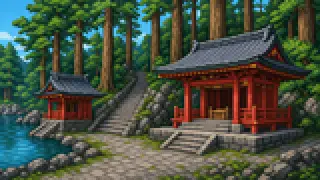
Togakushi Shrine is not a single building. Okusha, Chusha, Hokosha, Kuzuryusha, and Hinomikosha, five shrines linked by mountain paths, together form one space of faith.
Each of the five shrines has its own deity and role, and their founding stories differ in character as well. The complex passed through an era of Buddhist-Shinto fusion before being reorganized into its present form during the Meiji-era separation of Buddhism and Shinto.
This article does not cover Togakushi's soba restaurants, or the place-name questions around neighboring Kinasa. It looks instead at how each shrine's role, tied together by mountain paths, builds a single cultural landscape.
The Role of Each of the Five Shrines
Togakushi Shrine is made up of Okusha, Kuzuryusha, Chusha, Hinomikosha, and Hokosha, each with its own deity and role.
Okusha and Kuzuryusha
Togakushi's Okusha enshrines Ame-no-Tajikarao, the deity said to have opened the heavenly rock cave. Its approach runs some two kilometers, and past the Zuishinmon gate partway along, a cedar avenue over 400 years old continues toward the shrine. Kuzuryusha, enshrined alongside it, is said to have been worshipped as the local deity of water and harvests even before Ame-no-Tajikarao was installed here.
Source:戸隠神社「戸隠神社の歴史」
Chusha
Chusha enshrines Ame-no-Yagokoro-Omoikane, the wisdom deity said to have devised the sacred kagura dance used to reopen the heavenly rock cave. Its hall's ceiling carries a dragon painted by Kawanabe Kyosai, restored in 2003. The grounds also hold a sacred tree over 700 years old and the Sanbonsugi, three cedars more than 800 years old.
Source:戸隠神社「戸隠神社の歴史」
Hokosha
Hokosha enshrines Ame-no-Uwaharu, the child of Chusha's deity, and has long been worshipped for its benefits toward land development, learning and the arts, and safe childbirth. Reaching its hall means climbing more than 270 stone steps. Sitting closest to the foothills, it has also served as the entry point into Togakushi's wider faith.
Source:戸隠神社「戸隠神社の歴史」
Hinomikosha
Hinomikosha is said to have been founded around 1098, and enshrines Ame-no-Uzume as its main deity, alongside Takamimusubi, Takuhatachijihime, and Ame-no-Oshihomimi. It stands apart among the five shrines as the one that remained purely Shinto throughout the era when Buddhism and Shinto were fused together elsewhere on the mountain.
Source:戸隠神社「戸隠神社の歴史」
How the Shape of the Faith Changed
Togakushi's faith passed through an era as a temple bound up with mountain asceticism before being reorganized as a shrine during the Meiji era.
Kenkoji and the Shugendo Era
Under the fusion of Buddhism and Shinto, a temple called Kenkoji was founded at Togakushi and flourished for centuries as a center of shugendo, mountain asceticism. Togakushi Shrine presents its own history as stretching back "over two thousand years," but much of that span was carried forward as a strongly Buddhist-inflected faith.
Source:戸隠神社「戸隠神社の歴史」
Separation and Reorganization Into Togakushi Shrine
The 1868 separation of Buddhism and Shinto dissolved Kenkoji, and Togakushi's faith was reorganized into the shrine known today as Togakushi Shrine. The five-shrine structure we now call the "Five Shrines of Togakushi" only took its current shape after this change.
Source:戸隠神社「戸隠神社の歴史」
The Grand Festival and Daidai Kagura
Togakushi Shrine's grand festival, the Shikinen Taisai, is held every six years, in the years of the ox and the sheep. Today's festival centers on a procession in which Hokosha's deity travels to Chusha for a reunion with its father deity, and the sacred dance performed for the occasion is called Daidai Kagura.
Source:戸隠神社「式年大祭について」
A Space of Faith Carried by Path and Townscape
Togakushi's faith survives today in visible form too, in the order pilgrims follow and in the townscape built around it.
The Pilgrimage Route From the Foothills to Okusha
Visiting all five shrines from the foothills means moving in order through Hokosha, Hinomikosha, Chusha, Kuzuryusha, and finally Okusha. Kuzuryusha and Okusha sit side by side at the innermost end of the same approach road. Climbing in elevation while moving between shrines is itself part of the pilgrimage experience.
Source:戸隠神社「戸隠神社の歴史」
The Old Togakushi Path and Togakushi Confraternities
Between Zenkoji and Togakushi runs an old forest path known as the Togakushi Kodo, or kanmichi, used since ancient times by pilgrims heading for the five-shrine circuit. Across Shinshu, pilgrimage groups called Togakushi-ko formed to make the trip, and dual pilgrimages visiting both Togakushi and Zenkoji became common.
Source:戸隠神社「アクセス」
The Chusha and Hokosha Preservation District
In 2017, the Chusha and Hokosha district was designated an Important Preservation District for Groups of Traditional Buildings by the Agency for Cultural Affairs, the first such designation nationwide for a settlement built around temple lodgings. The 77.3-hectare district sits above 1,000 meters in elevation and keeps its Edo-period land divisions, with the shrine, the former administrator's residence, and rows of lodgings forming a historic townscape alongside stone walls and hedges. Many of the lodgings still carry the sub-temple and hall names they held during the era of Buddhist-Shinto fusion, and continue to operate as inns today.
Source:戸隠神社「重伝建と宿坊」
FAQ
Is Togakushi Shrine a single shrine?
Togakushi Shrine is the collective name for five shrines, Okusha, Kuzuryusha, Chusha, Hinomikosha, and Hokosha, standing apart from one another between the foothills and deep in the mountains. Nothing gathers them into a single building, and visiting means spending real time walking the mountain paths between them.
What does Togakushi's claim of "over two thousand years" of history mean?
Togakushi Shrine presents its own history as stretching back over two thousand years, but that is the shrine's own account of its origins, and much of that span was carried forward as the Buddhist-inflected Kenkoji temple and its shugendo practice. The five-shrine structure that exists today only took shape after the 1868 separation of Buddhism and Shinto.
How long does it take to visit all five shrines on foot?
Just the Okusha approach takes roughly 15 minutes from the entrance to the Zuishinmon gate, then another 20 to 25 minutes from there to Okusha itself. Visiting all five shrines in order from Hokosha to Okusha takes longer still, on top of time spent at each shrine along the way.
Can visitors still stay at the lodgings in the preservation district?
Yes. Most still operate as inns today, and arrangements for a stay or a meal are made by calling each inn or lodging directly.