What is the Takayama Festival? Sanno, Hachiman, and its UNESCO floats
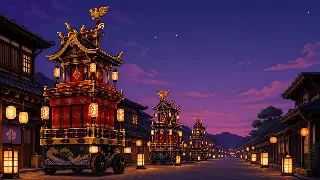
The single name "Takayama Festival" actually covers two separate festivals, one in spring and one in autumn. We trace the ornate floats, sometimes called one of Japan's three most beautiful festivals, and the history that led to UNESCO recognition, all with sources.
The Takayama Festival is the collective name for the "Sanno Festival" held in spring and the "Hachiman Festival" held in autumn. Each is the annual festival of a different shrine, and each has its own distinct number and roster of festival floats.
Sometimes called one of "Japan's three most beautiful festivals" for its ornate floats and festival art, the Takayama Festival gained international attention in 2016 when it was added to the UNESCO Intangible Cultural Heritage list.
Two festivals, one name
The Takayama Festival is really two festivals: the spring Sanno Festival at Hie Shrine with 12 floats, and the autumn Hachiman Festival at Sakurayama Hachimangu with 11.
Sanno Festival (spring Takayama Festival)sanno matsuri
The Sanno Festival is Hie Shrine's annual festival, known as the "spring Takayama Festival." A total of 12 floats are paraded, and the festival's ornate floats and festival art have sometimes earned it a place among "Japan's three most beautiful festivals."
Source:Takayama Yatai Preservation Association: Spring Takayama Festival
Hachiman Festival (autumn Takayama Festival)hachiman matsuri
The Hachiman Festival is Sakurayama Hachimangu Shrine's annual festival, known as the "autumn Takayama Festival." A total of 11 floats are paraded, a different lineup from the spring Sanno Festival. Together with the Jin'ya-mae Morning Market and the old townscape, it's counted among Takayama's three signature tourist attractions.
Source:Autumn Takayama Festival (Hachiman Festival) | Gifu Official Tourism Site
The floats' highlight: karakuri performances
The floats' biggest draw is karakuri: performers pull dozens of ropes to animate mechanical puppets, with three floats performing in spring and Hotei-tai's aya-watari in autumn.
Karakuri performancekarakuri honou
One of the Takayama Festival's biggest draws is its "karakuri" puppet performances. Performers called tsunakata skillfully pull dozens of control ropes to move mechanical puppets mounted on the floats, in a display of traditional skill that captivates audiences. In spring, three floats — Sanbaso, Ishibashi-tai, and Ryujin-tai — perform karakuri; in autumn, it's Hotei-tai.
Source:Takayama Yatai Preservation Association: Spring Takayama Festival
Hotei-tai's "aya-watari" performancehoteitai aya-watari
The signature performance of the autumn Takayama Festival is Hotei-tai's "aya-watari." Using 36 control ropes, male and female child-figure puppets cross a suspended ladder before finally landing on the shoulder or arm of the Hotei figure, in an elaborate mechanism. The puppets are said to have been made in Kyoto.
The road to UNESCO recognition
After national cultural-property designations in 1960 and 1979, the float tradition was added to the UNESCO Intangible Cultural Heritage list in 2016 among 33 Japanese float festivals.
Yama, Hoko, Yatai, Float Festivalsyama hoko yatai gyoji
The Takayama Festival floats themselves were designated an Important Tangible Folk Cultural Property in 1960, and the float tradition itself an Important Intangible Folk Cultural Property in 1979. In 2016, it was one of 33 float festivals nationwide added together to the UNESCO Intangible Cultural Heritage list under "Yama, Hoko, Yatai, Float Festivals in Japan."
Source:Takayama Festival FloatsTakayama Festival Float Event
Takayama Festival Floats Exhibition Halltakayama matsuri yatai kaikan
You don't have to visit during festival season to see the floats up close. The Takayama Festival Floats Exhibition Hall, on the grounds of Sakurayama Hachimangu Shrine, displays actual floats used in the festival. The floats on display rotate over time, so each visit can offer a different selection.
Source:Sakurayama Hachimangu Shrine
FAQ
How many times a year is the Takayama Festival held?
Twice: the spring Sanno Festival (April 14–15) and the autumn Hachiman Festival (October 9–10). Both share the collective name "Takayama Festival," but they're held by different shrines with different floats, so each is its own distinct event to experience.
Can you see the floats outside festival season?
Yes. The Takayama Festival Floats Exhibition Hall, on the grounds of Sakurayama Hachimangu Shrine, keeps a rotating selection of actual festival floats on permanent display. Only a limited number are shown at any one time, so the floats you'll see change from visit to visit.