Shirakawa-go World Heritage: Gassho Houses, Snow, and Sericulture
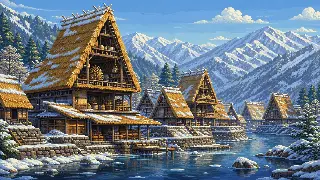
Shirakawa-go’s gassho houses are more than photogenic thatched roofs. Snow, wind, sunlight, sericulture, and land use along the Sho River are woven into one historic village landscape. Here is why the villages were recognized as World Heritage, through both architecture and everyday life.
UNESCO’s Historic Villages of Shirakawa-go and Gokayama comprise Ogimachi in Gifu Prefecture and Ainokura and Suganuma in Toyama Prefecture. Ogimachi is the center of Shirakawa Village’s World Heritage district, but the shared character of all three villages is what makes the site legible as a historic village landscape.
The defining form is the gassho-style house with a steep gabled thatched roof. Its large attic supported sericulture, while the roof form responded to a snowy mountain environment. Architecture and livelihood were designed together.
A World Heritage site of three villages
The property comprises three villages — Ogimachi in Shirakawa plus Ainokura and Suganuma in Toyama — valued as one historic landscape including paths, waterways, and fields.
Historic Villages of Shirakawa-go and Gokayama
The World Heritage property consists of Ogimachi in Shirakawa Village and Ainokura and Suganuma in Nanto, Toyama. The site is understood as a historic village landscape, including paths, waterways, fields, and other surroundings, rather than as a collection of isolated houses.
Source:Historic Villages of Shirakawa-go and Gokayama|UNESCO
Ogimachi district
Ogimachi is the core World Heritage district on the Shirakawa Village side. Gassho houses gather on mountain terrain beside the Sho River, and preservation considers roof orientation, fields, forests, and the surrounding landscape as well as the buildings themselves.
Source:World Heritage|Shirakawa VillageOgimachi Preservation District|Shirakawa Village
A steep roof and a working attic
The steep gabled thatched roof sheds heavy snow while creating a tall attic used for sericulture, uniting the house's form with its livelihood.
Gabled gassho construction
Shirakawa describes gassho construction as a wooden building with a steep gabled thatched roof. The name evokes hands joined in prayer, but the form also has practical logic: it sheds snow and creates a large working attic, linking the visible silhouette to daily life.
Sericulture in the attic
The attic of a gassho house was used for sericulture. Its height could be divided into several working levels, turning the upper part of the residence into productive space rather than a simple storage loft.
Source:Historic Villages of Shirakawa-go and Gokayama|UNESCOWhat is Gassho-zukuri?|Shirakawa Village
What the inscription criteria reveal
UNESCO inscribed the villages under criteria (iv) and (v), recognizing both the architecture and the traditional land-use pattern — the whole lived environment, not just the roofs.
UNESCO criteria (iv) and (v)
UNESCO inscribed the villages under criterion (iv), recognizing a group of buildings illustrating architecture and technology, and criterion (v), recognizing a traditional settlement and land-use pattern. The listing therefore covers the lived environment, not just roof design.
Source:Historic Villages of Shirakawa-go and Gokayama|UNESCO
The Sho River village landscape
The villages lie along the Sho River, where houses, paths, fields, and mountain terrain occupy the space between river and slopes. Reading the setting as a response to natural conditions explains the World Heritage value better than treating each house as a standalone monument.
Source:Historic Villages of Shirakawa-go and Gokayama|UNESCOOgimachi Preservation District|Shirakawa Village
FAQ
Which prefectures contain the three World Heritage villages?
Ogimachi is in Gifu; Ainokura and Suganuma are in Toyama.
When was the site inscribed?
1995.