Shonan: Layers of history | LoreMania
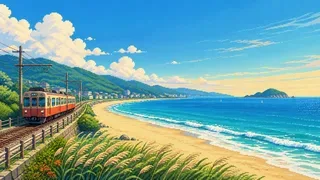
Beneath the single name "Shonan" lie several layers of history from very different eras, from a 6th-century founding legend to 20th-century political history. This page traces that layering through two sites far apart in time: ancient Enoshima Shrine and the modern-era former Yoshida Shigeru residence.
Enoshima Shrine traces its founding to a legend dated 552 CE, while the former Yoshida Shigeru residence records the mid-20th-century private life of a postwar prime minister. The two sites sit barely a dozen kilometers apart, yet more than 1,400 years apart in time, both folded into the same name, "Shonan."
Each entry links to a primary source from the relevant city or shrine. Check the source first for dates and titles that are easy to mix up.
Layers of history: names to know first
Enoshima Shrine is a trio of sub-shrines — Hetsu-no-miya, Naka-tsu-no-miya, and Oku-tsu-no-miya — each housing one Munakata goddess, with a founding legend dated to 552 CE.
Enoshima Shrine
Enoshima Shrine is the collective name for three sub-shrines on Enoshima island, Hetsu-no-miya, Naka-tsu-no-miya, and Oku-tsu-no-miya, traditionally said to have been founded in 552 CE when a deity was enshrined inside the island's sea caves. Counted among Japan's three great Benzaiten shrines, it retained Buddhist rites alongside Shinto ones until the Meiji-era separation of the two. Each sub-shrine enshrines one of the three Munakata goddesses, so it helps to think of it as three shrines in one rather than a single building.
Source:江島神社公式「ご由緒」
Layers of history: connections used in the quiz
The Oiso residence of postwar prime minister Yoshida Shigeru was rebuilt and reopened in 2017; its Kabuto Gate, erected in 1954, commemorates the San Francisco Peace Treaty.
Former Yoshida Shigeru Residence
The former Yoshida Shigeru residence in Oiso belonged to Yoshida Shigeru, who led Japan's postwar government for more than seven years combined. After a fire destroyed the original building, it was rebuilt and reopened to the public in 2017. The estate's Kabuto Gate was erected in 1954 to commemorate the signing of the San Francisco Peace Treaty and is also known as the "Peace Treaty Gate." Counting back from Enoshima Shrine's legendary founding in 552, that is well over 1,400 years of Shonan history separating the two sites.
Source:大磯町「吉田茂と旧吉田茂邸について」
FAQ
What do Enoshima Shrine's "three sub-shrines" refer to?
Each sub-shrine houses a different one of the three Munakata goddesses: Tagitsu-hime at Hetsu-no-miya, Ichikishima-hime at Naka-tsu-no-miya, and Tagori-hime at Oku-tsu-no-miya.
What does the Kabuto Gate at the former Yoshida Shigeru residence commemorate?
It marks the 1954 signing of the San Francisco Peace Treaty. Its design copies the Kabuto Gate at Urasenke's Konnichian in Kyoto, built by carpenters brought in from Kyoto, and it was registered as a national Tangible Cultural Property in 2019.