The Nation's Kitchen & the Merchant City: Dojima, Senba & Doshomachi
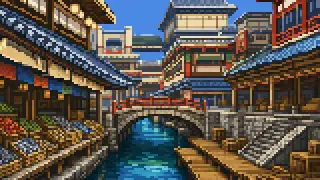
Osaka has long been a hub of water transport, the heart of a distribution network where rice and specialty goods from across the country gathered. In the Edo period it was called "the Nation's Kitchen," and the wisdom and spirit of commerce took root here. Let's trace its beating heart.
Osaka's prosperity rested on a logistics network that made the most of its rivers and sea, and on the ingenuity of its merchants.
Here we take up everything from the rice market to the medicine district to the figure who laid the foundations of the modern economy.
Osaka, the Water City Raised by Commerce
Edo-period Osaka was "the Nation's Kitchen," sustained by the Dojima Rice Market, domain kurayashiki warehouses, and merchant districts like Senba and Doshomachi — an economy Godai Tomoatsu later rebuilt in the Meiji era.
The Nation's Kitchen (天下の台所)
In the Edo period, the tax rice of the domains and specialty products from across Japan gathered in Osaka to be traded. Because it flourished as the linchpin of logistics and finance, Osaka came to be called "the Nation's Kitchen."
Source:大阪市公式ホームページ
Dojima Rice Market (堂島米市場)Dojima Kome Ichiba
The market where the domains' warehoused rice was bought and sold. Its "chogai-mai" trade, designed to guard against price swings, is regarded as a forerunner of futures trading worldwide, and the mechanics of the market grew sophisticated here.
Source:大阪府公式ホームページ
Kurayashiki (蔵屋敷)Kurayashiki
Bases that each domain established in Osaka to store and convert into cash their tax rice and specialty goods. Numbers of them lined the area around Nakanoshima, underpinning the domains' finances.
Source:大阪市公式ホームページ
Senba (船場)Senba
The nerve center of Osaka commerce, where wholesalers and merchant houses clustered. A culture that prized apprenticeship (detchi-boko) and the family name (noren) took root, and the refined, gentle "Senba dialect" was spoken.
Source:大阪観光局(OSAKA-INFO)
Doshomachi (道修町)Doshomachi
The "medicine district" where dealers in medicinal goods gathered from the Edo period. Sukunahikona Shrine ("Shinno-san"), which enshrines the deity of health, stands here, and many pharmaceutical companies still call it their place of founding.
Source:少彦名神社(神農さん)公式
Godai Tomoatsu (五代友厚)Godai Tomoatsu
In the Meiji era he devoted himself to founding the Osaka Stock Exchange and the Osaka Chamber of Commerce (today's Osaka Chamber of Commerce and Industry), rebuilding the modern Osaka economy. He is called "the benefactor of Osaka."
Source:大阪府公式ホームページ
FAQ
Why did goods from all over Japan gather in Osaka?
Because its water transport, making the most of rivers and the sea, was convenient, and goods could easily be shipped in from every region. It developed as a hub of accumulation and transshipment.
What is the significance of Dojima's futures trading?
It was a system for trading price-swing risk in advance—a forward-looking method that is credited with leading toward today's financial markets.
Does the merchant spirit still survive today?
The disposition that prizes practical gain—rational yet warm-hearted—is said to live on throughout the way Osaka does business and relates to people today.
What events are held in Doshomachi?
The Shinno Festival of Sukunahikona Shrine takes place in autumn, when papier-mâché tiger charms praying for good health are handed out. It is cherished as the year's final festival.