Osaka's Private Railways: Kintetsu, Nankai, Keihan, Hankyu & Hanshin
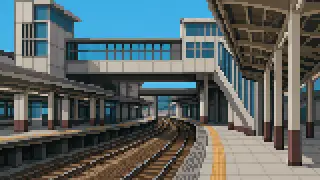
Osaka is a "kingdom of private railways," where private lines link the city and its suburbs like the mesh of a net. Each company has its own destinations and character, and knowing the lines makes Osaka's geography snap into three dimensions. Let's trace the major lines.
Osaka's private railways moved early into developing the land along their lines and running department stores, cultivating a culture all their own.
Here we cover the major private railway companies, right down to the sole streetcar still surviving in Osaka.
The Railways That Tie Osaka Together
Five major private railways — Kintetsu, Nankai, Keihan, Hankyu, and Hanshin — fan out by destination, with Osaka Metro's Midosuji Line as the city's main artery and the Hankai Tramway still trundling along.
Kintetsu (近鉄)Kintetsu
Starting from points such as Osaka-Namba and reaching as far as Nara, Mie, and Nagoya, it has the longest rail network of any private railway in Japan (excluding JR). It runs a varied roster of trains, including sightseeing limited expresses.
Source:近畿日本鉄道 公式
Nankai Electric Railway (南海電鉄)Nankai Dentetsu
Starting from Namba, this private railway links the Wakayama and Koyasan directions. One of the oldest railways in Japan, it also operates an access line to Kansai International Airport.
Source:南海電気鉄道 公式
Keihan Electric Railway (京阪電鉄)Keihan Dentetsu
A private railway linking Yodoyabashi in Osaka with Demachiyanagi in Kyoto. It also runs the Nakanoshima Line, and its route strings together famous spots between Osaka and Kyoto, such as Fushimi and Uji.
Source:京阪電気鉄道 公式
Hankyu Railway (阪急電鉄)Hankyū Dentetsu
A private railway extending from Umeda in three directions—toward Kobe, Takarazuka, and Kyoto. Known for its calm maroon-colored cars, the line-development methods of Kobayashi Ichizo became a model for private railway management.
Source:阪急電鉄 公式
Hanshin Electric Railway (阪神電鉄)Hanshin Dentetsu
A private railway linking Umeda and Kobe. Koshien Station—the nearest stop to Hanshin Koshien Stadium, home of the Hanshin Tigers—lies not in Osaka Prefecture but in Nishinomiya City, Hyogo Prefecture.
Source:阪神電気鉄道 公式
Osaka Metro
The operator of the subways and buses within the city of Osaka, privatized in 2018. Its flagship Midosuji Line, which opened in 1933, was Japan's first publicly run subway and is the main artery linking Umeda, Namba, and Tennoji.
Source:Osaka Metro 公式
Hankai Tramway (阪堺電車)Hankai Densha
Linking Ebisucho and Tennoji with Sakai, it is the only streetcar still in existence in Osaka Prefecture. It trundles leisurely through old downtown scenery and passes right in front of Sumiyoshi Taisha Shrine.
Source:阪堺電気軌道 公式
FAQ
What do Osaka's "Kita" and "Minami" refer to?
Kita is the downtown on the north side, centered on Umeda; Minami is the south side, centered on Namba and Shinsaibashi. The two are contrasted as the city's two great entertainment districts.
Are "Umeda" and "Osaka Station" the same place?
They refer to roughly the same area. JR calls it Osaka Station, while private railways and the subway tend to use the name Umeda, and they are connected by an underground mall.
Why did private railways develop so much in Osaka?
Because private rail companies began linking the suburbs and the city center early on, cultivating a business model of developing residential areas, department stores, and leisure facilities along their lines.
What are Osaka's main airports?
The main gateways to the skies are Kansai International Airport, on a man-made island in the sea off Senshu, and Osaka International Airport (Itami Airport), centered on Itami.