Kochi (Tosa): Food and crafts
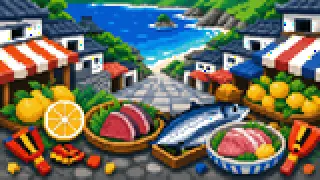
Kochi's tables carry dishes found nowhere else, from seared katsuo no tataki to sawachi platters piled high for a feast. Just as distinctive are the crafts shaped by local materials, like Tosa washi paper grown from clear streams or the forged blades of Tosa cutlery. This guide checks each name against what the sources actually say about it.
Food and crafts in Kochi (Tosa) range from a single festive platter to tools passed down through generations, so the names alone don't tell the whole story. Starting from a lively spot like Hirome Market and moving toward a workshop craft like Tosa washi makes it easier to see how these local industries support one another.
Rather than repeating a guidebook summary, each entry below points out a concrete setting, material, or date behind the name. Keep the details in mind, and a name from this list will carry its context the next time it comes up in a quiz.
Food and crafts: Hirome Market and Katsuo no tataki
Hirome Market names the food-hall market near Kochi Castle, while Katsuo no tataki names the seared-bonito dish served at it and elsewhere.
Hirome Market
Hirome Market opened in 1998 as a food-hall-style market right next to Kochi Castle, with roughly 60 stalls under one roof. Diners can order from several stalls and eat together at shared tables, a format both visitors and locals use daily.
Katsuo no tataki
Katsuo no tataki is bonito with only the surface seared, traditionally over burning straw, then sliced thick and served with condiments. The contrast between the smoky skin and the raw center is the point of the dish, and Japan's agriculture ministry lists it among Kochi's representative local foods.
Food and crafts: Sawachi cuisine and Tosa pomelo
Sawachi cuisine names the large shared platters served at Tosa feasts, while Tosa pomelo names a large citrus fruit grown in Kochi.
Sawachi cuisine
Sawachi cuisine is the Tosa custom of piling sashimi, sushi, and fried dishes onto one large platter set at the center of the table, rather than serving each course separately. Because the platter stays whole, it remains a common sight at celebrations and gatherings with many guests.
Tosa pomelo
Tosa pomelo is a variety of pomelo grown in Kochi Prefecture, notable for its size and the thick peel removed before eating. Kochi is known as a major citrus-growing region, and Tosa pomelo reaches peak shipping season from winter into early spring.
Food and crafts: Yuzu and Tosa washi
Yuzu names a fragrant citrus grown widely in Kochi's mountains, while Tosa washi names a paper craft developed along its clear streams.
Yuzu
Yuzu is widely cultivated in Kochi's mountain areas, and the prefecture ranks among Japan's leading producers. Cooks prize the peel's aroma more than the fruit itself, which sets it apart from Tosa pomelo, eaten mainly for its flesh.
Source:Yuzu — official reference
Tosa washi
Tosa washi is a paper craft developed using Kochi's clear streams and paper mulberry, the fibrous plant that supplies its raw material. References to the paper appear as far back as the Engishiki, a legal text from the Heian period, giving the craft well over a thousand years of recorded history.
Food and crafts: Tosa cutlery and Tosa tea
Tosa cutlery names blades forged by hand in Kochi, while Tosa tea names tea grown and produced within the prefecture.
Tosa cutlery
Tosa cutlery is forged one blade at a time by Kochi smiths and was designated a national Traditional Craft in 1977. The blades originally developed as tools for forestry and farming, and that emphasis on practical shape has carried through to today's knives.
Tosa tea
Tosa tea is the general name for tea grown and produced within Kochi Prefecture, drawing on cool mountain growing areas scattered across the region. Unlike a craft object such as Tosa cutlery, it's an agricultural product that reaches local tables every day.
FAQ
What's a good route for this theme in Kochi (Tosa)?
Starting at Hirome Market and moving on to Katsuo no tataki and Sawachi cuisine shows how the same regional ingredients turn up in different dishes and settings.
Should these names be memorized on their own?
For a name tied to a clear date, like Tosa cutlery's 1977 craft designation, pairing the name with that date makes it easier to recall. When two names sound similar, like a fruit and a craft, decide up front which category each belongs to.
Where can these details be verified?
Each entry links to an official source from a municipality, prefecture, or industry body. Check the official page again for hours and availability before visiting.