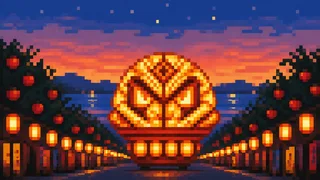
Aomori & Nebuta Local Quiz Practice: Questions and Explanations
40QEasyIntermediateAdvanced
Review questions from the real quiz with answers, explanations and sources. Think it through first, then reveal the correct answer.
This is a selection from the question pool — the real quiz also draws questions you won’t find here.
Last updated: 2026-09-21
EasyTier 1 — 10 questions
The first ten questions are the faces you meet the moment you arrive in Aomori: when the Nebuta Festival runs and how far the floats travel, the exhibits at Wa Rasse that stay open all year, the apples and nokkedon bowls near the station, Hakkodamaru now moored along the waterfront, the undersea tunnel joining Honshu and Hokkaido, and the great Jomon settlement nearby. Answer all ten and you are ready to lead a first-time visitor around town. Open each answer for the sourced explanation behind it.
Q1.If you take the train into central Aomori to explore the Nebuta area, which station is the natural starting point for a walk?
Aomori Station
Hirosaki Station
Hachinohe Station
Shin-Aomori Station
Reveal the correct answer
Correct answerAomori Station
Aomori Station is the city's central station, served by the JR Ou Main Line and Tsugaru Line as well as the third-sector Aoimori Railway. Tourist information counters and restaurants cluster nearby, and landmarks such as A-FACTORY are barely a minute's walk away, which makes the station a sensible starting point for exploring the Nebuta area on foot.
Q2.Which fruit is a familiar autumn staple associated with Aomori?
Cherries
Mandarins
Grapes
Apples
Reveal the correct answer
Correct answerApples
Apples are a familiar representative fruit and autumn staple associated with Aomori. The prefecture accounts for roughly 60 percent of Japan's total apple production, making it the country's leading growing region. Fuji alone covers about half the cultivated area, while varieties such as Tsugaru and Orin round out a harvest season that stretches across several months.
Q3.At Aomori Fish Market, what bowl is made by placing chosen sashimi on warm rice?
Nokkedon
Seafood soba
Market curry
Grilled seafood set meal
Reveal the correct answer
Correct answerNokkedon
The nokkedon at Aomori Fish Market is assembled by choosing sashimi and placing it on warm rice to make a personal seafood bowl. The market is known locally as Furukawa Ichiba, and diners pick toppings from roughly thirty shops inside, a format enjoyed by residents grabbing breakfast as much as by visitors passing through.
Q4.What dates are given for the annual Aomori Nebuta Festival?
July 20–25
August 1–6
August 2–7
August 10–15
Reveal the correct answer
Correct answerAugust 2–7
The Wa Rasse FAQ states that the Aomori Nebuta Festival is held every year from August 2 through August 7. Over that stretch, large floats, haneto dancers, and musicians parade through the city each night, and the festival closes on the seventh with a daytime procession and a marine parade in Aomori's harbor.
Q5.About how long is the parade route of the Aomori Nebuta Festival?
About 1 km
About 3 km
About 8 km
About 15 km
Reveal the correct answer
Correct answerAbout 3 km
Aomori City says that the floats, haneto dancers, and musicians travel together along a route of about three kilometers. Processions start from more than one departure point and the exact path shifts from day to day, so the view depends on where along the route a spectator chooses to stand.
Q6.Which facility permanently displays large Nebuta floats that appeared in the festival?
Aomori City Museum of Art
Aomori Museum of Art
Hakkodamaru Memorial Ship
Nebuta Museum Wa Rasse
Reveal the correct answer
Correct answerNebuta Museum Wa Rasse
Wa Rasse permanently displays large Nebuta floats that took part in the festival each year. The first-floor Nebuta Museum is a wide, atrium-like hall open through to the second floor, letting visitors see the floats' scale and detail up close year-round, long after the festival itself has ended.
Q7.How is the Seikan ferry memorial ship Hakkodamaru preserved today?
It still operates as an active ferry
It is preserved as a memorial ship
It was scrapped and no longer exists
It was moved to a facility in Hokkaido
Reveal the correct answer
Correct answerIt is preserved as a memorial ship
Hakkodamaru is now moored and preserved as the Seikan Ferry Memorial Ship, telling the story of Aomori City's history and the role of the Seikan ferries. It entered service in 1964 and served for 23 years and 7 months, and its bright yellow hull has stayed a familiar sight ever since retirement.
Q8.What two regions was the Seikan Tunnel built to connect?
Honshu and Hokkaido
Honshu and Shikoku
Honshu and Kyushu
Hokkaido and Sakhalin
Reveal the correct answer
Correct answerHonshu and Hokkaido
The Seikan Tunnel starts in Imabetsu, Aomori Prefecture, and is an undersea tunnel connecting Honshu and Hokkaido. It became the world's longest undersea tunnel when it opened, surpassing the Channel Tunnel, and it was built wide enough to accommodate future Shinkansen service.
Q9.Which period does the Sannai-Maruyama Site mainly date from?
The Jomon period
The Yayoi period
The Kofun period
The Asuka period
Reveal the correct answer
Correct answerThe Jomon period
The Sannai-Maruyama Site is a large settlement dating mainly from the early to middle Jomon period. Full-scale excavation began in 1992 and turned up large pillar-supported buildings and road remains, and the site was later inscribed, together with related locations, as part of the Jomon Prehistoric Sites in Hokkaido and Northern Tohoku World Heritage listing in 2021.
The Tsugaru-ben word menkoi corresponds to "cute" in standard Japanese. It's one of the dialect's best-known terms, commonly used for babies, small animals, or anything endearing, and it pairs neatly with shibareru, meaning freezing cold, as an easy way to remember two contrasting Tsugaru-ben staples.
From here, fifteen questions that even residents pause over: the railway sharing Aomori Station with JR, how to spend an afternoon at Wa Rasse, what it takes to join as a haneto dancer and which instruments carry the bayashi, what the city highlights about the snow season, the year Hakkodamaru entered service, when Seikan ferry service began, which stretch of the Jomon period Sannai-Maruyama belongs to, the region named in its World Heritage listing, the year the Seikan Tunnel opened, how Aomori's apple industry started and which variety leads it, the local dialect word for you, and the right way to build a nokkedon bowl. Loosely remembered facts get pinned down here.
Q11.When using Aomori Station as the start of a city walk, select two practical features.
Tourist information and restaurants are nearby
It is convenient for reaching other areas of Aomori
A mountaintop is one minute away on foot
Only one JR line serves the station
Reveal the correct answer
Correct answerTourist information and restaurants are nearby / It is convenient for reaching other areas of Aomori
Aomori Station has tourist information and restaurants nearby, and it is convenient for reaching other parts of Aomori. Beyond the JR Ou Main and Tsugaru lines, the third-sector Aoimori Railway also serves the station, so it functions both as a base for exploring downtown on foot and as a transfer point for trips elsewhere in the prefecture.
Q12.Which third-sector railway, in addition to the JR lines, serves Aomori Station?
Aoimori Railway
Hankyu Railway
Seibu Railway
Meitetsu
Reveal the correct answer
Correct answerAoimori Railway
Aomori Station is served by the JR Ou Main Line and JR Tsugaru Line, plus the third-sector Aoimori Railway. The Aoimori Railway took over a line spun off from JR East, and it now carries commuters and students as well as visitors heading further into the prefecture from Aomori Station.
Q13.If you also eat and shop inside Wa Rasse, what stay length is a useful estimate?
About 30 minutes
About 60 minutes
About 2 hours
A full day
Reveal the correct answer
Correct answerAbout 2 hours
The Wa Rasse FAQ suggests roughly two hours when dining and shopping inside are included. The first-floor Nebuta Museum is a large atrium-like space, so seeing only the permanent exhibits takes less time, but budgeting closer to two hours leaves room to browse the café and gift shop without rushing.
Q14.Select the two correct ways or requirements for joining the Aomori Nebuta Festival as a haneto dancer.
You do not need to belong to a group
Advance registration is required
You must buy a paid seat
Wear the formal haneto costume
Reveal the correct answer
Correct answerYou do not need to belong to a group / Wear the formal haneto costume
The official guide says that people may join without belonging to a group and must wear the formal haneto costume. Advance registration is not required, but this question asks for two selected statements. Joining as a haneto is one of the few festival roles open to walk-up visitors, and costume rental shops operate throughout the city.
Q15.Select the three instruments used in Nebuta bayashi.
Drums
Shamisen
Flutes
Hand cymbals
Reveal the correct answer
Correct answerDrums / Flutes / Hand cymbals
The official English guide introduces drums, flutes, and hand cymbals as the instruments of Nebuta bayashi. Layering these three distinct tones together gives the parading floats their distinctive, driving sound as they move through the streets.
Aomori City's tourism page lists the Aomori Winter Wonderland and Hakkoda skiing among the appeals of winter. In contrast to the summer Nebuta Festival, snow-and-light events and winter sports become the city's seasonal draw, a reminder that Aomori has reasons to visit throughout the year, not just in August.
Q17.In what year did the Seikan ferry memorial ship Hakkodamaru enter service?
1954
1964
1974
1984
Reveal the correct answer
Correct answer1964
Hakkodamaru entered service on August 12, 1964, as one of the Seikan ferries. Its active career spanned 23 years and 7 months before it was moored in Aomori City, where it now operates as the Seikan Ferry Memorial Ship and continues to tell that history to visitors.
Q18.In what year is the history of the Seikan ferries said to have begun?
1888
1898
1908
1918
Reveal the correct answer
Correct answer1908
The Seikan ferry service is said to have begun in 1908 with the Hirafu-maru, the first railway ferry. For the following 80 years the ferries linked Honshu and Hokkaido across the Tsugaru Strait, and that long chapter closed only when the Seikan Tunnel later opened.
Q19.Which part of the Jomon period does the Sannai-Maruyama Site's settlement mainly date from?
The Incipient to Initial Jomon period
The Initial to Early Jomon period
The Early to Middle Jomon period
The Late to Final Jomon period
Reveal the correct answer
Correct answerThe Early to Middle Jomon period
The Sannai-Maruyama Site is considered a large settlement dating mainly from the Early to Middle Jomon period. Full-scale excavation from 1992 uncovered large pillar-supported buildings and road remains, giving archaeologists a concrete picture of daily life and the settlement's scale during that era.
Q20.What region is named in the official title of the World Heritage listing that includes the Sannai-Maruyama Site?
Hokkaido and Northern Tohoku
All six Tohoku prefectures
Aomori Prefecture alone
All of eastern Japan
Reveal the correct answer
Correct answerHokkaido and Northern Tohoku
The Sannai-Maruyama Site is inscribed as part of the "Jomon Prehistoric Sites in Hokkaido and Northern Tohoku." That listing groups multiple Jomon-period sites spread across Hokkaido and the prefectures of Aomori, Iwate, and Akita, and the whole group was inscribed together as a UNESCO World Heritage site in July 2021.
The Seikan Tunnel opened on March 13, 1988. Construction had taken roughly 24 years, and on completion the tunnel was recognized as the world's longest undersea tunnel, surpassing the Channel Tunnel, while its opening simultaneously closed the book on 80 years of Seikan ferry service.
Q22.In what Meiji year is the history of Aomori apples said to have begun?
Meiji 4
Meiji 8
Meiji 18
Meiji 28
Reveal the correct answer
Correct answerMeiji 8
The history of Aomori apples is said to begin in the spring of Meiji 8 (1875), when seedlings were distributed by the Home Ministry's Bureau of Industrial Promotion. Only three seedlings arrived at first, yet cultivation spread across the Tsugaru region from that start, culminating in a 150th-anniversary ceremony held in 2025.
Q23.Which apple variety has the largest cultivated area among Aomori apples?
Fuji
Orin
Tsugaru
Jonagold
Reveal the correct answer
Correct answerFuji
By cultivated area, Fuji accounts for about half of all Aomori apple varieties. Tsugaru, Orin, and Jonagold are also grown alongside it, and cultivating several varieties side by side lets the prefecture stagger harvests from early to late season, keeping fresh apples available across a long stretch of the year.
Q24.Who do the Tsugaru-ben words "na" and "ome" refer to?
Me
You
A child
A friend
Reveal the correct answer
Correct answerYou
The Tsugaru-ben words na and ome correspond to "you" in standard Japanese. Which one gets used can depend on the listener or the situation, and paired with wa, meaning "I," they form the basic first- and second-person vocabulary that's usually the first thing newcomers to Tsugaru-ben pick up.
Q25.Select two correct statements about how to enjoy nokkedon.
You buy meal tickets at the information office
You choose toppings you like from the market's shops and exchange them for meal tickets
Kitchen staff decide on a fixed menu and serve it
You must always take the bowl home to eat
Reveal the correct answer
Correct answerYou buy meal tickets at the information office / You choose toppings you like from the market's shops and exchange them for meal tickets
Nokkedon is made by buying meal tickets at the information office and exchanging them for toppings you choose from about 30 shops in the market. Because it includes raw seafood, the finished bowl itself cannot be taken home. Building a bowl piece by piece is part of the fun, and the dish is closely associated with Aomori Fish Market specifically.
Source:Aomori Nokkedon
AdvancedTier 3 — 15 questions
The final fifteen stand between you and any claim to Aomori expertise: the year Nebuta was designated an Important Intangible Folk Cultural Property, the order haneto dancers put on their costume, the chant that carries the parade, the record Hakkodamaru holds among every Seikan ferry, the final role it played, how Sannai-Maruyama has been protected as a cultural property over time, the people behind Aomori's apple industry, a handful of closely related local dialect expressions, and the transportation history linking Aomori to Hokkaido pulled into one timeline. Clear this tier, and the top titles in the real quiz are within reach.
Q26.In what year was “Aomori's Nebuta” designated an Important Intangible Folk Cultural Property of Japan?
1963
1980
1992
2011
Reveal the correct answer
Correct answer1980
Aomori City's official overview states that Aomori's Nebuta received the designation in 1980. The festival's roots are said to reach back to the Edo period, but formal recognition of its cultural value came only decades after the war, a status that later fed into preservation efforts such as the opening of Wa Rasse.
Q27.Put these haneto costume items in order from head to feet.
Flower hat
Shoulder sash
Gagashiko
White tabi and zori
Reveal the correct answer
Correct answerFlower hat → Shoulder sash → Gagashiko → White tabi and zori
Looking at the four listed costume elements by where they are worn, the order is the flower hat, shoulder sash, gagashiko at the waist, then white tabi and zori at the feet. The flower hat draws the eye with color, while gagashiko emphasizes hip movement, so the costume balances visual impact with practical ease of dancing from head to toe.
Q28.What chant do haneto dancers call out as they dance and bounce with the Nebuta floats?
Sōya, sōya
Yāre, yāre
Rassera, rassera
Wasshoi, wasshoi
Reveal the correct answer
Correct answerRassera, rassera
The official English guide says that haneto dancers move with the floats while calling out “Rassera, Rassera.” The chant layers over the drums, flutes, and hand cymbals of the bayashi, and because spectators can easily join in the call, it has become one of the festival's most recognizable sounds.
Q29.Put the main events in the 2026 official schedule in date order.
The eve festival
The children's and large-float processions begin
The large-float processions continue
The daytime large-float procession closes the festival
Reveal the correct answer
Correct answerThe eve festival → The children's and large-float processions begin → The large-float processions continue → The daytime large-float procession closes the festival
The official schedule places the eve festival first, followed by the August 2–3 processions, the August 4–6 processions, and the August 7 daytime procession. Evening parades dominate the first days, while the final day closes with a daytime procession and a marine parade, giving each day of the festival a slightly different character.
Q30.What record does Hakkodamaru hold among the 55 Seikan ferries in history?
It had the shortest service life
It had the longest service life
It cost the most to build
It had the smallest passenger capacity
Reveal the correct answer
Correct answerIt had the longest service life
Hakkodamaru entered service on August 12, 1964, and served for 23 years and 7 months, the longest of the 55 Seikan ferries. It also carried a gross tonnage of 5,382.65 tons and passenger capacity of 1,286, a scale that matches its record as the fleet's longest-serving vessel.
Q31.What major final role did Hakkodamaru play as a Seikan ferry?
It was the first Seikan ferry to enter service
It served as the final departing ferry (from Aomori)
It was converted into a cargo-only ship
It stood by as a backup ship on the Hokkaido side
Reveal the correct answer
Correct answerIt served as the final departing ferry (from Aomori)
Hakkodamaru also served the major role of the final departing Seikan ferry, sailing from Aomori. When the Seikan Tunnel opened in 1988 and closed 80 years of ferry history, the vessel that had served longer than any other in the fleet was also the one that made that last historic crossing.
Q32.In what year were the 1,958 excavated items from the Sannai-Maruyama Site designated Important Cultural Properties?
1993
1998
2003
2008
Reveal the correct answer
Correct answer2003
The 1,958 excavated items from Sannai-Maruyama were designated Important Cultural Properties in May 2003 (Heisei 15). The site itself has also been recognized under several other cultural-property categories, including Historic Site and Special Historic Site status, as well as World Heritage inscription.
Q33.What is said to have survived in good condition in the "valley" at Sannai-Maruyama?
Wooden items such as lacquerware
Glass items
Metal weapons and armor
Ceramic jars
Reveal the correct answer
Correct answerWooden items such as lacquerware
The valley was used as a dump and, being damp and cut off from air, preserved wooden items such as lacquerware in good condition. Wood and fiber normally decay quickly in dry soil, but the waterlogged, low-oxygen conditions of the valley let these organic artifacts survive for thousands of years, offering a rare look at everyday tools.
Q34.What is Kashichi Tonosaki, affectionately called "the god of apples," said to have invented?
A method of reshaping trees and bagging fruit to protect it from pests and disease
Mass-production technology for apple juice
The method of dwarf-tree cultivation
A system for registering apple varieties
Reveal the correct answer
Correct answerA method of reshaping trees and bagging fruit to protect it from pests and disease
Kashichi Tonosaki invented methods of reshaping tree form and bagging fruit to protect it from pests and disease, earning him the nickname "the god of apples." Building on the first seedlings that Tatee Kikuchi had spread, he pushed the cultivation techniques themselves forward, lifting apple quality across Aomori from the late Meiji era into the Taisho era.
Q35.Who led the postwar movement to restore devastated apple orchards and is called "the father of Aomori apples' postwar recovery"?
Tatee Kikuchi
Kashichi Tonosaki
Denjiro Shibukawa
Jinya Kimura
Reveal the correct answer
Correct answerDenjiro Shibukawa
Denjiro Shibukawa founded the Aomori Prefecture Apple Association, a growers' organization, and led the postwar recovery movement, earning him the title "father of Aomori apples' postwar recovery." His work rebuilding orchards devastated by the war helped restore the industry and, eventually, the prefecture's position as Japan's top apple producer.
Q36.What does the Tsugaru-ben word "ittomaga" mean?
A short while
A very long time
Every day
Never again
Reveal the correct answer
Correct answerA short while
The Tsugaru-ben word ittomaga corresponds to "a short while" in standard Japanese. Reading it as itto (a little) plus ma (interval) makes the meaning easy to remember, and it turns up in everyday phrases asking someone to wait for just a moment.
Q37.In what kind of situation is the Tsugaru-ben word "wai(ha)" used?
As an exclamation of surprise, like "oh my"
As a greeting before a meal
As a farewell greeting
As an expression of thanks
Reveal the correct answer
Correct answerAs an exclamation of surprise, like "oh my"
The Tsugaru-ben word wai(ha) is used as an exclamation of surprise, similar to "oh my" or "good grief." It isn't a greeting or set phrase but something said spontaneously in the moment, and the dialect's characteristic intonation helps carry just how surprised the speaker really is.
Q38.Put these events in the transportation history between Aomori and Hokkaido in chronological order.
Seikan ferry service begins with the Hirafu-maru
The Toya Maru maritime disaster occurs
Hakkodamaru enters service
The Seikan Tunnel opens, ending the era of Seikan ferries
Reveal the correct answer
Correct answerSeikan ferry service begins with the Hirafu-maru → The Toya Maru maritime disaster occurs → Hakkodamaru enters service → The Seikan Tunnel opens, ending the era of Seikan ferries
It begins with the Hirafu-maru entering service in the Meiji era, continues through the Toya Maru disaster in the mid-Showa era, then Hakkodamaru entering service a decade later, and finally the Seikan Tunnel opening in the late Showa era, ending ferry service. The disaster's lessons are often cited as a reason the tunnel project gained urgency.
Q39.Select the one correct statement about the Seikan Tunnel's track structure.
It uses a three-rail slab track designed for future Shinkansen use
It only supports single-track service
It is a shared track also used by roads
It uses old-style wooden sleepers
Reveal the correct answer
Correct answerIt uses a three-rail slab track designed for future Shinkansen use
The Seikan Tunnel uses a three-rail slab track so that Shinkansen trains can run alongside conventional lines in the future. It originally carried only conventional trains, but later modifications allowed Shinkansen service, showing that the track design anticipated high-speed operation from the construction stage onward.
Q40.Select two correct statements about the construction of the Seikan Tunnel.
The main tunnel fully broke through about three years before it opened
The idea for the tunnel first arose after the war
Construction took less than 10 years
Pump rooms were installed to drain groundwater during construction
Reveal the correct answer
Correct answerThe main tunnel fully broke through about three years before it opened / Pump rooms were installed to drain groundwater during construction
The main tunnel broke through in 1985 and opened in 1988, about three years later. The concept actually dates to before the war, and construction took about 24 years. Three pump rooms were installed inside the tunnel to drain the constant inflow of groundwater, since the strait beneath made drainage a management concern throughout construction and operation.