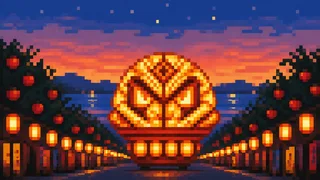
Clear the Aomori Local Quiz and earn the Aomori Local title. Want to know Aomori & Nebuta even better, or already confident? The tougher courses are next.
The chant of rassera carries over taiko drums, bamboo flutes, and hand gongs — and this quiz asks how much of the Aomori Nebuta Festival you can actually explain. Questions cover the haneto dancers and their costumes, the craft of the nebuta-shi who build the great lantern floats stage by stage, and the year-round exhibits at the Wa Rasse museum. The city gets equal billing: nokke-don rice bowls near Aomori Station, the apples the prefecture is known for, the Sannai-Maruyama archaeological site, even Tsugaru dialect. Memories of the festival make surprisingly good study material — carry them straight into the quiz.
Q1.If you take the train into central Aomori to explore the Nebuta area, which station is the natural starting point for a walk?
Aomori Station
Hirosaki Station
Hachinohe Station
Shin-Aomori Station
Reveal the correct answer
Correct answerAomori Station
Aomori Station is the city's central station, served by the JR Ou Main Line and Tsugaru Line as well as the third-sector Aoimori Railway. Tourist information counters and restaurants cluster nearby, and landmarks such as A-FACTORY are barely a minute's walk away, which makes the station a sensible starting point for exploring the Nebuta area on foot.
Q2.Which fruit is a familiar autumn staple associated with Aomori?
Cherries
Mandarins
Grapes
Apples
Reveal the correct answer
Correct answerApples
Apples are a familiar representative fruit and autumn staple associated with Aomori. The prefecture accounts for roughly 60 percent of Japan's total apple production, making it the country's leading growing region. Fuji alone covers about half the cultivated area, while varieties such as Tsugaru and Orin round out a harvest season that stretches across several months.
Q3.At Aomori Fish Market, what bowl is made by placing chosen sashimi on warm rice?
Nokkedon
Seafood soba
Market curry
Grilled seafood set meal
Reveal the correct answer
Correct answerNokkedon
The nokkedon at Aomori Fish Market is assembled by choosing sashimi and placing it on warm rice to make a personal seafood bowl. The market is known locally as Furukawa Ichiba, and diners pick toppings from roughly thirty shops inside, a format enjoyed by residents grabbing breakfast as much as by visitors passing through.
Q4.When using Aomori Station as the start of a city walk, select two practical features.
Tourist information and restaurants are nearby
It is convenient for reaching other areas of Aomori
A mountaintop is one minute away on foot
Only one JR line serves the station
Reveal the correct answer
Correct answerTourist information and restaurants are nearby / It is convenient for reaching other areas of Aomori
Aomori Station has tourist information and restaurants nearby, and it is convenient for reaching other parts of Aomori. Beyond the JR Ou Main and Tsugaru lines, the third-sector Aoimori Railway also serves the station, so it functions both as a base for exploring downtown on foot and as a transfer point for trips elsewhere in the prefecture.
Q5.In what year was “Aomori's Nebuta” designated an Important Intangible Folk Cultural Property of Japan?
1963
1980
1992
2011
Reveal the correct answer
Correct answer1980
Aomori City's official overview states that Aomori's Nebuta received the designation in 1980. The festival's roots are said to reach back to the Edo period, but formal recognition of its cultural value came only decades after the war, a status that later fed into preservation efforts such as the opening of Wa Rasse.