Aomori Nebuta: Origins, Revival, and Preservation
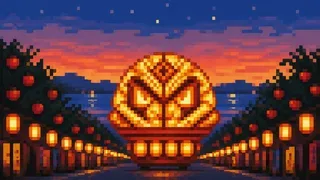
Aomori Nebuta is more than a procession of enormous floats. Its present form brings together a folk memory of sending away sleep, the rebuilding of a port city, and a local system for passing skills onward. Official explanations help us follow that history without pretending that every early detail is settled.
The Aomori Nebuta Festival Executive Committee describes the Aomori Nebuta Festival as likely transformed from the Tanabata lantern-floating custom. It also presents the name as a sound change from the folk expression nemuri nagashi, while leaving room for uncertainty about the exact origin.
After the war, the Reconstruction Port Festival helped create a new stage for Nebuta. Marine processions and battery lighting were part of that change, and Aomori City later established an ordinance to preserve and transmit the culture rather than treating the festival as scenery alone.
Tracing the name and the proposed origin
The official account points to a transformation of the Tanabata lantern-floating custom and to the folk term nemuri nagashi as the name's possible source.
The Tanabata lantern-floating custom
The official origin page describes the Aomori Nebuta Festival as probably a transformation of the Tanabata lantern-floating custom. That comparison connects Nebuta with practices of sending away misfortune or sleep in a floating lantern, but it does not mean that today's giant floats existed in the earliest period. The careful wording matters: the site presents a plausible line of development, not final proof.
Source:The Origin of Nebuta
nemuri nagashi
The same official explanation says the word Nebuta is thought to have developed through a dialectal sound change from nemuri nagashi. The phrase evokes a custom for casting off drowsiness, so it supplies a cultural clue rather than a simple dictionary translation. Read alongside the Tanabata connection, it shows why sound and seasonal timing matter here.
Source:The Origin of Nebuta
A port city's revival and cultural safeguards
The Reconstruction Port Festival marked postwar renewal, while the preservation ordinance gave Aomori City a formal framework for transmission.
The Reconstruction Port Festival
The official timeline places the Reconstruction Port Festival in 1947 as a major postwar turning point. A marine procession began around this period, and lighting changed from candles to batteries. Nebuta did not merely return unchanged after wartime damage; it gained a port-facing public stage and technologies that supported larger, more mobile floats.
Source:Changes in Nebuta
Aomori Nebuta Preservation and Transmission Ordinance
Aomori City enacted the Aomori Nebuta Preservation and Transmission Ordinance in 2005. Its significance is broader than protecting a finished float: the ordinance treats making, parading, playing, and teaching as cultural material that needs continuity. It explains how a festival can be rebuilt every year and still remain a long-term local tradition.
Source:Aomori Nebuta Preservation and Transmission Ordinance
Important Intangible Folk Cultural Property
Aomori's Nebuta was designated an Important Intangible Folk Cultural Property of Japan in 1980. The designation concerns a living cultural system rather than one surviving float. Production knowledge, parade practice, bayashi, and participation all help explain what is being carried forward, so the designation recognizes a community tradition in motion.
Source:Aomori Nebuta Festival
Aomori Nebuta Standard Bayashi Preservation Society
The official flute guide says the Aomori Nebuta Standard Bayashi Preservation Society was founded in 1948. This adds a musical layer to the history: preservation is not only about keeping a float visible, but also about carrying a recognizable performance style through people who can teach and play it in the festival setting.
FAQ
Does the official site claim that Nebuta's origin is proven?
No. It describes a likely transformation of the Tanabata lantern-floating custom and gives nemuri nagashi as a possible linguistic source, but it keeps the historical wording cautious.
Why is the 1947 festival important?
The Reconstruction Port Festival marks a postwar restart that introduced a marine procession and battery lighting, helping Nebuta develop a new public and technical form.