Tsukuba Science City: from a 1963 plan to the 1985 World Expo
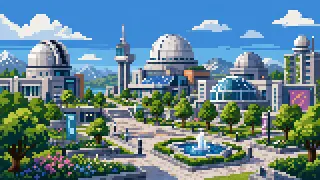
What if a national government decided to build an entire city from scratch just to solve overcrowding in the capital? That's essentially how Tsukuba got its start.
Tsukuba City's foundation was laid by a 1963 cabinet decision to build a 'science city' — a plan to relieve overcrowding in the Tokyo metropolitan area by relocating national research institutes and universities to the foot of Mt. Tsukuba.
Over the following six decades, the University of Tsukuba opened, JAXA's Tsukuba Space Center began operating, and the 1985 World Exposition put the city on the map as Japan's 'city of science.' Here's how that story unfolded.
1963: the cabinet decision that started it all
Tsukuba began with a September 1963 cabinet decision to build a roughly 4,000-hectare science city, moving national research institutes out of overcrowded Tokyo.
A cabinet decision to build a science city (1963)Tsukuba Science City
In September 1963, the Japanese government approved a plan to build a roughly 4,000-hectare research and education city at the foot of Mt. Tsukuba, aiming to ease population concentration in the Tokyo metropolitan area. Deliberately relocating national research institutes and universities out of the capital was an unusual idea for its time, and it became the blueprint from which today's Tsukuba City grew.
Source:Online Lecture Series on National Land Policy, No. 128 - MLIT
University of Tsukuba: a 'new concept' university
The University of Tsukuba opened in 1973 on the foundation of Tokyo University of Education, becoming Japan's first 'new concept university' with its distinctive organizational structure.
Founded in 1973 on the foundation of Tokyo University of EducationUniversity of Tsukuba
The University of Tsukuba opened in 1973, built on the foundation of Tokyo University of Education. Rather than the traditional faculty-and-department structure, it adopted a distinct organization of 'gakugun' and 'gakurui,' earning its reputation as Japan's first 'new concept university.' Tokyo University of Education itself wasn't formally abolished until 1978, once its remaining students had graduated.
JAXA Tsukuba Space Center: Japan's space hub
Tsukuba Space Center opened in 1972 under NASDA and is now among JAXA's largest facilities, hosting astronaut training for the ISS Kibo module.
Opened in 1972, now home to astronaut trainingTsukuba Space Center
Tsukuba Space Center opened in 1972, when the National Space Development Agency of Japan (NASDA) began preparations for launching the N-I rocket. Spread across roughly 530,000 square meters, it's one of JAXA's largest facilities and hosts astronaut training tied to operating the Kibo module on the International Space Station. The center opens to the public twice a year, in spring and autumn.
Source:JAXA | Tsukuba Space Center
1985: the Tsukuba Expo
Expo '85 ran from March to September 1985 with 48 participating countries, drawing about 20.3 million visitors over its 184-day run.
48 countries, roughly 20.3 million visitorsExpo '85
The International Exposition, Tsukuba, Japan 1985 ran from March to September on a roughly 101.6-hectare site within Science City, drawing participation from 48 countries and 37 international organizations. Over its 184-day run it attracted about 20.3 million visitors. A time capsule called 'Post Capsule 2001,' buried on the grounds, holds around 3.26 million letters sent in from across the country. After the expo closed, the Tsukuba Expo Center science museum opened on the former exhibition site.
FAQ
How big is Tsukuba's population today?
As of 2025, Tsukuba City has a population of roughly 260,000, making it one of Ibaraki Prefecture's larger cities. Growth has come both from the planned research district and from newer housing development along the Tsukuba Express rail line.
How is a 'science city' different from an ordinary new town?
A typical new town is built mainly to supply housing, while Tsukuba Science City was designed to deliberately relocate national research institutes and universities — moving brainpower rather than just residents. Even today, researchers and students make up an unusually large share of the population.