Kashima Shrine and the Kashima Antlers: myth meets football
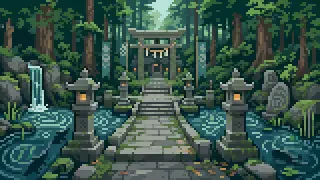
The Kashima Antlers, one of the J-League's original ten clubs. Trace the origin of that name, and you land at Kashima Jingu, one of Japan's most storied shrines.
Kashima Jingu in Kashima City is said to have been founded in the year of Emperor Jinmu's accession, making it one of the oldest shrines in eastern Japan. Along with Ise Jingu and Katori Jingu, it's one of the few shrines historically granted the title 'Jingu,' and it's also known for the legend of the kaname-ishi, a stone said to hold down an earthquake-causing giant catfish.
The football club named after the shrine's deity is the Kashima Antlers, a powerhouse club since the J-League's founding. From ancient myth to a modern stadium, here's the story tying together one place name: Kashima.
One of eastern Japan's oldest shrines
Kashima Jingu is traditionally dated to Emperor Jinmu's accession, making it one of eastern Japan's oldest shrines and one of only three recorded as 'Jingu' in the Engishiki.
Said to date to Emperor Jinmu's accessionKashima Jingu
Kashima Jingu's founding is traditionally dated to the year of Emperor Jinmu's accession, 660 BCE by legendary reckoning. Its enshrined deity, Takemikazuchi-no-Okami, is known as a god of martial arts. In the Heian-era Engishiki records, only three shrines were recorded with the title 'Jingu': Ise, Katori, and Kashima. Kashima also holds the rank of ichinomiya, the highest-ranked shrine of old Hitachi Province.
The kaname-ishi: a stone said to pin down a giant catfish
The kaname-ishi is a sacred stone said to pin down the head of an earthquake-causing giant catfish, with most of it buried deep underground.
A stone that holds back a catfish said to cause earthquakes
The kaname-ishi, or 'keystone,' on the shrine grounds is said to hold down the head of a giant catfish believed to cause earthquakes. What's visible above ground is a small, concave stone only about 30 centimeters across and 7 centimeters tall, with most of it said to lie buried underground. According to legend, Tokugawa Mitsukuni, lord of Mito Domain, once had men dig around it for seven days and nights without ever reaching its base. After the 1855 Ansei Edo earthquake, prints known as namazu-e, depicting the Kashima deity restraining the earthquake catfish, became hugely popular in Edo — around 400 varieties are known to survive today.
Source:Kaname-ishi - Wikipedia
Shrine buildings donated by the Tokugawa shogunate
Tokugawa Ieyasu donated the inner shrine and Tokugawa Yorifusa the roumon gate, while the treasure hall holds the National Treasure sword Futsu-no-Mitama.
Ieyasu's oku-miya, Yorifusa's roumon gate
Kashima Jingu's oku-miya, or inner shrine, began as the main hall, donated in 1605 by Tokugawa Ieyasu in thanks for his victory at the Battle of Sekigahara, and later relocated to its current position. The two-story roumon gate was built in 1634, funded by Tokugawa Yorifusa, the first lord of Mito Domain. The shrine's treasure hall also holds Futsu-no-Mitama, a straight sword with a blade about 2.23 meters long — roughly 271 centimeters including its mounting — among the largest surviving straight swords in Japan, and designated a National Treasure.
Source:Guide to the Grounds: Oku-miya - Kashima Jingu official siteNational Treasure: Straight Sword Futsu-no-Mitama - Token World
Kashima Antlers: a founding member of the J-League
Founded in 1991 on Sumitomo Metal Industries' club, the Antlers are an Original 10 member that has never been relegated to J2.
Founded in 1991, built on Sumitomo Metal Industries' club
Kashima Antlers was founded in 1991, backed by investment from five municipalities, including Kashima, Kamisu, and Hasaki towns, plus 43 companies, building on the existing Sumitomo Metal Industries football club. It was one of the J-League's 'Original 10' clubs at the league's 1993 launch, winning the Suntory Series (first stage) in that inaugural year. Former Brazil international Zico joined in 1991 and became the spiritual pillar behind the club's rise. Among the Original 10, only Kashima Antlers and Yokohama F. Marinos have never been relegated to J2. The club's home stadium's official name remains Ibaraki Prefectural Kashima Soccer Stadium, unchanged even after a naming-rights sponsorship added a nickname in 2025.
Source:Club Profile | Kashima Antlers Official SiteKashima Antlers - Wikipedia (Japanese)Ibaraki Prefectural Kashima Soccer Stadium's Nickname Decided as 'Mercari Stadium' - Ibaraki Prefecture
FAQ
What's the connection between Kashima and deer?
The shrine's sacred messenger animal is the deer, tied to a legend that its deity once traveled on a deer's back. That same legend is said to explain why deer roam freely around Nara's Kasuga Taisha shrine, founded when the Kashima deity was invited there, reportedly riding a deer the whole way. The deer in the Antlers' name and crest trace back to this same role as sacred messenger.
Is the kaname-ishi unique to Kashima Jingu?
Not entirely — neighboring Katori Jingu has one too. Kashima's stone is said to be concave and Katori's convex, and legend holds that together the two pin the giant catfish from both ends. Kashima and Katori are often described as a paired set of ancient shrines, even in their folklore.
Sources & references
- About Kashima Jingu - Kashima Jingu official site
- Kaname-ishi - Wikipedia
- Guide to the Grounds: Oku-miya - Kashima Jingu official site
- National Treasure: Straight Sword Futsu-no-Mitama - Token World
- Club Profile | Kashima Antlers Official Site
- Kashima Antlers - Wikipedia (Japanese)
- Ibaraki Prefectural Kashima Soccer Stadium's Nickname Decided as 'Mercari Stadium' - Ibaraki Prefecture