Kodokan and Kairakuen: Nariaki's paired vision of study and rest
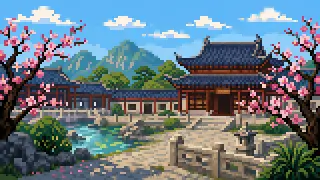
Mito has a paired set of landmarks: the domain school Kodokan and the garden Kairakuen. They were built by the same lord, from the same idea.
Kodokan was a place of study; Kairakuen, a place of rest. They may look like separate sites, but both were founded in the Tenpo era by Tokugawa Nariaki, the 9th lord of Mito Domain.
Nariaki is said to have envisioned the two as a pair, guided by the idea of alternating tension and release. Here's how their history unfolded.
Kodokan: scale and philosophy of a domain school
Kodokan, the Mito Domain school provisionally opened in 1841, championed both scholarship and martial arts and ranked among Japan's largest domain schools; several surviving buildings are Important Cultural Properties.
A domain school founded in 1841Kodokan
Kodokan held a provisional opening in 1841 and a formal opening ceremony in 1857. Built on the principle of balancing scholarship and martial arts, it became one of the largest domain schools in the country. Its surviving Main Gate, Main Hall, and Shizendo Hall are all designated Important Cultural Properties.
Source:Kodokan - City of Mito
Kairakuen: a garden to enjoy together with the people
Kairakuen is the garden Nariaki opened in 1842, a year after Kodokan, built to be 'enjoyed together with the people' and counted among Japan's three great gardens.
Opened in 1842Kairakuen
Kairakuen was opened by Nariaki in 1842, a year after Kodokan, and is ranked among Japan's three great gardens. Built around the idea of 'enjoying it together with the people,' it was designed to be openly shared, with about 3,000 plum trees planted throughout. Kobuntei, the pavilion inside, is said to have been designed with Nariaki's own direct involvement.
Mito Gaku, the backbone connecting both
Both sites rest on Mito Gaku, the school of thought born from Tokugawa Mitsukuni's Dai Nihonshi project, which strongly shaped Bakumatsu-era imperial-loyalist thinking.
Dai Nihonshi and the rise of Mito Gaku
Underlying both Kodokan and Kairakuen is Mito Gaku, the school of thought that grew from the Dai Nihonshi compilation begun by the 2nd lord, Tokugawa Mitsukuni. Mito Gaku profoundly shaped Bakumatsu-era imperial-loyalist, anti-foreigner thought, and Nariaki's son, Tokugawa Yoshinobu, would go on to become the last shogun, presiding over the Meiji Restoration.
Source:Dai Nihonshi - City of Mito
FAQ
Which came first, Kodokan or Kairakuen?
Kodokan was founded in 1841 and Kairakuen in 1842, so Kodokan came about a year earlier.
What does 'alternating tension and release' mean?
It describes alternating between periods of exertion and rest — the idea said to underlie Nariaki's pairing of Kodokan, a place of rigorous study, with Kairakuen, a place to rest body and mind.