Sakitsu's Settlement Landscape and Hidden Christians
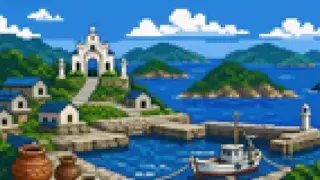
Sakitsu's church cannot stand alone. Behind it lies the heavy history of Christian prohibition, and around it lies a landscape where fishing-village life and faith overlap. This article follows, in order, why Sakitsu was registered as a settlement rather than a church alone, how Hidden Christian belief endured, and where the memory of persecution survives today.
Amakusa's Sakitsu settlement was inscribed as World Heritage not for its church alone but for an entire fishing-village landscape. Behind that lies the Shimabara-Amakusa Rebellion and the harsh prohibition policy that followed it.
This article introduces, with sources, how the settlement came to be, the shape Hidden Christian faith took, and the churches and museum that carry the memory of persecution today.
Glossary terms covered here: Sakitsu Settlement, Sakitsu Church, Hidden Christians, Shimabara-Amakusa Rebellion, Oe Church, Amakusa Christian Museum, Amakusa-ban
A Settlement That Carries the Memory of Prohibition
Sakitsu is a fishing village where faith quietly endured after the rebellion; in 2018 the entire settlement landscape, not the church alone, was inscribed as World Heritage.
Shimabara-Amakusa RebellionShimabara Amakusa no Ran
Understanding Sakitsu's faith landscape starts with the Shimabara-Amakusa Rebellion of 1637-1638. Sparked by harsh tax demands and the suppression of Christianity, the rebels rallied around Amakusa Shiro as commander, fought at Hondo in Amakusa, and were ultimately crushed by shogunate forces at Hara Castle in Shimabara. After the rebellion, the shogunate tightened its control over Christianity even further.
Source:島原・天草一揆(島原天草の乱)
Sakitsu SettlementSakitsu Shuraku
Sakitsu is one of the fishing villages where people who kept their faith secretly after the rebellion continued to live. In 2018, the entire settlement including Sakitsu Church was inscribed as a component of the World Heritage listing "Hidden Christian Sites in the Nagasaki Region." What matters is that the object of evaluation is not the church building alone but the whole landscape, including the hillside, the sea, and the rows of houses.
Source:天草の﨑津集落とは
Hidden ChristiansSenpuku Kirishitan
Hidden Christians outwardly posed as Buddhist parishioners while secretly continuing their faith. Treating ordinary Buddhist statues and household objects as substitutes for devotional tools let them weave belief into daily life and keep it alive. That wisdom of substitution is still etched into the landscape of the Sakitsu settlement today.
Source:文化遺産オンライン「天草の﨑津集落」
Amakusa-banAmakusa-ban
Rebellion and persecution are not the whole of Amakusa's Christian history. Roughly half a century before the uprising, Amakusa was home to the Jesuit seminary Amakusa Collegio, where a movable-type press brought back by the Tensho embassy printed Roman-letter books. Those works, known as Amakusa-ban or Kirishitan-ban, preserve a very different face of faith, one that existed before prohibition closed it down.
Source:天草コレジヨ館
Places of Prayer and Evidence Passed Down
That memory lives on in tatami-floored Sakitsu Church by the sea, hillside Oe Church, and the Amakusa Christian Museum, which holds some 200 artifacts including Amakusa Shiro's battle standard.
Sakitsu ChurchSakitsu Kyoukai
After the ban on Christianity was lifted, Sakitsu's believers built Sakitsu Church. The current building, rebuilt in 1934, is notable for its tatami-mat flooring inside. Standing by the water, it is called the "Cathedral of the Sea," often contrasted with hillside Oe Church.
Source:天草の﨑津集落とは
Oe ChurchOe Tenshudo
A short distance from Sakitsu, in Oe, Amakusa Town, a hillside chapel looks out toward the water: Oe Church. French missionary Father Garnier raised the current building together with local believers in 1933, choosing a Romanesque design that earned it the name "Cathedral of the Mountain." Father Garnier is said to have served as its priest for 49 years, dying in Amakusa without ever returning to his native France.
Source:大江教会
Amakusa Christian MuseumAmakusa Kirishitan-kan
Where Sakitsu and Oe carry forward a living faith landscape, the Amakusa Christian Museum in Hondo instead gathers physical evidence of the rebellion and its persecution. It holds roughly 200 items, including weapons used in the Shimabara-Amakusa Rebellion, the National Important Cultural Property Amakusa Shiro's Battle Standard, and fumi-e stepping images from the prohibition era; the battle standard is shown only during limited periods a few times a year.
Source:天草キリシタン館
FAQ
Are the Sakitsu settlement and Sakitsu Church the same thing?
No. The building is only one element of the town; what earns the World Heritage recognition is the way an entire fishing community's daily life and prayer stayed inseparable from each other. That is exactly why the inscription uses the word settlement rather than naming the church by itself.
How do Sakitsu Church and Oe Church differ?
Sakitsu Church stands by the sea with tatami flooring inside and is called the Cathedral of the Sea; Oe Church stands on a hillside in a Romanesque style and is called the Cathedral of the Mountain. Both their setting and their style contrast.
Can Amakusa Shiro's Battle Standard be seen at any time?
No, it is not on permanent display. The Amakusa Christian Museum shows it only a few times a year, for about a week each time.