Hasekura Tsunenaga & the Keicho Mission to Europe
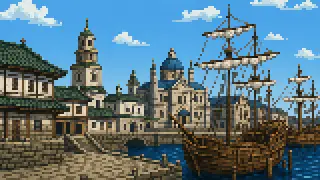
Just over 400 years ago, the Sendai Domain crossed the Pacific in a sailing ship it built itself, bound for Rome.
On Masamune's orders, his retainer Hasekura Tsunenaga was dispatched to distant Europe.
We trace the grand plan that aimed at trade, and the path it followed.
The Mission That Crossed the Pacific
In 1613 Masamune sent the Keicho Mission led by Hasekura Tsunenaga, who sailed from Tsukinoura and met the Pope in Rome, though the hoped-for trade never materialized.
Keicho Mission to Europeけいちょうけんおうしせつ
A delegation Masamune dispatched in 1613 to seek trade with Spain. His retainer Hasekura Tsunenaga led the mission.
Source:せんだい旅日和(仙台観光情報サイト)
Hasekura Tsunenagaはせくらつねなが
A retainer of Masamune who headed the delegation and visited Mexico, Spain, and Rome in turn.
Source:支倉常長(Wikipedia)
San Juan Bautistaさんふぁんばうてぃすたごう
A Western-style sailing ship the Sendai Domain built at Tsukinoura. It carried the delegation across the Pacific Ocean.
Source:サン・ファン・バウティスタ号(Wikipedia)
Tsukinouraつきのうら
A harbor in the Sendai Domain (in present-day Ishinomaki) from which the delegation set sail. In 1613 it embarked from here onto the Pacific.
Source:せんだい旅日和(仙台観光情報サイト)
Luis Soteloるいす・そてろ
A Spanish Franciscan missionary who urged Masamune to send the mission and traveled along with the party.
Source:ルイス・ソテロ(Wikipedia)
Audience with the Popeろーまきょうこうへのえっけん
In 1615, Tsunenaga was received in Rome by Pope Paul V. The aim of securing trade, however, was never achieved.
Source:支倉常長(Wikipedia)
FAQ
Did the mission achieve its purpose?
The trade negotiations with Spain bore no fruit. With the persecution of Christianity intensifying in Japan as well, Tsunenaga returned home in 1620.
Can you still see traces of the mission today?
You can encounter a reconstructed ship and related materials at facilities in Ishinomaki. The associated documents are also inscribed on UNESCO's Memory of the World register.