Toyohira River, Jozankei, and Urban Water|Reading Sapporo’s Nature
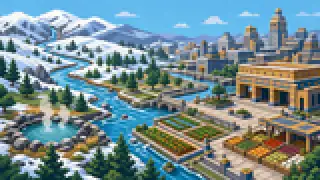
If Sapporo’s nature is reduced to mountain scenery, its connection with city life disappears. Sapporo Waterworks identifies the Toyohira River as a water source and works to conserve its quality. From upstream Jozankei and Mount Moiwa’s backdrop to parks, markets, and food, water links nature with civic culture and systems.
For the Toyohira River, the source directly states its role as a water source for Sapporo and the conservation work in its upper basin. Do not expand that into a stronger claim such as “most of the supply”; stay within the source.
Jozankei Onsen offers several angles: its location in Shikotsu-Toya National Park, its 1866 opening, and its sodium-chloride spring type. Keep hot springs, rivers, and parks distinct and verify each against its own source.
The Toyohira River as a water source
Sapporo Waterworks identifies the Toyohira River as a source of the city's drinking water and runs conservation work in its upper basin, where Jozankei Onsen — inside Shikotsu-Toya National Park — has welcomed bathers since 1866 (Keio 2).
Toyohira River豊平川
Sapporo Waterworks identifies the Toyohira River as a water source for the city and carries out conservation work in its upper basin. The quiz point is not memorizing a river name as one of Hokkaido’s major rivers, but understanding the link between urban water and upstream conservation.
Source:Toyohira River Water-Source Conservation / Sapporo Waterworks
Jozankei Onsen定山渓温泉
Jozankei Onsen is in Shikotsu-Toya National Park and is introduced as opening in 1866 (Keio 2). Its spring-quality page identifies a sodium-chloride spring, so location, year, and spring type can be treated as separate source-backed claims.
Source:Jozankei Tourism Association
Nature flowing into markets and daily life
From the waterside of Nakajima Park beneath Mount Moiwa to the Central Wholesale Market at Kita 12-jo Nishi 20-chome, Sapporo's natural blessings flow into daily life as scenery and as food distribution.
Nakajima Park中島公園
Nakajima Park is introduced as a green, watery place of recreation with Mount Moiwa in the background. It is not the same claim as Toyohira water-source conservation, but adds the urban-landscape angle. It is an example of separating nature terms into geography, systems, and scenery.
Source:Nakajima Park
Sapporo Central Wholesale Market札幌市中央卸売市場
Sapporo Central Wholesale Market is located in Kita 12-jo Nishi 20-chome, Chuo-ku, and its business regulations define the goods handled by the produce and seafood sections. When the resources of land and water enter food distribution, the nature story connects with a market system.
Source:Sapporo Central Wholesale Market Business Regulations
FAQ
What is an entry point for reading Sapporo’s nature as infrastructure?
Separate the river as a source, the hot spring as an upstream resource, parks as civic scenery, and markets as food distribution.
What becomes clear when hot-spring and river facts share one map?
Keeping place, date, and spring type separate shows that nearby facts can still come from different sources.